

Why Roof Coatings Are Your Building’s Best Defense
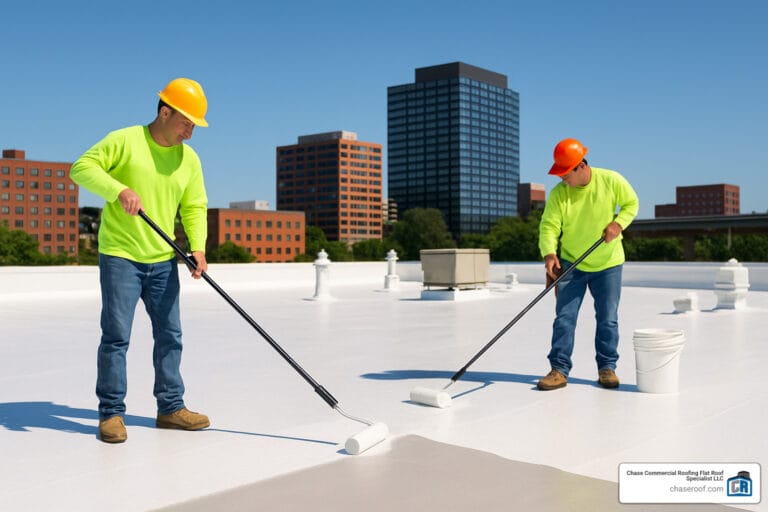
Roof coatings are liquid-applied membranes that form a seamless, protective layer over your existing commercial roof. They provide an effective barrier against leaks, UV damage, and heat while extending roof life at a fraction of replacement costs.
Quick Guide to Commercial Roof Coatings:
| Coating Type | Best For | Lifespan | Key Benefit |
|---|---|---|---|
| Acrylic | Metal, Single-ply | 7-10 years | Cost-effective, UV resistant |
| Silicone | Flat roofs with ponding | 10-15 years | Withstands standing water |
| Polyurethane | High-traffic areas | 15-20 years | Excellent durability |
| Elastomeric | Various substrates | 10-15 years | Superior flexibility |
| Aluminum | Asphalt roofs | 3-5 years | Heat reflection |
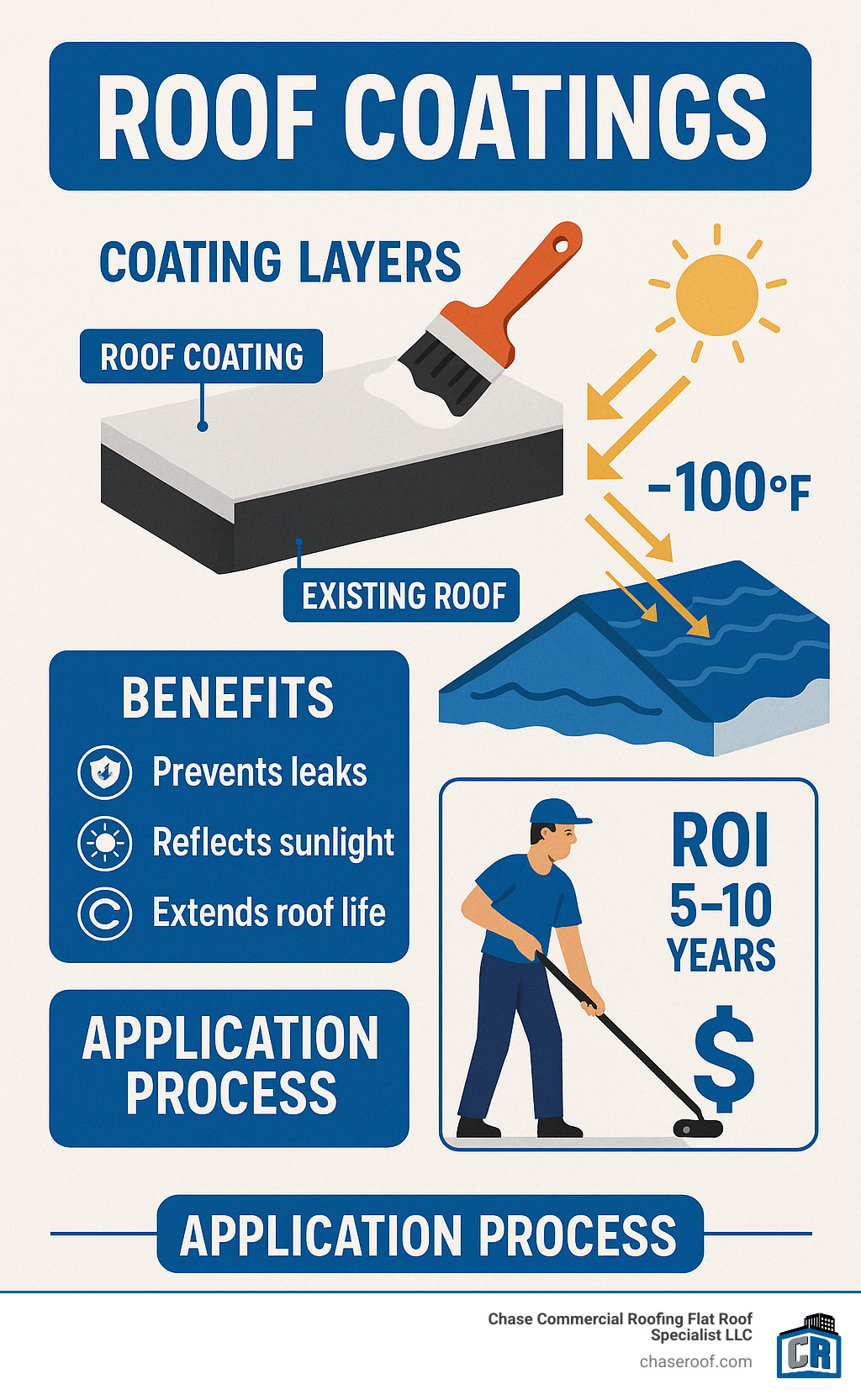
For New Jersey facility managers, roof coatings offer a compelling solution to chronic roofing problems. These protective systems can reflect up to 88% of sunlight, potentially reducing surface temperatures by up to 100°F and cutting cooling costs significantly.
Beyond energy savings, a quality coating creates a waterproof barrier that seals existing minor leaks and prevents new ones from forming. This means fewer emergency repairs, less disruption to your operations, and protection for valuable equipment and inventory below.
The environmental benefits are substantial too. By avoiding a complete tear-off, you’ll keep roofing materials out of landfills while extending your existing roof’s service life by 10-25 years, depending on the coating system chosen.
I’m John Chase, President of Chase Commercial Roofing, with over 30 years of experience applying high-performance roof coatings on commercial buildings throughout New Jersey. My team specializes in custom coating solutions that address your specific roofing challenges while maximizing your return on investment.
What Are Roof Coatings & Why They Matter
Think of roof coatings as your building’s superhero cape – a special liquid that transforms into a seamless protective shield once applied. Unlike regular paint you might use in your home, these specialized formulations pack a much thicker punch with higher solid content, specifically engineered to defend your commercial roof against whatever Mother Nature throws its way.
When our Chase Commercial Roofing team applies these coatings properly, they create an elastomeric membrane – fancy talk for a rubber-like covering that can stretch and bounce back without damage. This flexibility is crucial since your commercial roof expands and contracts hundreds of times throughout New Jersey’s varying temperatures.
As we like to tell our customers, “The only thing more watertight would be a pool liner!” This isn’t just clever marketing – it highlights just how exceptional these systems are at keeping water out. But waterproofing is just the beginning of the story.
Have you ever touched a dark roof on a sunny summer day in Woodland Park? Ouch! Uncoated dark roofs absorb tremendous heat, contributing to urban heat islands and skyrocketing energy bills. Research from the EPA shows that a clean white roof reflecting 80% of sunlight stays about 55°F cooler than a gray roof reflecting only 20%. That dramatic difference translates directly to your bottom line through reduced cooling costs.
Roof coatings also play a major role in sustainability:
- They keep old roofing out of landfills by avoiding complete tear-offs
- They slash building energy use and associated carbon emissions
- Many formulations contain low volatile organic compounds (VOCs)
- They can help your building earn valuable LEED certification points
With roughly 2.5 billion square feet of commercial roofs either replaced or re-coated annually across America, choosing coating over replacement makes a substantial environmental impact.
Primary Purpose of Roof Coatings
At their core, roof coatings serve as your building’s first line of defense against the three biggest roof killers: moisture, UV radiation, and thermal stress.
Most commercial roofs start leaking because UV exposure and aging make the material more permeable – essentially allowing water to sneak through tiny pathways in the roofing material. High-quality coatings maintain their water-resistance even after years of harsh New Jersey sun exposure.
Modern coating systems work hard in multiple ways:
They create a seamless, watertight barrier that blocks moisture infiltration. They shield your roof from ultraviolet radiation that breaks down roofing materials over time. They reflect sunlight to reduce surface temperatures and heat transfer into your building. They add 10-25 years of life to existing roof systems at a fraction of replacement cost. And they seal minor cracks, seams, and penetrations to stop existing leaks.
Here in New Jersey, where we experience both scorching summers and freezing winters, roof coatings provide year-round protection against the thermal cycling that can cause premature roof failure on commercial buildings.
Key Benefits of Roof Coatings
When we talk with our New Jersey clients about roof coatings, their eyes light up at the practical advantages beyond basic protection.
Lower Your Energy Bills: On hot summer days, reflective roof coatings can reduce surface temperatures by up to 100°F! This dramatic drop means less heat transfers into your building, cutting air conditioning demands by 10-15%. For larger commercial facilities in Woodland Park, this often translates to thousands in utility savings each year.
Keep More Money in Your Pocket: Re-covering with a coating system typically costs 50-70% less than ripping everything off and starting fresh. For budget-conscious facility managers with structurally sound but aging roofs, this makes roof coatings a financially smart choice.
Business as Usual During Installation: Unlike the noisy, disruptive process of roof replacement, our coating installations are relatively quiet and odor-free. Your team can continue working without major interruptions – particularly valuable for retail spaces, offices, and manufacturing facilities where downtime equals lost revenue.
Sidestep Expensive Code Requirements: Full roof replacements often trigger current energy code compliance, potentially forcing you into additional insulation and other costly modifications. Roof restoration through coating can often avoid these triggers, saving you significant expense.
Long-Term Peace of Mind: Many premium coating systems include 10-15 year warranties, with some offering up to 20 years of protection when professionally applied by certified contractors like our team at Chase Commercial Roofing.
Go Green While Saving Green: Beyond energy savings, roof coatings reduce landfill waste and transportation emissions. Plus, when a coating eventually reaches the end of its service life, we can often clean and recoat it without removal, further extending your roof’s lifespan at minimal cost.
Want to see if roof coatings are right for your commercial building? Call Chase Commercial Roofing today for a free estimate and consultation. Our Woodland Park team provides 24/7 service throughout New Jersey and can help determine if a roof coating system is the right solution for your specific roofing needs.
Comparing Commercial Roof Coating Types
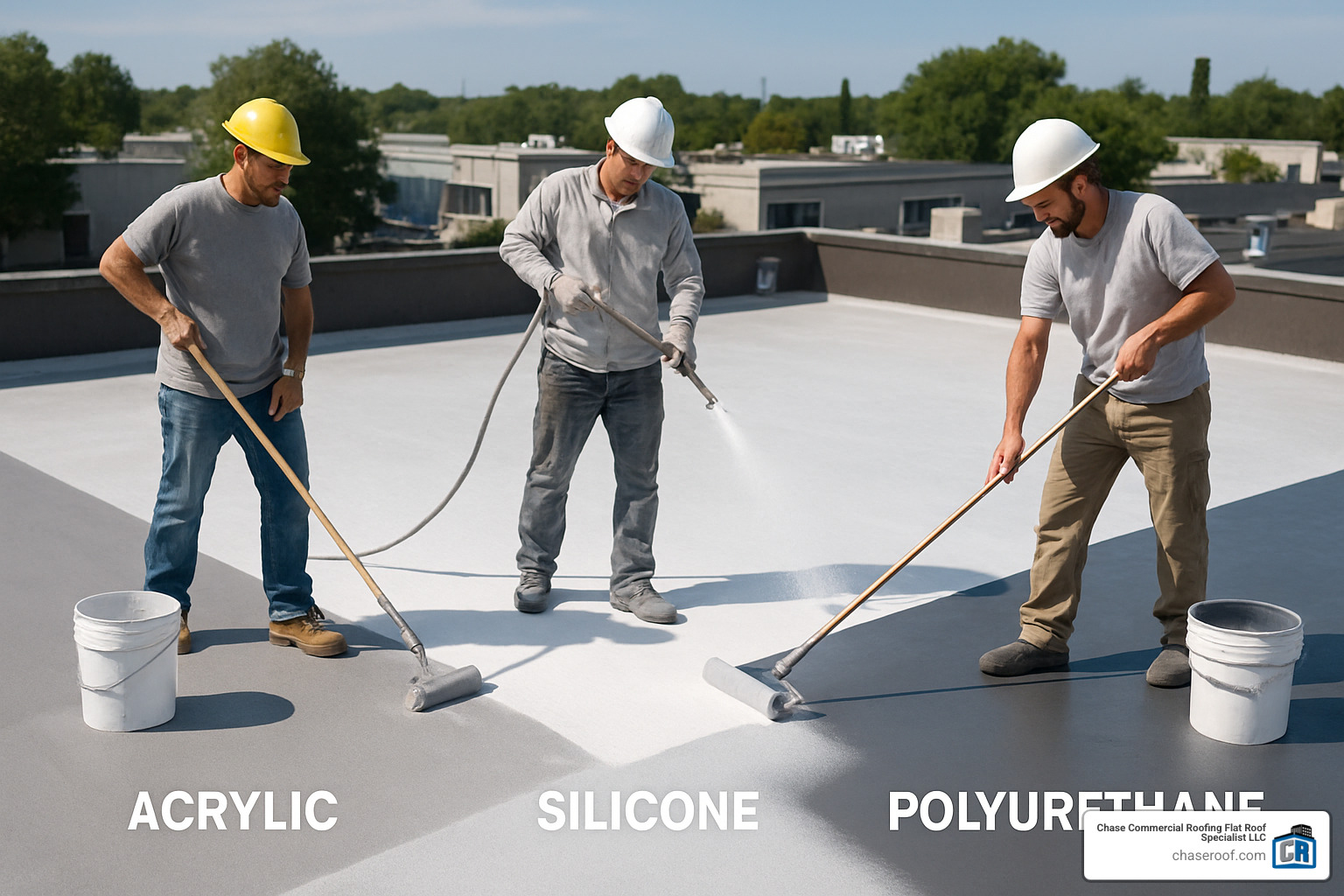
When it comes to protecting your commercial building, not all roof coatings are created equal. Each type brings its own unique strengths to the table—kind of like choosing the right tool for a specific job. Let me walk you through the options we regularly recommend to our New Jersey clients.
Acrylic vs. Silicone vs. Polyurethane
Think of acrylic coatings as your reliable, budget-friendly friend. Water-based and environmentally conscious, these coatings shine brightest when it comes to UV protection and reflectivity. With their ability to stretch 200-300%, they roll with your roof’s natural movements throughout New Jersey’s seasonal temperature swings.
Most building owners appreciate that acrylics won’t break the bank, typically running $1.50-$3.00 per square foot installed. They’re exceptionally good at bouncing sunlight away (up to 85% reflection) and maintain their color beautifully over time. The downside? They’re a bit particular about application conditions—temperatures need to be above 50°F with clear skies in the forecast. And if your roof tends to collect puddles after a heavy Woodland Park rainstorm, you might want to look elsewhere, as standing water is acrylic’s kryptonite. Under normal conditions, expect 7-10 years of solid performance.
Silicone coatings are the marathoners of the coating world. When ponding water is your nemesis (a common issue on many New Jersey commercial buildings), silicone stands its ground without complaint. These 100% solids formulations create an exceptionally durable membrane that bonds tenaciously to most roofing materials.
Yes, silicone comes with a premium price tag ($4.00-$6.00 per square foot installed), but many of our clients find the investment worthwhile. With remarkable elasticity (stretching up to 400%), superior weathering capabilities, and the ability to maintain flexibility even during harsh Jersey winters, silicone delivers impressive long-term value. Many applications can be completed in a single coat, and silicone tends to stay cleaner than acrylics over time. When properly maintained, you’re looking at 10-15+ years of protection.
For roofs that see heavy foot traffic or mechanical equipment maintenance, polyurethane coatings offer best durability. These systems often feature a tough aromatic base coat topped with an aliphatic layer that handles UV exposure beautifully.
Polyurethane systems sit at the high end of the cost spectrum ($5.00-$8.00 per square foot installed), but they’re the commercial equivalent of heavy-duty truck bed liners—virtually impervious to impacts, abrasion, and chemical exposure. They stand up well to ponding water, though they do require two-component mixing and contain higher VOCs than other options. The payoff? An impressive 15-20 year lifespan with proper maintenance.
For our commercial clients in Newark and Jersey City where rainfall can be heavy, we often recommend silicone coatings for flat roofs with drainage issues. Meanwhile, the metal roofs common in Paterson’s industrial areas typically perform exceptionally well with acrylic systems that balance performance and value.
Specialty & Emerging Chemistries
Beyond these mainstream options, several specialized formulations address unique roofing challenges:
Instant-Set Acrylic Formulations have been a game-changer for our New Jersey clients. These innovative coatings cure in minutes rather than hours, eliminating the wash-off risks that come with our region’s unpredictable weather patterns. When a surprise shower pops up on the radar, these formulations provide peace of mind that traditional coatings simply can’t match.
Fluid-Applied Asphaltic Rubber Membranes combine rubber’s flexibility with asphalt’s legendary waterproofing properties. Applied at thicknesses ranging from 20 to 200 mils, they create a seamless barrier capable of bridging substantial gaps and providing immediate waterproofing. They’re particularly valuable for older commercial roofs with multiple existing problems.
I’ve seen Butyl Rubber Coatings perform miracles on challenging projects. With the industry’s lowest moisture vapor transmission rates, premium butyl formulations maintain their impermeability even after intense UV and temperature testing. The ones we apply at Chase Commercial Roofing can withstand 9,000 hours of accelerated weather testing—translating to decades of real-world protection for your New Jersey commercial property.
For aging modified bitumen and built-up roof systems, SEBS Coatings (Styrene Ethylene Butylene Styrene) offer excellent waterproofing while still providing good reflectivity when formulated with aluminum or white pigments. They’re specifically engineered to breathe new life into these traditional roofing systems.
Not sure which roof coating is right for your commercial building? Our team at Chase Commercial Roofing provides free, no-obligation assessments to determine the ideal solution for your specific situation. Give us a call to schedule your consultation and find how the right coating can protect your investment for years to come.
Selecting the Right Coating for Your Roof Type
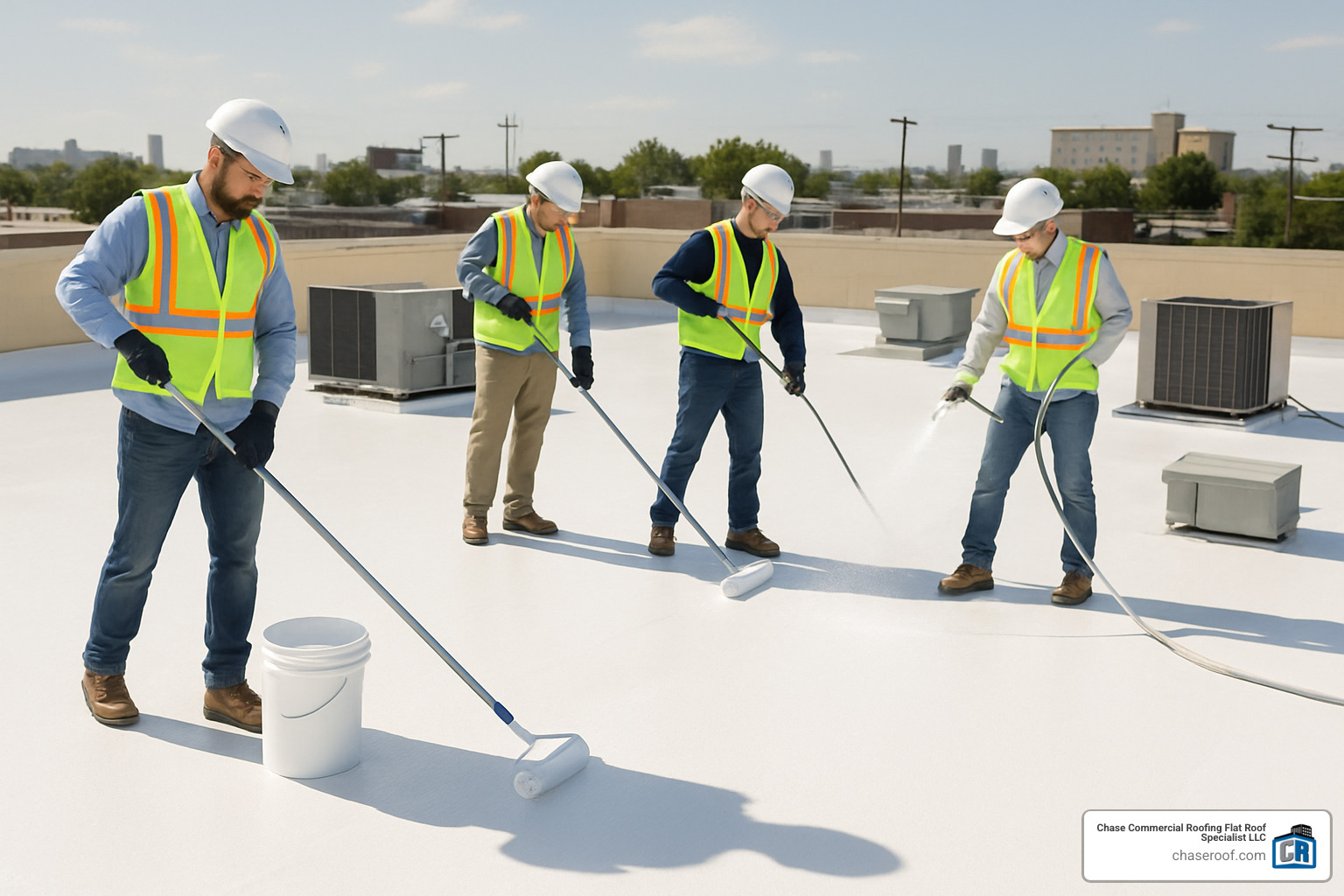
Choosing the perfect roof coating for your commercial building isn’t just about picking a product off the shelf. It’s like matching the right shoes to your outfit – everything needs to work together! Each roofing material has its own personality and quirks that require specific coating solutions.
Best Coatings for Flat & Low-Slope Roofs
If you’ve got a flat roof in New Jersey, you’re probably familiar with that dreaded phrase: “ponding water.” Those innocent-looking puddles that stick around for more than 48 hours after rain can be your roof’s worst enemy. They’re like unwanted houseguests who overstay their welcome and eat all your food!
For these water-prone situations, silicone coatings are truly the champions. They actually use moisture from the air to complete their curing process – talk about turning lemons into lemonade! In places like Hackensack where humidity can be high, silicone provides exceptional protection even when water decides to camp out on your roof.
If your flat roof has decent drainage but occasionally holds water, high-solids acrylic coatings (those with over 60% solids content) offer excellent performance at a friendlier price point than silicone. Think of them as the economical but reliable middle-ground option.
For older built-up roofing or modified bitumen surfaces, fluid-applied asphaltic rubber systems work wonders. They create a seamless waterproof layer that bridges existing seams and small cracks – essentially giving your aging roof a waterproof superhero cape!
In areas like East Rutherford where roof access might be challenging, we often recommend longer-lasting systems like silicone or polyurethane. These minimize how often you’ll need to have crews scrambling around on your roof for maintenance.
Want to explore your flat roof options in more detail? Check out our flat roof systems page for comprehensive information, or learn more about specific roof coating solutions we offer.
Matching Coatings to Single-Ply Membranes (EPDM/TPO)
Single-ply membranes present a unique coating challenge – think of it like trying to get paint to stick to a smooth plastic surface. The key word here is adhesion.
EPDM (rubber) roofs typically come in black, absorbing heat like a parking lot in August. Adding reflective roof coatings can dramatically cut your cooling costs while extending the membrane’s life. But there’s a catch – EPDM contains oils that can sneak to the surface and ruin your coating’s grip.
At Chase Commercial, we tackle this with a three-step approach: thorough cleaning with specialized cleaners, applying EPDM-specific primers that block those migrating oils, and selecting compatible coating systems (usually silicone or certain acrylics). For more details on working with these rubber roofs, visit our EPDM roofing page.
TPO membranes start out white and reflective, but like anything exposed to the elements, they lose their luster over time. Their smooth, somewhat waxy surface requires proper preparation with approved cleaners or rinseable primers. Sometimes we’ll even lightly abrade the surface to give the coating something to grab onto – similar to how sanding wood helps paint adhere better.
Our extensive experience with TPO roofing allows us to accurately assess when coating makes sense versus when replacement might be necessary. We won’t recommend coating if your membrane is too far gone – that would be like putting expensive tires on a car with a failing engine!
Metal & Concrete Roof Considerations
Metal roofs and rust go together like rainy days and traffic jams – inevitable but manageable with the right approach. When coating metal roofs, we focus on three critical areas: treating rust with inhibiting primers, reinforcing vulnerable seams and fasteners, and using highly elastic coatings (with 300%+ elongation) that can handle metal’s expansion and contraction dance.
Acrylic coatings typically provide the best value here, offering great adhesion, UV resistance, and reflectivity without breaking the bank. For severe rust situations, we use specialized rust-converting primers that transform the rust into a stable compound before coating application. It’s like magic, but it’s actually chemistry!
Learn more about our approach to metal roofing on our dedicated service page.
Concrete roofs present a different challenge altogether. You can’t exactly remove and replace a concrete roof deck, making coating the only viable restoration option. We focus on sealing hairline and non-structural cracks to prevent water from reaching and corroding the internal rebar. Alkali-resistant primers ensure proper adhesion, while high-stretch elastomeric coatings bridge existing and future cracks.
For these tough surfaces, we typically recommend high-build elastomeric acrylic or silicone coatings with fabric reinforcement at cracks and transitions – creating a seamless, waterproof membrane that moves with the building.
Spray foam roofs absolutely require protective coatings – it’s not optional. Unprotected foam turns orange under sunlight faster than a New Jersey tourist at the shore! This color change indicates rapid deterioration. We typically recommend silicone coatings for maximum UV protection, acrylics for good protection at lower cost, or specialized polyurethane coatings for high-traffic areas.
Have questions about which roof coating is right for your commercial building in New Jersey? Give Chase Commercial Roofing a call for a free estimate and personalized recommendation. Our Woodland Park team provides expert assessment and honest advice on the best coating solution for your specific roof type and condition.
Application & Maintenance Best Practices
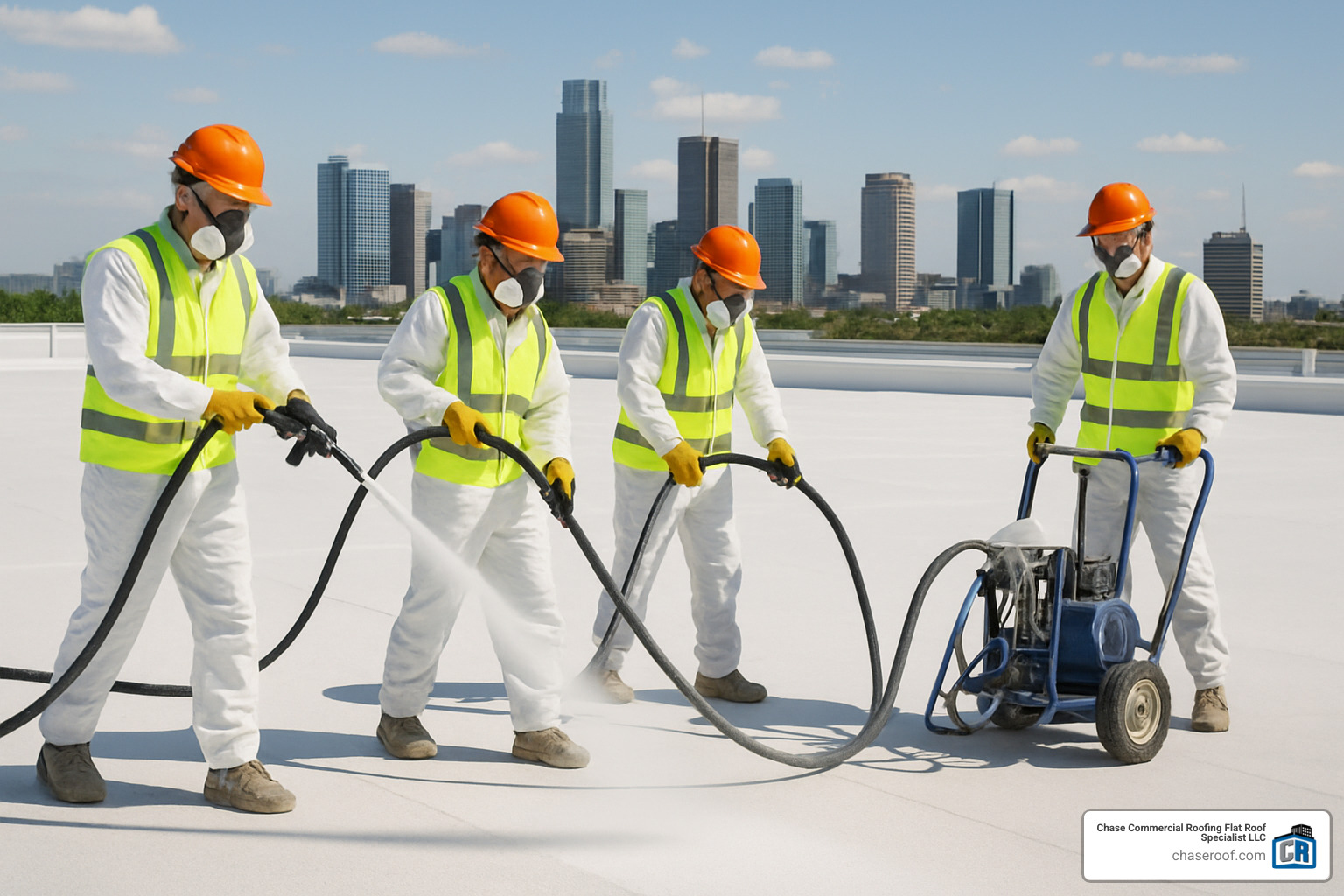
Even the highest quality roof coating will fail if it’s not properly applied. At Chase Commercial Roofing, we’ve seen too many building owners waste their investment with cut-corner applications. That’s why we follow a meticulous process that ensures your coating performs as promised for years to come.
Step-by-Step Coating Process
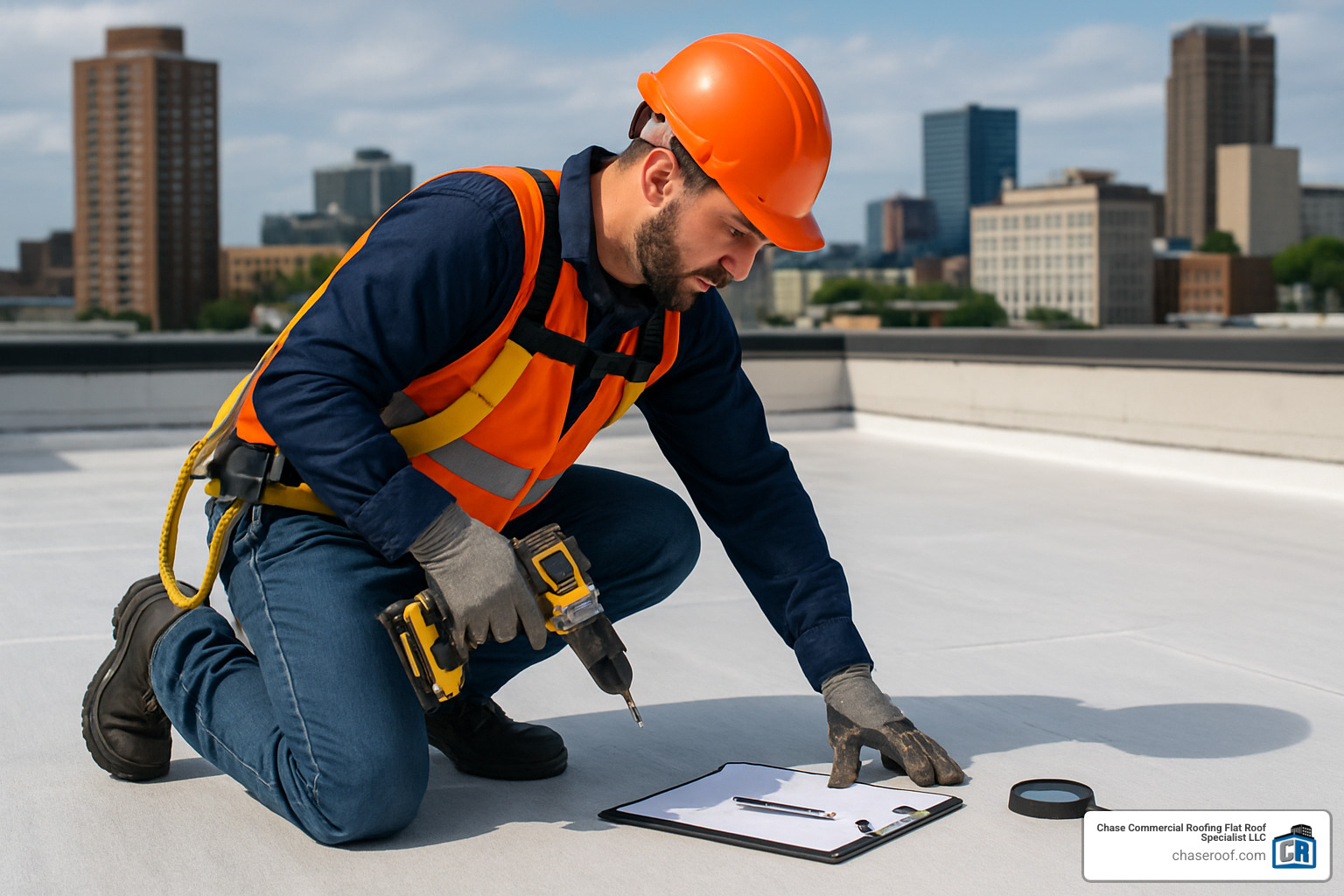
Before we open a single bucket of coating, we start with a comprehensive roof assessment. Think of it as a physical exam for your roof. We’ll conduct a moisture survey to find any trapped water hiding beneath the surface, take core samples to verify what we’re working with, and perform adhesion tests to ensure the coating will properly bond to your specific roof type.
Surface preparation is where many contractors cut corners, but it’s absolutely critical. “A coating is only as good as what it sticks to,” is something I often tell my clients. We thoroughly power wash using the right pressure and cleaning agents for your roof type. All dirt, oils, and biological growth like algae or mold must be completely removed, and the roof needs proper drying time before we move forward.
Next comes the repair phase. We address all existing issues – seam failures, loose fasteners, rusty areas, and damaged flashings. On metal roofs, we’ll replace or re-tighten fasteners. For single-ply membranes, we’ll reinforce seams with compatible mastics and fabrics. Every penetration and transition gets special attention.
Many substrates require primers for proper adhesion. We select the right primer based on your specific roof – rust-inhibiting primers for metal, bleed-blocking primers for asphalt roofs, adhesion promoters for single-ply membranes like TPO or EPDM, and alkali-resistant primers for concrete surfaces.
The base coat application provides the foundation of your new coating system. We apply it at the manufacturer-specified thickness (typically 12-20 wet mils), carefully monitoring coverage rates. Critical areas like seams and transitions receive embedded fabric reinforcement for added strength and durability.
After proper curing time, we apply the top coat perpendicular to the base coat direction. This crosshatch pattern ensures complete coverage with no thin spots. Throughout application, we use wet film thickness gauges to verify proper material application rates. Temperature and humidity conditions are carefully monitored, as they significantly impact cure times and performance.
Quality control completes our process. We measure dry film thickness at multiple points, inspect all details and transitions, and document everything photographically for warranty purposes. This attention to detail is why our roof coatings consistently outperform industry averages for longevity.
For buildings requiring commercial roof repair before coating, we ensure all underlying issues are properly addressed. Our team follows detailed commercial roof maintenance tips to maximize coating performance and longevity.
Post-Coating Care & Re-coat Cycles
Your newly coated roof isn’t maintenance-free – it needs regular care to perform its best. Think of it like maintaining your car – regular check-ups prevent major problems.
We recommend semi-annual professional inspections in spring and fall, with additional checks after severe weather events. These inspections help catch small issues before they become big problems. During these visits, we’ll clear debris that could damage the coating, ensure drains and scuppers are flowing properly to prevent ponding water, and document the roof’s condition for warranty purposes.
Keeping your roof coating clean is particularly important for maintaining reflectivity and energy savings. Buildings in high-pollution areas like Newark or Jersey City may need more frequent cleaning to maintain optimal performance. A simple gentle washing can restore significant reflectivity to a dirty coating.
Eventually, all coating systems will require reapplication. The timing varies by coating type – acrylics typically last 7-10 years, silicones 10-15 years, and polyurethanes 15-20 years. The good news is that recoating is typically less expensive than the initial application. Since the existing coating provides a compatible base, the preparation process is simpler and material requirements are often reduced.
One advantage of working with Chase Commercial Roofing is our detailed record-keeping. We’ll track your roof’s condition and alert you when it’s approaching recoating time, helping you budget appropriately and avoid emergency situations.
Frequently Asked Questions about Commercial Roof Coatings
How long do roof coatings last?
When clients ask me about the lifespan of roof coatings, I always explain that it’s similar to asking how long a car will last—it depends on what you buy and how well you maintain it!
Generally speaking, acrylic coatings will serve you well for 7-10 years, while premium silicone coatings can protect your building for 10-15 years. If you invest in a high-quality polyurethane system, you’re looking at an impressive 15-20 year lifespan with proper care.
The secret to longevity isn’t just in the material, though. Proper application thickness makes a world of difference—skimping on thickness to save a few dollars upfront typically leads to premature failure. And let’s face it, New Jersey weather isn’t always kind to our buildings! Extreme temperature swings, industrial pollution (especially in areas like Newark), and intense summer UV all challenge coating performance.
Here at Chase Commercial Roofing, we stand behind our work with warranty options extending up to 15 years on our premium coating systems. Some of our advanced butyl-rubber formulations have shown remarkable durability, with no significant degradation after 9,000 hours in accelerated weather testing chambers—that’s like fast-forwarding through decades of real-world exposure!
Do coatings really cut cooling bills in New Jersey’s summers?
“But we’re not in Florida or Texas—do reflective coatings really make a difference in New Jersey?” I hear this question frequently, and the answer is a resounding yes!
While our savings might not be quite as dramatic as those in the Sun Belt, our New Jersey clients consistently report 10-15% reductions in summer cooling costs after installing reflective roof coatings. Building managers often tell me about the noticeable improvement in comfort for employees working on top floors—those spaces that used to be unbearably hot in July and August.
The science is straightforward: studies in climate zones similar to ours have documented peak roof temperature reductions of up to 55°F with reflective coatings compared to uncoated surfaces. When your roof isn’t absorbing and transferring all that heat, your HVAC system doesn’t have to work as hard or cycle as frequently. Many facility managers find this extends the life of their cooling equipment—an additional savings beyond the direct energy benefits.
For larger commercial buildings in Passaic County and surrounding areas, these savings typically add up to thousands of dollars annually. Most of our clients achieve complete return on investment within 3-5 years through energy savings alone, not counting the extended roof life and reduced maintenance costs.
What mistakes void a coating warranty?
After three decades in the roofing business, I’ve unfortunately seen many building owners lose their warranty protection through avoidable mistakes. Let me share the most common warranty-voiding errors so you can protect your investment:
Poor surface preparation tops the list—skipping proper cleaning or rushing through prep work virtually guarantees adhesion problems. Think of it like painting over a dirty wall; it might look okay initially, but it won’t last.
Cutting corners on thickness is another frequent issue. Manufacturers specify minimum thickness requirements for a reason. When contractors apply coatings too thinly to save material costs, the warranty becomes worthless because the system can’t perform as designed.
Weather-related application problems occur when coatings are applied outside recommended temperature ranges, during rain, or in high humidity. Each coating chemistry has specific curing requirements, and ignoring them leads to problems that won’t be covered under warranty.
Unauthorized modifications happen more often than you might think. Having maintenance staff or unqualified contractors make repairs to a warranted coating system typically voids coverage immediately.
Neglecting required maintenance is an easy trap to fall into. Many warranties require documented periodic inspections and maintenance—skip these, and you might find yourself without coverage when you need it most.
Physical damage from foot traffic, equipment installation, or falling debris generally isn’t covered under standard material warranties. This is why we recommend walkway pads in high-traffic areas.
At Chase Commercial Roofing, we provide comprehensive warranty documentation and clear maintenance guidelines with every coating project. Our optional maintenance programs are specifically designed to keep your warranty intact while maximizing the lifespan of your roof coating investment.
Conclusion
Roof coatings represent one of the most cost-effective strategies for extending the life of commercial roofing systems while improving energy efficiency and reducing environmental impact. From the busy streets of Newark to the industrial landscapes of Paterson, New Jersey businesses are finding the remarkable benefits of these protective systems.
The secret to successful coating application isn’t just in the product—it’s in the process. Proper system selection, meticulous preparation, and expert installation make all the difference between a coating that lasts for years and one that fails prematurely. With so many coating technologies available, each with their own unique strengths and ideal applications, partnering with experienced professionals isn’t just helpful—it’s essential.
At Chase Commercial Roofing Flat Roof Specialist LLC, we don’t just apply coatings—we provide solutions. Our team brings decades of hands-on experience with commercial roof coatings to every project we undertake. Our certified technicians have installed millions of square feet of coating systems throughout New Jersey, always staying current with the latest application techniques and product innovations.
We understand that your building is unique. The coating system that works perfectly for a retail center in Jersey City might not be ideal for a manufacturing facility in East Rutherford. That’s why we tailor our recommendations to address your specific challenges, whether you’re battling persistent ponding water, dealing with aging metal panels showing signs of rust, or managing a deteriorating single-ply membrane.
Our commitment doesn’t end when the coating cures. We provide comprehensive maintenance programs designed to maximize your investment and ensure your coating system delivers long-term performance and protection for years to come.
Ready to explore how roof coatings can transform your commercial property? Contact our Woodland Park team today for a free, no-obligation assessment and estimate. We provide 24/7 emergency service and serve businesses across New Jersey with the reliable, high-quality workmanship that has made us the region’s trusted roof coatings specialists.
Call us today to schedule your free commercial roof inspection and find the protection, reflection, and perfection that a professional roof coating system from Chase Commercial Roofing can provide for your Woodland Park business.

