


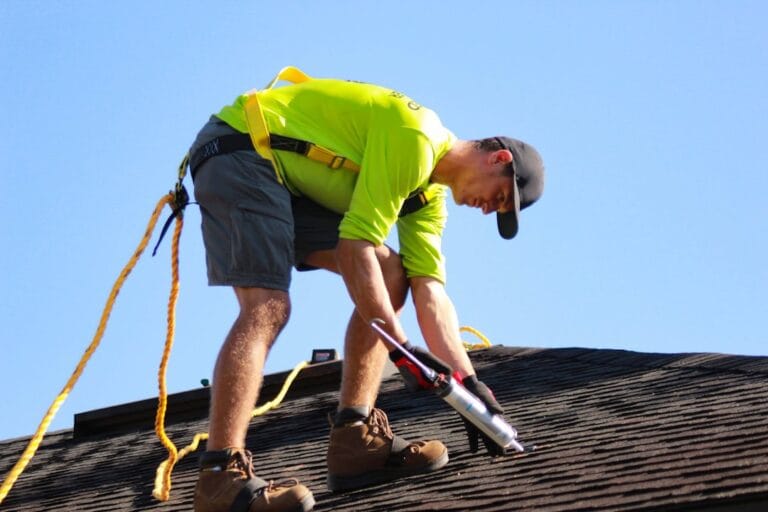
Why Asphalt Flat Roof Problems Can’t Wait
Asphalt flat roof repair is one of the most critical maintenance tasks for New Jersey commercial properties. When your roof starts showing signs of wear, every day you wait can mean more water damage, higher repair costs, and potential business disruption.
Quick Answer: Essential Asphalt Flat Roof Repair Steps
1. Inspect – Look for cracks, blisters, ponding water, and loose gravel
2. Clean – Remove debris and dry the damaged area completely
3. Patch – Apply roofing cement, embed fiberglass mesh, seal edges
4. Protect – Add gravel or reflective coating for UV protection
5. Monitor – Schedule follow-up inspections to prevent future issues
Asphalt flat roofs are popular on commercial buildings across New Jersey because they’re cost-effective and durable. But they face unique challenges from our harsh winters, heavy spring rains, and intense summer heat.
A properly maintained asphalt flat roof can last 20-25 years, but small problems can quickly become expensive disasters if ignored. Most asphalt flat roof repairs cost $5-10 per square foot when caught early, but full replacement can run $15,000-30,000 for a typical commercial building.
Many common issues like small cracks, blisters, and minor leaks can be fixed with the right approach. Some repairs are suitable for property managers with basic skills, while others require professional expertise to avoid costly mistakes.
I’m John Chase, President of Chase Commercial Roofing Flat Roof Specialist LLC, and I’ve been solving asphalt flat roof repair challenges across New Jersey for over 30 years. From small patches in Newark to complete roof overhauls in Hackensack, I’ve seen how proper repair techniques can extend roof life and save property owners thousands in replacement costs.
Asphalt flat roof repair terminology:
– flat roof calculator
– replace flat roof
Most Common Asphalt Flat Roof Problems

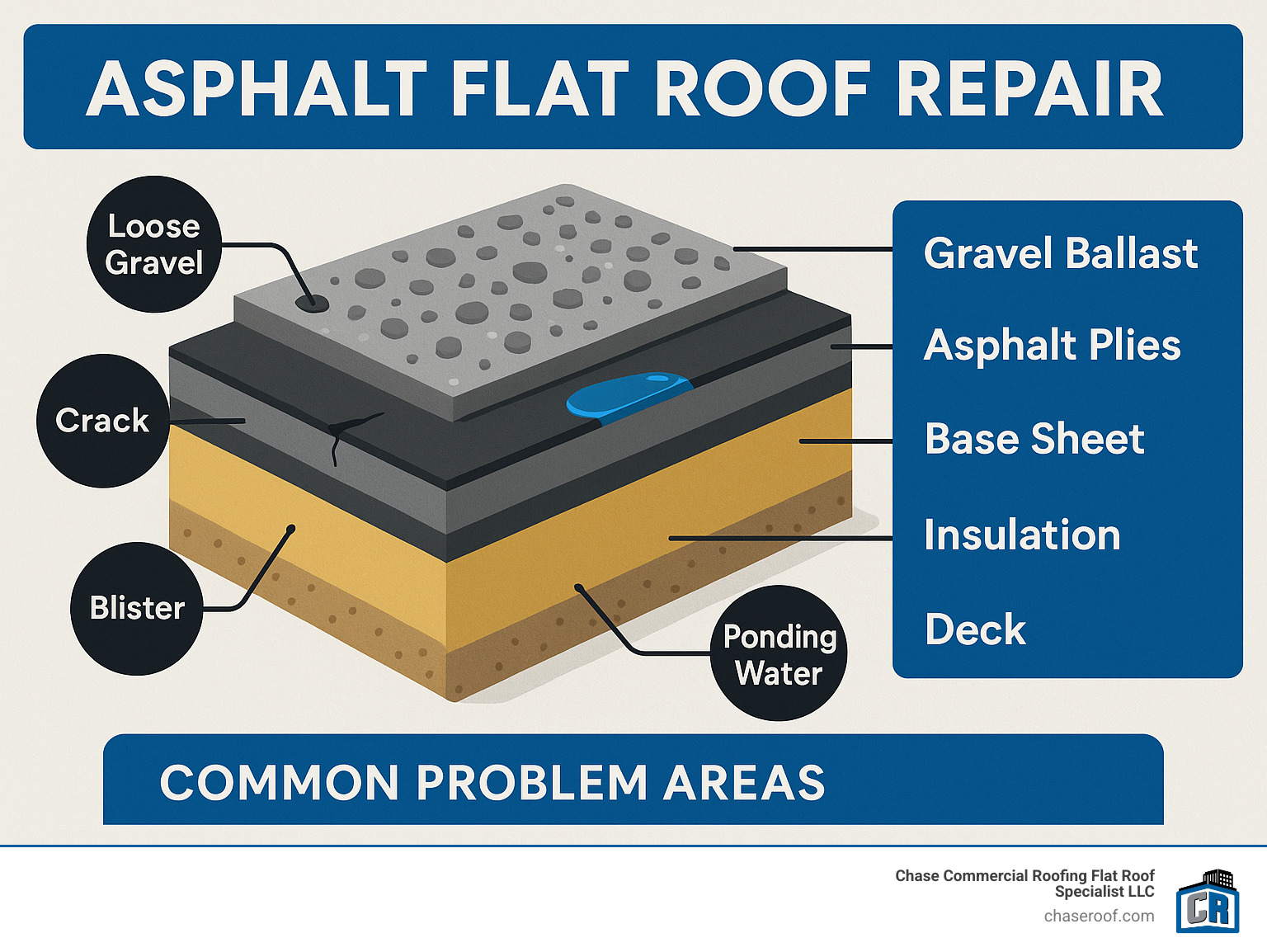
After three decades of commercial roofing in New Jersey, I can confirm that about 90 % of service calls come from just six issues:
- Blisters & bubbles – moisture trapped between layers expands during our freeze-thaw cycles.
- Cracks & splits – UV exposure makes asphalt brittle, letting water in through hairline openings.
- Ponding water – 48 + hours of standing water rapidly degrades the membrane and even the deck.
- Loose or missing gravel – gravel shields the roof from UV and wind; without it, deterioration speeds up.
- Drainage failure – clogged drains and damaged scuppers trigger most of the problems above.
- General UV aging – the sun quietly bakes oils out of asphalt every summer.
How to Spot Trouble Early
Be a roof detective instead of a fire-fighter:
- Water stains on ceiling tiles mean a breach somewhere above.
- Soft spots underfoot suggest saturated insulation—time to call a pro.
- Drips hours after rain often indicate hidden drainage issues.
Inspect twice a year—after winter and before hurricane season—and review our guide on how to identify roof leaks for additional clues.
Safety first: if you see structural sagging or feel uneasy up there, Chase Commercial Roofing offers 24/7 emergency roof repair anywhere in Woodland Park and beyond.
Tools, Materials & Safety Gear You’ll Need
Getting your asphalt flat roof repair project right starts with having the proper tools and materials before you climb onto the roof. After 30 years of commercial roofing work across New Jersey, I’ve learned that preparation prevents both poor results and dangerous situations.
The foundation of any successful repair is high-quality roofing cement. You’ll want plastic roofing cement for most general repairs since it stays flexible through our New Jersey temperature swings. For built-up roof systems, asphalt-based cement works better, while modified bitumen roofs need their own specialized cement.
Fiberglass roofing mesh acts as reinforcement for your patches, distributing stress across a wider area. You’ll also need modified bitumen patches or compatible membrane material that matches your existing roof system. A good roofing primer ensures better adhesion, especially on older surfaces.
Your tool kit should include a sharp utility knife with plenty of extra blades, a trowel for spreading cement smoothly, and a stiff brush for cleaning surfaces. A measuring tape helps you cut accurate patches, while chalk lets you mark damaged areas clearly.
Safety isn’t optional – it’s the difference between a successful repair and a trip to the emergency room. An OSHA-approved safety harness with proper anchor points is essential for any roof work. Non-slip safety shoes with good tread prevent slips on gravel surfaces, while work gloves protect your hands from rough materials and cement.
Don’t forget safety glasses and a hard hat. Even small pieces of gravel can cause serious eye injuries when you’re scraping or cleaning.
Weather timing makes or breaks your repair. Never attempt asphalt flat roof repair when the roof is wet, icy, or during high winds. The ideal conditions are dry weather with temperatures above 55°F and no rain expected for at least 48 hours.
Sourcing Quality Repair Supplies
Not all roofing materials work together. I’ve seen countless failed repairs because someone grabbed whatever was cheapest at the hardware store instead of choosing compatible materials.
Roofing cement selection depends entirely on your roof type. Plastic roofing cement stays flexible and works great for general repairs, while asphalt-based cement bonds better with built-up roof systems. Modified bitumen roofs need their own specialized cement.
The patch material must match your existing roof system or you’re setting yourself up for failure. Built-up asphalt roofs need asphalt-saturated felt patches, while modified bitumen systems require matching SBS or APP membrane patches.
Cost considerations matter, but so does longevity. A small crack repair might cost you $50-100 in materials and take 2-4 hours of your time, while our professional repair runs $300-500 but includes labor, proper materials, and a warranty.
For detailed guidance on selecting materials that will actually work with your roof system, check out our comprehensive guide on what are the best materials for flat roof repairs.
If you’re feeling overwhelmed by material choices or safety concerns, Chase Commercial Roofing provides commercial roof repair services throughout the Woodland Park area. We offer free estimates and can help you determine whether DIY repair makes sense for your specific situation – call today to schedule your appointment!
Asphalt Flat Roof Repair: Step-by-Step Fixes That Last
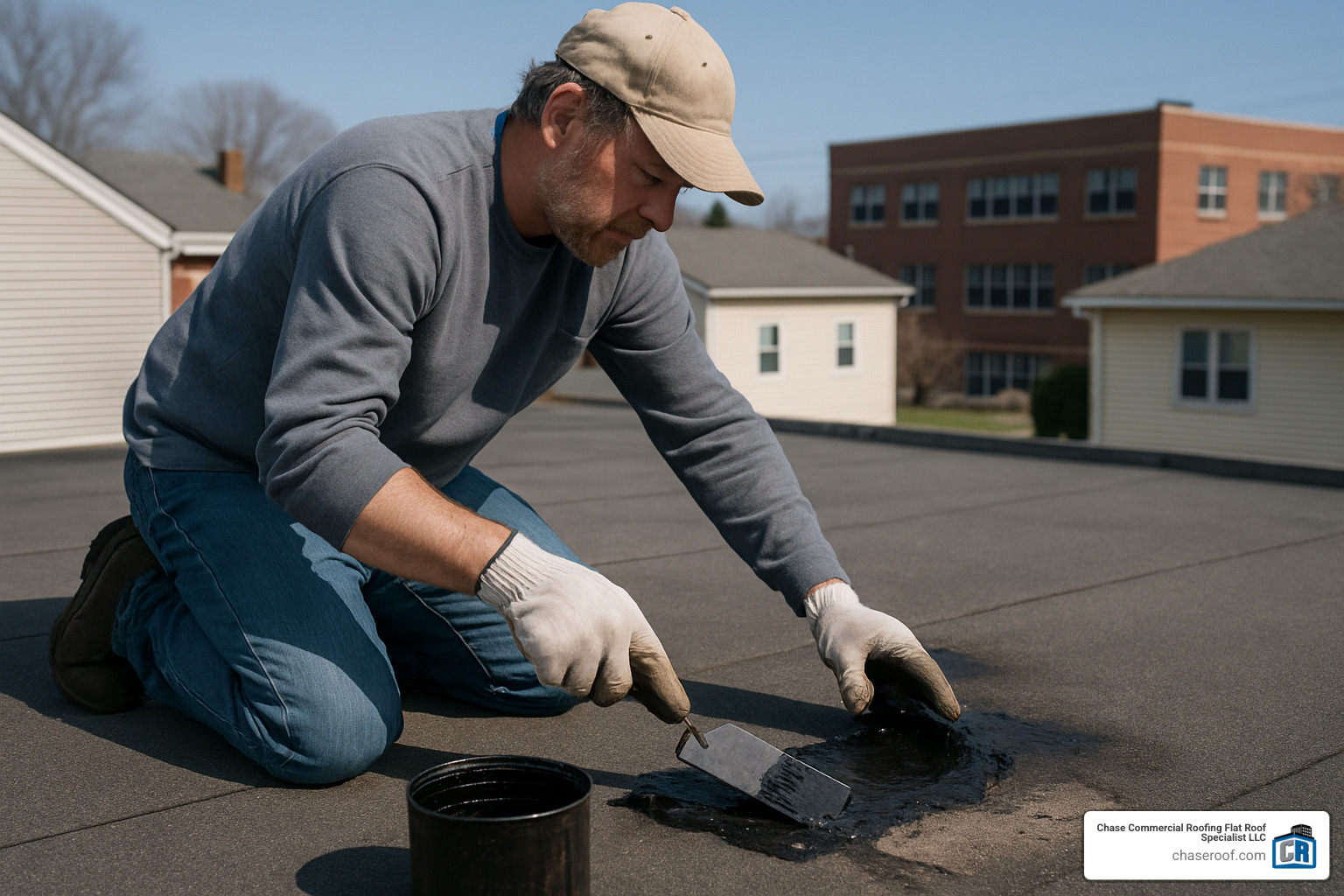
Great repairs start with thorough surface prep—clean, dry, and mark the area at least 6 inches beyond visible damage. Rushing this step is why many DIY patches fail.
Small Cracks & Pinholes
- Wire-brush the crack, widen to 1/8 inch, and wipe clean.
- Trowel on 1/8 inch of compatible roofing cement 6 inches past the crack.
- Embed fiberglass mesh, add a second cement layer, and press matching gravel into the surface.
Done properly, this 15-minute fix can last 5–10 years and costs just a few dollars in materials.
Blisters & Delaminations
- Cut an X through the top layer only.
- Fold flaps back, blot everything completely dry.
- Butter each flap with cement and press flat.
- Reinforce with mesh and a finish coat of cement, then re-gravel.
Larger Damaged Sections
For areas bigger than a pizza box:
- Chalk a border 6 inches past damage and cut out failed layers.
- Confirm the deck is sound; prime if the manufacturer requires.
- Install a modified-bitumen patch that fits the opening, roll it tight, and seal edges.
- Add a second, oversized patch (the double-patch method) for redundancy.
Restoring Drainage
- Clear every drain and scupper—often the only fix you need.
- Persistent low spots may require tapered insulation; that’s best left to professionals. Learn more on our roof coatings and flat roof systems pages.
These condensed steps handle 75 % of common issues. For anything involving saturated insulation, structural concerns, or more than 25 % roof area, schedule a free estimate with our commercial roof repair team.
DIY vs. Professional Help & Budget Planning
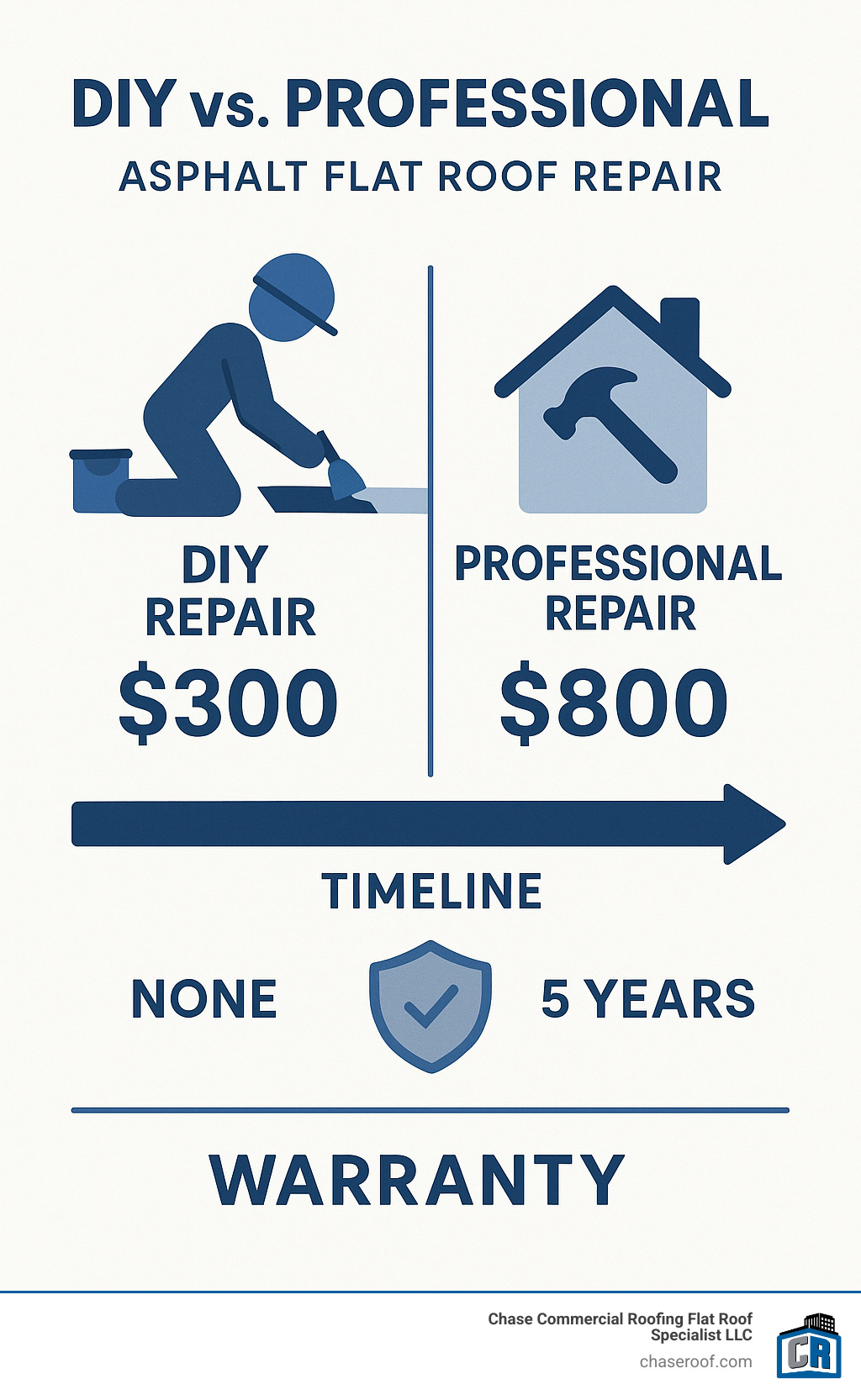
Minor jobs—like a single crack or blister smaller than a dinner plate—often run $3-8 per sq ft in materials if you’re handy. Our professional repair for the same area averages $300-600, but that includes commercial-grade materials, a watertight warranty, and full inspection of underlying causes.
Remember: a cheap fix that fails in a year really costs double. Use our flat roof calculator for realistic numbers, and review built-up roofing longevity research showing pro repairs last 2-3 × longer.
When to Call a Roofer
- Sagging deck or spongy walk areas
- Multiple leaks that hint at system-wide failure
- Roofs higher than two stories or near electrical lines
- Damage exceeding 25 % of surface (time for a commercial roof replacement)
Chase Commercial Roofing offers 24/7 service across Passaic, Newark, Paterson, Jersey City, Hackensack, East Rutherford and our home base of Woodland Park. Get a free estimate today and see why we’re New Jersey’s go-to team for commercial roofing services.
Maintenance Hacks to Extend Roof Life
The secret to getting decades of service from your asphalt flat roof repair investments? Smart maintenance that prevents problems before they start. After 30 years in the business, I’ve seen roofs that should have failed at 20 years still going strong at 35 – all because of consistent, thoughtful care.
Prevention truly is cheaper than cure. We’ve developed a proven maintenance program that routinely extends asphalt flat roof life from the typical 20-25 years to well over 30 years.
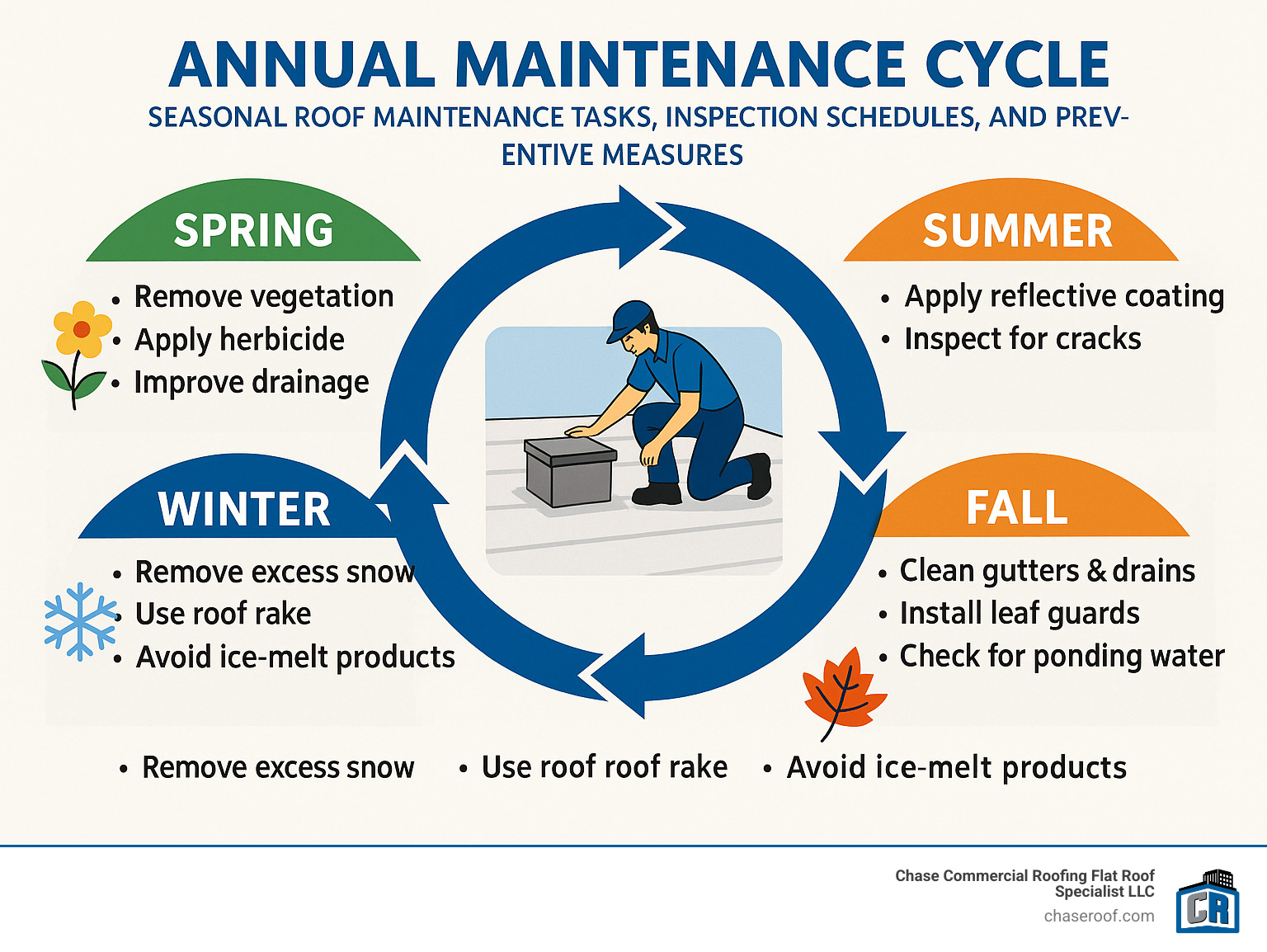
Your semi-annual inspection schedule should become as routine as changing your HVAC filters. Spring inspections in March or April let you assess winter damage, clear accumulated debris, and test drainage systems before heavy spring rains arrive. Fall inspections in September or October prepare your roof for harsh New Jersey winters while addressing any issues that developed over the summer.
Between those major inspections, monthly quick walks across your roof can catch problems while they’re still small. Look for new cracks, test that drains flow freely, and remove debris before it builds up.
Drainage maintenance is absolutely critical because clogged drains are the number one cause of flat roof failure. During leaf season, check drains monthly and clear any blockages immediately. Installing drain screens or leaf guards saves countless hours of maintenance.
Reflective coating applications every 5-7 years work like sunscreen for your roof. These coatings reduce UV damage to asphalt membranes, lower roof surface temperatures by 50-80°F, improve your building’s energy efficiency, and seal minor cracks before they become leaks. For detailed information about coating options that work best in New Jersey’s climate, visit our roof coatings page.
New Jersey winters demand smart snow removal practices. Remove snow when accumulation exceeds 2 feet, but always use plastic shovels – never metal ones that can damage your membrane. Leave 1-2 inches of snow to protect the roof surface, and never use salt or ice melt products that can deteriorate asphalt.
Vegetation control might seem minor, but plants on your roof spell trouble. Those innocent-looking weeds have roots that can penetrate membranes and cause serious leaks. Remove all vegetation immediately, apply roof-safe herbicide to prevent regrowth, and improve drainage to eliminate the standing water where plants love to grow.
The best maintenance programs are customized to your specific roof type and building needs. At Chase Commercial Roofing, we design comprehensive maintenance programs that fit your budget and schedule. Our flat roof solutions include preventive maintenance that keeps small issues from becoming expensive emergencies.
Frequently Asked Questions about Asphalt Flat Roof Repair
After thirty years of handling asphalt flat roof repair projects across New Jersey, I’ve heard just about every question property managers can ask. Here are the most common concerns we address, along with practical answers based on real-world experience.
Can I repair my flat roof in winter?
Winter repairs are tricky, but sometimes you don’t have a choice. When water is pouring through your ceiling in January, you need solutions that work in cold weather.
The temperature challenge is real. Most roofing cements and adhesives need temperatures above 40°F to cure properly. Below that threshold, materials simply won’t bond correctly, and your repair will likely fail within weeks or months.
For emergency situations, we’ve developed specialized techniques that work in New Jersey winters. We use cold-applied cements formulated for low temperatures, temporary membrane patches that are mechanically fastened rather than glued, and sometimes set up heated work areas for critical repairs that absolutely can’t wait for spring.
The smart approach is focusing on interior protection during active winter leaks – strategic bucket placement, temporary tarps, and moisture barriers to prevent further damage to your building contents and structure. Then schedule proper repairs as soon as temperatures consistently stay above freezing.
What’s the typical lifespan after a quality patch?
This is probably the question I get asked most often, and the honest answer is “it depends” – but I can give you realistic expectations based on thousands of repairs we’ve completed.
Small crack repairs done correctly with quality materials typically last 5-10 years. The key word here is “correctly” – proper surface preparation, compatible materials, adequate curing time, and UV protection all make the difference.
Blister repairs and medium-sized patches usually give you 7-15 years of service when performed professionally. These are more complex repairs because you’re dealing with moisture issues and multiple membrane layers.
Large section replacements can last 15-20 years or more, essentially giving you new roof performance in that area. When we replace significant portions of membrane, you’re getting the same materials and installation quality as a complete roof replacement.
What kills repairs early? Poor surface preparation is the number one culprit. Rushing the job, using incompatible materials, inadequate drainage, and skipping follow-up maintenance can cut repair lifespan in half.
How do I prevent ponding water for good?
Ponding water keeps me up at night because I know it’s slowly destroying roofs across New Jersey. The good news is that most ponding problems can be solved permanently with the right approach.
Start with the obvious solutions – clear all drains and scuppers of debris, and do this monthly during leaf season. You’d be amazed how many “drainage problems” disappear once water can actually reach the drains. Install drain screens to keep debris out, and consider adding more drain outlets if your current system is overwhelmed during heavy rains.
For persistent ponding areas, roof coatings can fill minor low spots while providing UV protection. This works well for shallow ponding (less than an inch deep) but isn’t a solution for major drainage issues.
The permanent solution often involves installing tapered insulation to create proper slope – minimum 1/4 inch per foot toward drains. This is typically a job for professionals because it requires calculating drainage patterns, removing existing membrane, installing precisely tapered insulation boards, and reinstalling the waterproof membrane.
For comprehensive solutions to persistent flat roof drainage issues, our flat roof solutions page covers the full range of options available for New Jersey commercial properties.
Conclusion
Asphalt flat roof repair success comes down to three simple truths I’ve learned over 30 years in the New Jersey commercial roofing business: catch problems early, use quality materials, and know when to call for help.
The small leak you notice today won’t magically fix itself. That $300 crack repair we can handle this week might become a $15,000 roof replacement if you wait until next season. I’ve seen it happen countless times across Passaic County – property owners who thought they could “ride it out” until spring, only to face emergency repairs during the worst possible weather.
Quality materials aren’t negotiable when it comes to lasting repairs. We use commercial-grade materials that are designed to handle New Jersey’s harsh weather cycles – from blazing summer heat to brutal freeze-thaw winters.
Safety should never be compromised. A serious fall costs infinitely more than professional repair services, not to mention the human cost that can’t be measured in dollars.
The DIY approach works great for small cracks, minor blisters, and routine maintenance when you have the right tools and knowledge. But when you’re dealing with structural issues, extensive damage, or warranty concerns, that’s when professional expertise becomes essential.
At Chase Commercial Roofing Flat Roof Specialist LLC, we’ve built our reputation on reliable, high-quality workmanship across New Jersey’s commercial properties. From small office buildings in Woodland Park to large warehouses in Newark, we’ve solved every type of flat roof challenge you can imagine. Our 24/7 emergency service means you’re never alone when disaster strikes, and our comprehensive warranties give you peace of mind that the job is done right.
Your roof is protecting everything inside your building – your equipment, inventory, employees, and customers. When that protection fails, everything else is at risk. That’s why we offer free estimates and can usually schedule inspections within 24 hours.
Whether you need emergency repairs, routine maintenance, or are considering complete commercial roof replacement, we have the expertise and equipment to handle projects of any size. Our comprehensive commercial roofing services cover everything from basic repairs to complete system installations.
Don’t gamble with your property’s protection. Small problems become big expenses when ignored, but they’re usually manageable when addressed promptly. We’re here to help property owners throughout New Jersey make smart decisions about their roofing investments.
Ready to get started? We provide free estimates for all commercial roof repair projects, and if you’re in our local service area, you can learn more about our roofers near me in Woodland Park services.
Call Chase Commercial Roofing today to schedule your appointment and protect your investment with expert asphalt flat roof repair services you can trust.

