


Understanding the Problem: Why Industrial Roofs Leak
An industrial roof leak repair is more than a nuisance; it’s a threat to your entire operation. Your roof protects all your assets, and a single leak can disrupt business, damage property, and create safety hazards.
If you’re dealing with an industrial roof leak, here’s a quick overview:
- Common Causes: Aging materials, poor installation, weather damage, clogged drains, and damaged flashing.
- Signs to Watch For: Water stains, drips, musty odors, or visible roof damage.
- Immediate Steps: Contain water, move valuables, and call a professional roofer immediately.
Understanding these issues is key to protecting your investment. For expert assistance with your industrial roofing needs, visit Chase Commercial Roofing.
I’m John Chase, President of Chase Commercial Roofing Flat Roof Specialist LLC. With over 30 years of experience in industrial roof leak repair and flat roofing systems, I know how critical effective solutions are. This guide covers everything from identifying leaks to permanent repair and prevention.
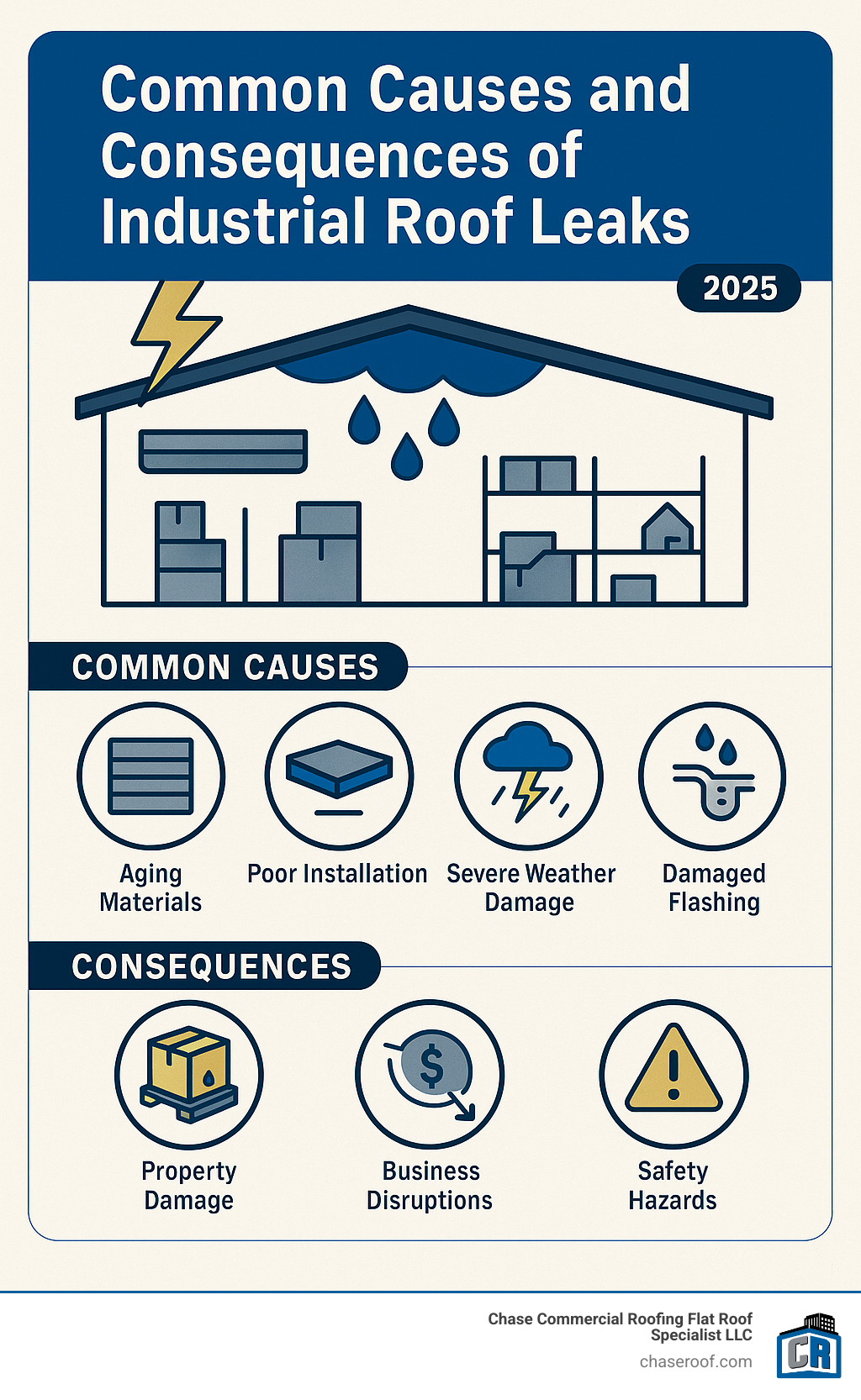
A leak is often the result of cumulative issues. Recognizing the root cause is the first step toward an effective repair. Think of your industrial roof as a complex shield; when it fails, it’s usually a consequence of stress, age, or improper care.
Common Causes of Roof Leaks
From our experience across New Jersey, we’ve identified several recurring culprits behind industrial roof leaks. Pinpointing the primary cause is crucial for a lasting industrial roof leak repair.
- Poor Installation: A leading cause of leaks, accounting for 60-70% of problems. Improperly sealed seams, inadequate flashing, or poor initial workmanship can lead to premature failure and standing water.
- Damaged Roof Membrane: The primary waterproofing layer can develop blisters, cracks, or punctures from wear, foot traffic, or debris, creating vulnerabilities.
- Punctures and Open Roof Penetrations: Vents, pipes, and HVAC units create openings in the roof. If their seals degrade, they become direct pathways for water. Punctures from debris or loose screws also compromise the membrane.
- Fallen Debris from Trees and Storms: Accumulated leaves, twigs, and other debris can trap moisture, promote vegetation growth, and cause corrosion on your roof’s surface, leading to damage and leaks.
- Aged Materials: Roofs last 15-30 years, but buildings last much longer. As roofing materials age, they become brittle and crack, losing their waterproofing ability.
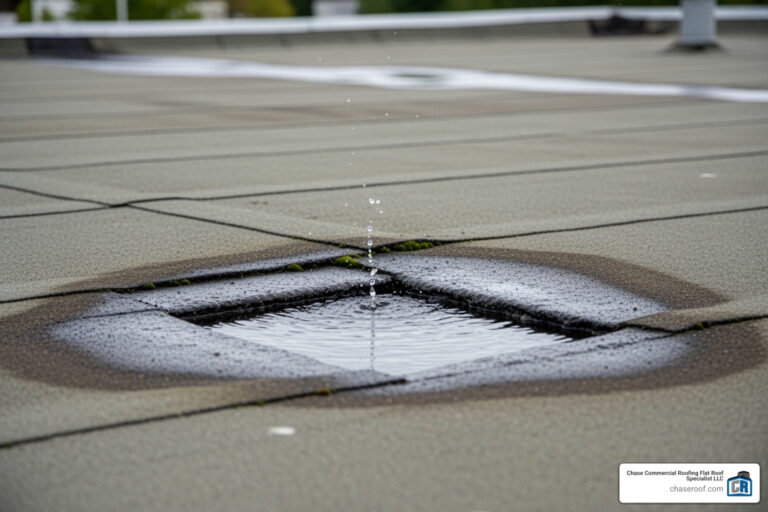
- Clogged Drains and Ponding Water: When drains clog, water pools on the roof (“ponding”). The excess weight and constant moisture stress the structure and degrade the membrane, leading to leaks.
- Damaged Flashing: Flashing seals joints around chimneys, skylights, and walls. If this material is damaged, cracked, or improperly installed, it creates a direct entry point for water.
- Heavy Foot Traffic: Excessive or careless foot traffic from maintenance crews can cause micro-tears, punctures, or damage to the membrane and underlying insulation.
- Weather Damage: Constant exposure to sun, rain, wind, and temperature changes gradually degrades roofing materials, causing cracks and damaged seams.
Telltale Signs of a Leak
Sometimes a leak is obvious, but other times it’s subtle. Being vigilant can save you money and headaches. For more detailed guidance, learn How To Identify Roof Leaks.
Interior Signs of a Leak:
- Water Stains on Ceilings or Walls: The most common sign. Look for discoloration or streaks. The stain may not be directly below the leak, as water can travel.
- Dripping Water or Puddles on the Floor: An undeniable sign that water has breached your roof. Place buckets immediately.
- Musty Odors: A persistent damp smell indicates hidden moisture and potential mold growth, a serious health and structural concern.
- Bubbling or Peeling Paint: If paint on walls or ceilings starts to bubble or peel, it’s a strong sign of trapped moisture.
- Damaged Insulation: Saturated insulation becomes compressed and moldy, reducing its effectiveness. Sagging ceiling panels are a key indicator.
Exterior Signs of a Leak (Best identified by a professional):
- Blisters in the Membrane: Trapped moisture or air can cause the membrane to lift and form bubbles, which are weak points prone to rupture.
- Cracked Seams: The seams where membrane sections are joined are common failure points. Look for separation or cracking.
- Ponding Water: Standing water on the roof is a significant risk factor that will eventually lead to leaks if not addressed.
- Damaged Flashing: Visually inspect flashing for cracks, tears, rust, or signs of separation.
- Missing or Damaged Components: Look for missing fasteners, damaged vent covers, or compromised areas around rooftop equipment.
Immediate Response: What to Do When You Find a Leak
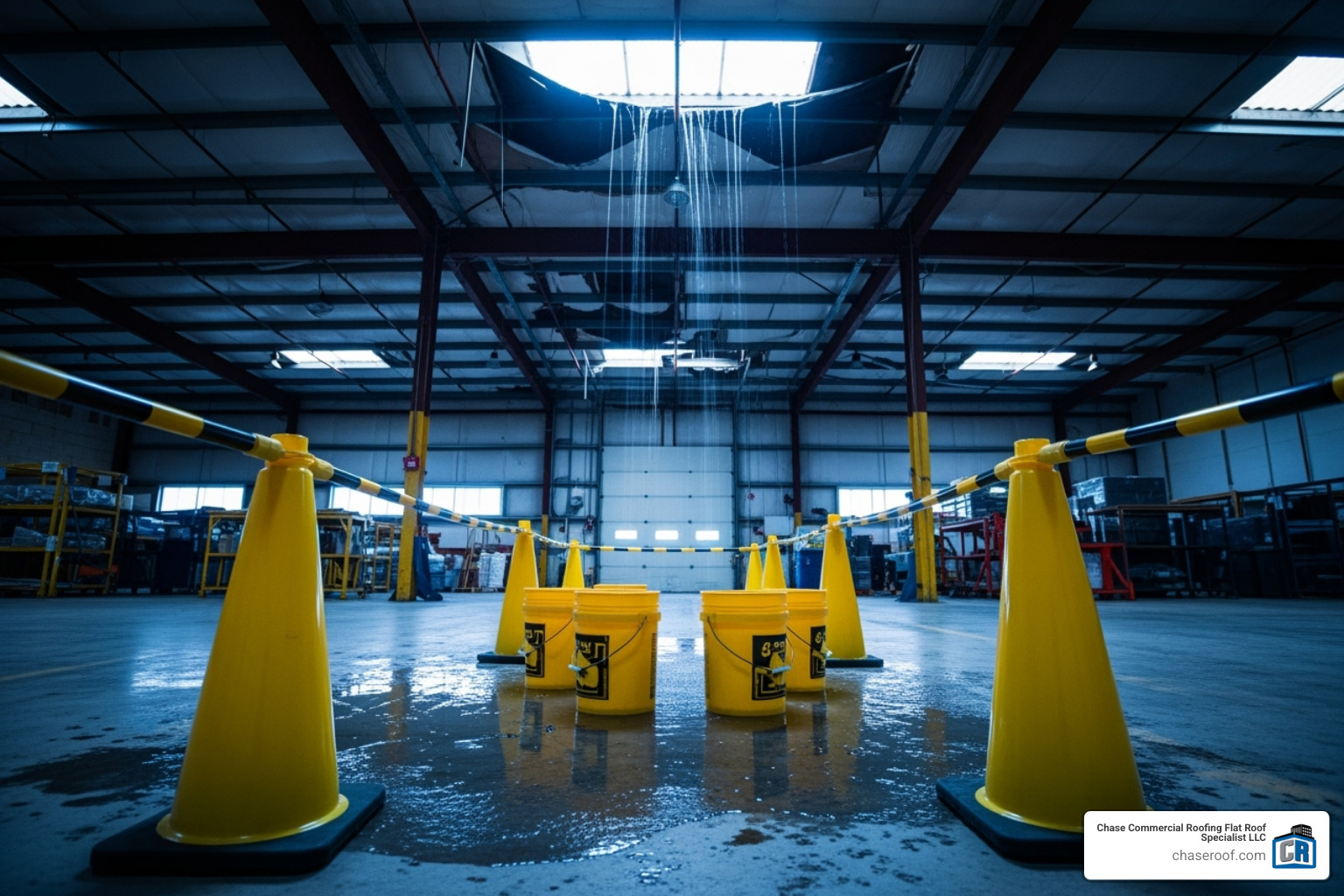
Finding a leak requires a swift, correct response to minimize damage. When we get calls for emergency leak repairs, our priority is to secure the area and prevent further harm. Safety for your team and assets should always be the top priority.
Step 1: Ensure Safety and Mitigate Damage
Don’t panic. These immediate steps can significantly reduce the impact on your operations and assets.
First, contain the water. Use buckets or containers to catch drips. If water is spreading, use tarps to funnel it. Empty containers regularly to prevent overflow.
Next, move equipment and inventory if it’s safe. Relocate valuable machinery and products away from the water. This can prevent damage far more costly than the roof repair itself.
Safety is paramount, so cordon off the area immediately. Use safety cones or tape to clearly mark the wet zone and prevent slip hazards.
Finally, document the damage. Take photos and videos of the leak and any affected assets for insurance claims and for your contractor. Note the time and date.
Step 2: Emergency Measures and Professional Contact
Once the immediate situation is under control, it’s time to call in the experts.
Do not send untrained personnel onto the roof. It’s a significant safety risk. Slippery, unstable surfaces and heights can cause serious injury. Leave roof access and assessment to trained professionals.
While you wait for help, a temporary seal using waterproof tape from the inside might slow a minor drip, but this is not a substitute for a proper repair.
Don’t wait. Call a professional roofing team that offers 24/7 emergency response right away. Time is of the essence. A rapid response can be the difference between a minor repair and extensive structural damage. Our crews are often on-site within a couple of hours for urgent situations in service areas like Woodland Park, Newark, or Jersey City.
Solutions for Industrial Roof Leak Repair
Once the emergency is handled, the real work begins. A permanent industrial roof leak repair goes beyond a simple patch. The right solution depends on your roofing system, the extent of the damage, and the cause of the leak.
Temporary vs. Permanent Fixes
It’s crucial to understand the difference between a quick fix and a lasting solution. The table below compares them:
| Feature | Temporary Solutions (e.g., Tarping, Caulk) | Permanent Solutions (e.g., Professional Patching, Membrane Replacement, Coating) |
|---|---|---|
| Cost | Low initial outlay (DIY materials) | Higher initial investment (professional labor, quality materials) |
| Durability | Very short-term, susceptible to weather, band-aid solution | Long-term, designed to withstand elements, addresses root cause |
| Application | Quick, often DIY, applied to surface | Requires skilled professionals, specialized tools, and specific techniques |
| Effectiveness | Stops immediate drip, but doesn’t fix underlying problem | Resolves the leak at its source, prevents recurrence |
| Warranty | None | Often comes with a contractor and/or material warranty |
Temporary fixes like tarps or sealants can buy you time during a storm but are only stop-gap measures. They don’t address the root cause, such as a torn membrane or faulty flashing. To truly protect your assets, a permanent, professional repair is essential.
Long-Term Repair Solutions for Common Flat Roof Systems
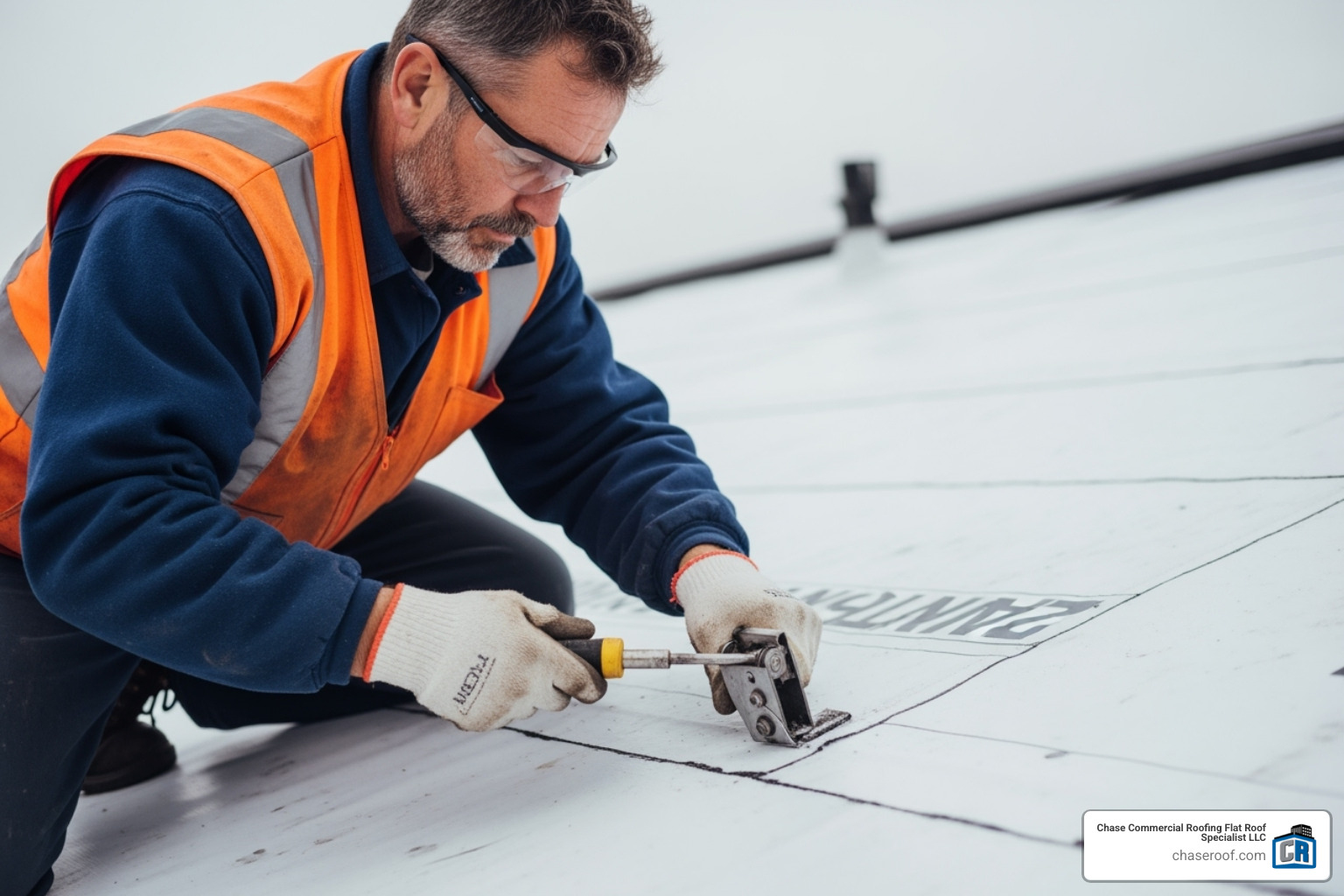
Most industrial buildings have flat roofing systems, each requiring a unique repair approach.
- TPO & PVC Roofing Repairs: For these single-ply systems, leaks often occur at seams or punctures. The repair involves cleaning the area and heat-welding a matching patch for a seamless bond.
- EPDM Rubber Roof Repairs: For this flexible rubber membrane, repairs involve cleaning, priming, and bonding a new EPDM patch with special adhesive or tape.
- Metal Roof Repairs: Leaks from rust or loose fasteners are fixed by replacing panels, applying specialized sealants, or using coatings to reinforce seams.
- Built-Up Roofing (BUR) Repairs: For these multi-layer roofs, we cut out damaged sections, install new layers, and apply a final coat to restore waterproofing.
- Roof Coatings: For many aging roofs, a new reflective coating can seal small cracks, add waterproofing, and extend service life while improving energy efficiency.
- Flashing Replacement: Damaged flashing must be replaced with materials compatible with your existing roof, sometimes upgrading for extra longevity.
- What Are The Best Materials For Flat Roof Repairs?: For a deeper dive into compatible repair products, see our guide on What Are The Best Materials For Flat Roof Repairs?.
The Critical Role of Flashing in Your Industrial Roof Leak Repair
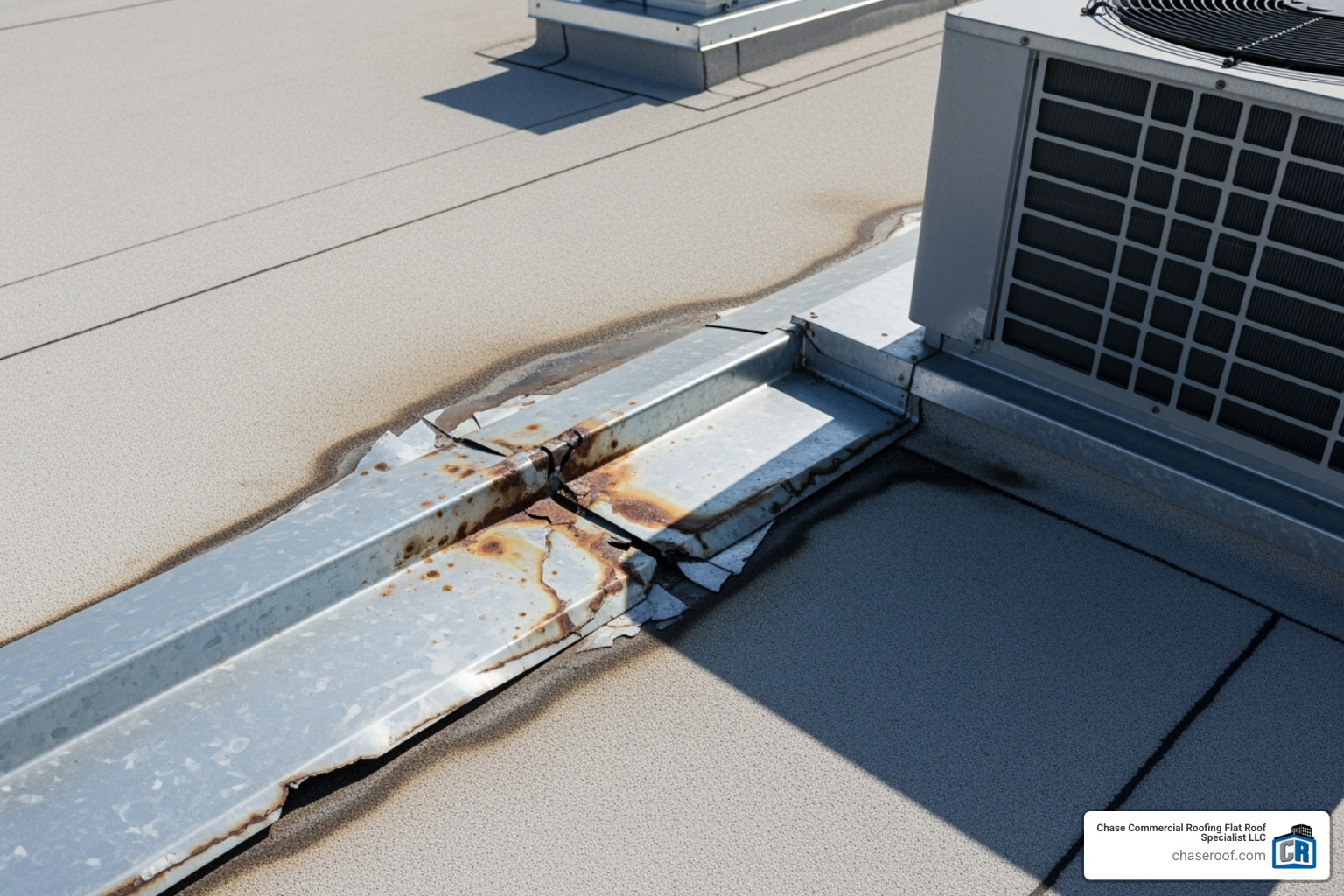
Flashing is a critical component that protects the most vulnerable spots on your roof—where the surface meets a wall or where pipes, vents, and HVAC units penetrate the membrane. Without properly installed and maintained flashing, these areas are prime entry points for water.
Proper installation is key, as incorrect application is a common cause of leaks. The choice of material (metal, rubber, etc.) also impacts durability. When we perform an industrial roof leak repair, we pay close attention to flashing, as it’s often the direct cause of water intrusion. For a deeper dive into this vital component, you can explore All about flashing.
Prevention: The Best Defense Against Leaks
Proactive measures are far more cost-effective than reacting to a crisis. A structured maintenance plan is the best way to extend your roof’s lifespan and prevent unexpected, costly leaks.
Developing a Proactive Maintenance Plan
Implementing a robust maintenance plan is the single best way to avoid stressful, costly surprises. A comprehensive checklist should include:
- Regular Inspections: Inspect your roof at least twice a year (spring and fall) and after major storms. Focus on seams, penetrations, and flashing to catch small issues early.
- Clean Gutters and Drains: Clogged drains cause water to pool, a leading cause of leaks. Keep them clear to ensure proper drainage.
- Debris Removal: Clear leaves, branches, and other debris from the roof surface to prevent trapped moisture and hidden damage.
- Seam Inspection: On flat membrane roofs, regularly check seams for any signs of separation, lifting, or wear.
- Flashing Checks: Visually inspect all flashing around vents, skylights, and walls for cracks, tears, or signs of separation.
- Documentation: Keep detailed records of all inspections and repairs, including dates and photos. This helps track your roof’s health, plan for future needs, and is valuable for warranty or insurance claims. Proactive steps stabilize maintenance costs and prevent the need for a major industrial roof leak repair.
The Importance of Regular Professional Inspections
While self-inspections are good, nothing replaces the trained eye of a professional roofing contractor.
- Identify Hidden Issues: Professionals use tools like infrared cameras to find moisture and damage not visible to the naked eye, such as wet insulation.
- Catch Problems Early: A professional can find and fix minor issues before they become major, costly leaks, saving you money and disruption.
- Extend Your Roof’s Lifespan: Promptly fixing minor issues can significantly prolong your roof’s life, helping it reach the upper end of its 15-30 year expected lifespan.
- Budget for Future Needs: A professional assessment gives you a clear picture of your roof’s condition, allowing you to plan and budget for future work.
- Ensure Warranty Compliance: Many warranties require regular professional inspections. Neglecting them can void your coverage, leaving you liable for all repair costs.
At Chase, our certified experts provide professional assessments with comprehensive digital reports. These reports cover over 20 aspects of your roof’s health, complete with notes and photographs, empowering you to make informed decisions about your investment.
Why Professional Assistance is Crucial
While DIY is tempting, industrial roofing is complex and dangerous. Professional expertise ensures the job is done safely and correctly. Attempting an industrial roof leak repair yourself is risky; it’s a specialized field requiring specific knowledge, tools, and safety protocols.
The Risks of Improper Repair
Attempting to fix an industrial roof leak without proper training can turn a manageable problem into a nightmare. Here’s what can go wrong:
- Voiding Warranties: Most commercial roof warranties require professional repair. A DIY fix can void your warranty, costing you thousands in lost coverage.
- Incomplete Fixes: A surface patch may not address the root cause. Without fixing the underlying issue, the leak will return, often worse than before.
- Further Water Damage: An improper repair can accidentally channel water to new areas, causing unexpected water damage to other parts of your facility.
- Safety Hazards: Industrial roofs present numerous dangers like slippery surfaces and fall risks. Without proper safety equipment and training, you put yourself and others at serious risk.
- Using Incorrect Materials: Each roofing system requires specific, compatible materials. Using the wrong product can accelerate deterioration and cause more damage.
- Increased Long-Term Costs: A cheap DIY fix often fails, leading to more extensive damage and far greater costs than calling a professional from the start.
How to Choose the Right Industrial Roofing Contractor
Finding the right partner for your commercial roofing needs is essential. Here’s what to look for:
- Licensed and Insured: This is non-negotiable. Ensure your contractor is licensed for commercial work in New Jersey and carries full liability and worker’s compensation insurance to protect you.
- Experience with Your Specific Roof Type: A residential roofer lacks the expertise for industrial flat roofs (TPO, EPDM, etc.). Hire a contractor who specializes in your specific roofing system.
- Local Reputation: Ask for local references and check online reviews. A strong reputation in areas like Woodland Park, Newark, or Jersey City indicates consistent, quality work.
- Detailed Written Estimates: A professional provides a clear, itemized estimate. Be wary of vague quotes or prices that seem too good to be true.
- Warranty Offerings: Ask about warranties on both labor and materials. A contractor who stands behind their work will offer meaningful guarantees.
- Safety Record and Protocols: Ask about their safety training and track record. A commitment to safety protects their workers, your property, and indicates overall professionalism.
At Chase Commercial Roofing, we specialize in flat roofing systems and understand the unique challenges of industrial facilities. Our teams are bonded and insured, and we’re available 24/7 for emergency services. We set high standards for training and safety, ensuring your industrial roof leak repair is done right the first time.
Conclusion: Protect Your Assets with a Watertight Roof
An industrial roof leak repair is not just an inconvenience; it’s a direct threat to your machinery, inventory, and operations. There is no such thing as a “minor” leak—every drop is a warning sign of a potentially costly problem.
You now have the knowledge to identify the causes and signs of leaks. When one occurs, your immediate response is critical: contain the water, secure your assets, and call a professional immediately. DIY repairs are risky and can lead to voided warranties and further damage.
The best strategy is prevention. A proactive maintenance plan with regular professional inspections is the most effective way to protect your investment and avoid unexpected disasters. When you need a commercial roof repair, choose a licensed, insured contractor with proven experience in your specific roofing system.
Your roof protects 100% of your business. Don’t gamble with it.
Stop the drip for good. Invest in professional repairs and commit to regular maintenance with experts who understand that your roof is the foundation of your business continuity. Your bottom line will thank you for it.

