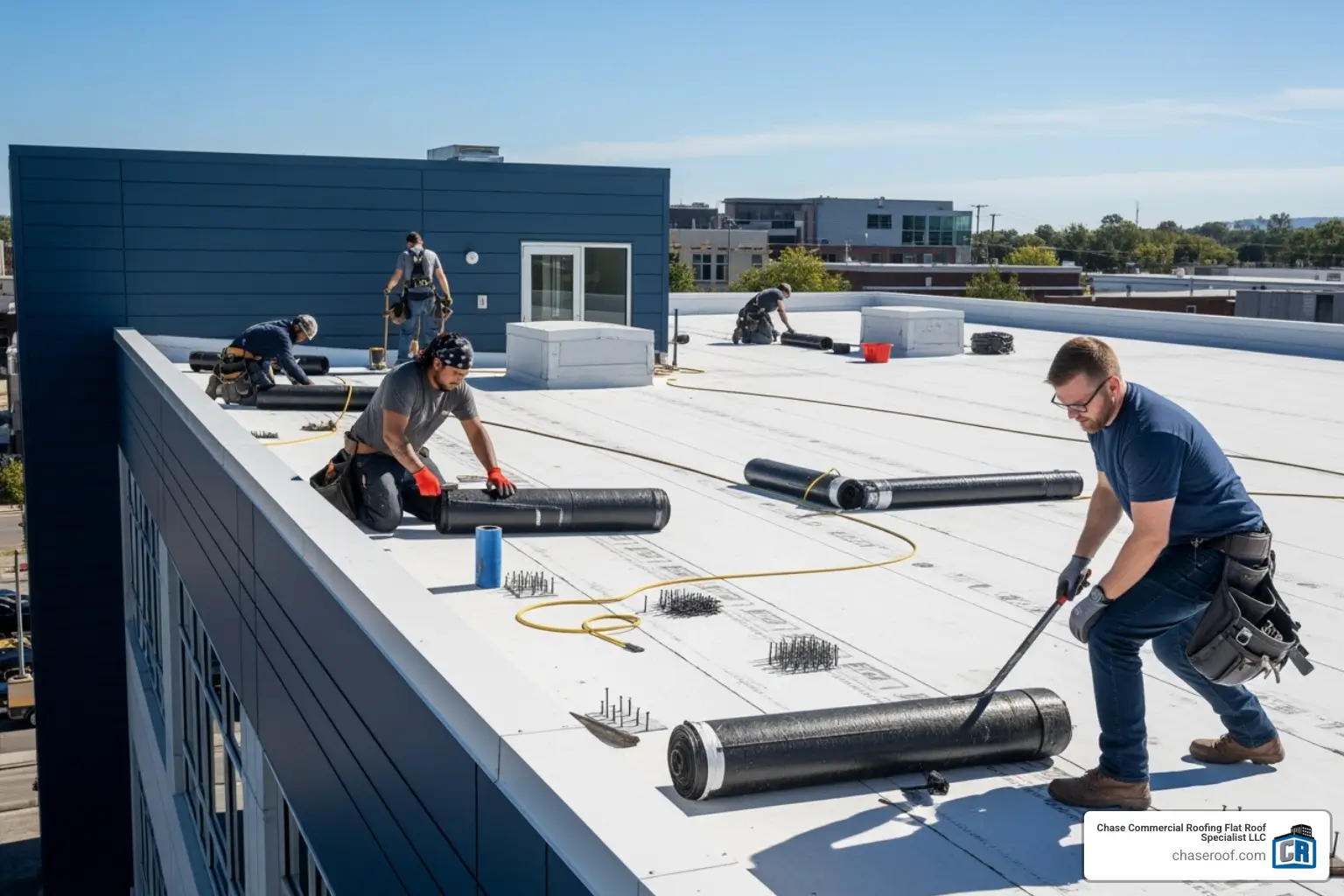
What Is The Best Type Of Roofing For A Commercial Low-Sloped Roof?
What is the best type of roofing for a commercial low-sloped roof? This post will answer all of your questions on the topic! And if you are located in New Jersey, contact Chase Commercial Roofing today.
Best Type Of Roofing For A Commercial Low-Sloped Roof
Choosing the right roofing system is one of the most important decisions a commercial property owner can make. Unlike steep-sloped residential roofs, commercial low-sloped roofs require materials specifically designed to protect large, relatively flat surfaces from rain, snow, standing water, temperature changes, and everyday wear.
So, what is the best type of roofing for a commercial low-sloped roof?
For many commercial properties, TPO roofing is one of the best all-around choices because of its durability, energy-efficient reflective surface, and versatility. However, there is no single roofing material that is right for every building. EPDM, PVC, modified bitumen, and built-up roofing systems can also be excellent choices depending on the property, roof design, budget, and how the building is used.
At Chase Commercial Roofing NJ Flat Roof Specialist, we work with commercial property owners throughout New Jersey to determine which roofing system makes the most sense for their specific building.
What Is Considered a Low-Sloped Commercial Roof?
A low-sloped roof has only a slight pitch rather than the noticeable incline found on most residential roofs. These roofs are often referred to as flat roofs, although they are typically designed with some slope to allow water to move toward drains, gutters, or scuppers.
Commercial low-slope roofing systems need to create a continuous, watertight surface. For this reason, traditional asphalt shingles generally are not appropriate for these applications.
The National Roofing Contractors Association includes systems such as EPDM, thermoplastic membranes, modified bitumen, and built-up roofing among the membrane roofing systems used for low-slope applications.
TPO Roofing for Commercial Low-Sloped Roofs
TPO roofing, or thermoplastic polyolefin roofing, has become an extremely common choice for commercial flat and low-sloped roofs.
TPO is installed in large membrane sheets with seams that are heat-welded together to create a continuous roofing surface. It is commonly available in white and other light colors that reflect a portion of the sun’s heat rather than absorbing it.
Some of the benefits of TPO roofing include:
- Reflective roofing options
- Heat-welded seams
- Resistance to UV exposure
- Flexibility
- Compatibility with many commercial roof designs
- Relatively straightforward maintenance and repairs
Its combination of performance and cost makes TPO an attractive option for warehouses, retail buildings, offices, industrial facilities, schools, and many other commercial properties.
TPO and PVC are classified as thermoplastic single-ply roofing systems, while EPDM is another major type of single-ply commercial roofing membrane. You can learn more about both systems through our TPO roofing and EPDM roofing service pages.
For many New Jersey commercial properties, TPO can be an excellent starting point when evaluating a commercial roof replacement. Learn more by contacting Chase Commercial Roofing for an evaluation.
EPDM Commercial Roofing
EPDM roofing has been used on commercial buildings for decades and remains a popular option for low-sloped roofs.
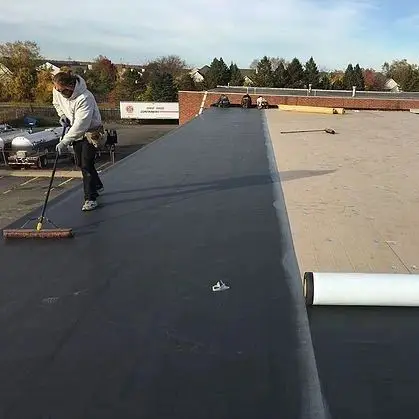
EPDM is a synthetic rubber roofing membrane sometimes simply referred to as a “rubber roof.” It can be installed using several methods, including fully adhered and mechanically attached systems.
One major advantage of EPDM is its flexibility. This can be especially valuable in areas such as New Jersey where roofing materials experience seasonal temperature changes throughout the year.
EPDM is commonly installed on:
- Office buildings
- Warehouses
- Retail facilities
- Apartment buildings
- Industrial properties
- Commercial additions
When properly installed and maintained, an EPDM system can provide reliable protection for a commercial building for many years.
PVC Roofing for Commercial Properties
PVC is another thermoplastic single-ply roofing membrane used for commercial low-slope applications.
Like TPO, PVC roofing uses seams that can be heat-welded together. One of PVC’s notable characteristics is its resistance to certain chemicals, oils, and greases. GAF notes that PVC roofing membranes offer resistance to UV exposure, grease, and punctures.
This can make PVC particularly attractive for properties such as:
- Restaurants
- Food-processing facilities
- Manufacturing buildings
- Commercial kitchens
- Industrial properties
However, the ideal roofing material should always be chosen based on the actual conditions of the building rather than simply selecting one material for every commercial roof.
Modified Bitumen Roofing
Modified bitumen roofing combines asphalt-based roofing technology with polymers designed to improve the material’s performance.
These systems typically include multiple layers, providing additional redundancy compared with some single-layer roofing assemblies.
Modified bitumen can be a good choice for commercial buildings where there is frequent rooftop activity or where durability against foot traffic is particularly important.
For example, a commercial roof containing HVAC systems that technicians regularly access may benefit from a roofing system designed to handle more activity.
SBS-modified bitumen incorporates a synthetic rubber polymer that improves characteristics such as elongation and low-temperature flexibility.
Built-Up Roofing Systems
Built-up roofing, commonly known as BUR, is one of the more traditional commercial flat roofing systems.
A built-up roof consists of multiple layers of reinforcing materials and bitumen that create a durable roofing assembly. A protective surface, such as aggregate or another roofing material, is then installed over the system.
Because BUR contains multiple layers, it offers a high degree of redundancy. These systems have a long history of use on commercial low-sloped buildings.
However, installation can be more involved than with many modern single-ply systems. Whether BUR makes sense will depend on the existing roof, building design, budget, and long-term plans for the property.
So, Which Commercial Flat Roofing System Is Best?
If we are looking strictly for an all-around commercial low-slope roofing option, TPO is often one of the first systems worth considering.
However, the better question is:
Which roofing system is best for your particular commercial building?
The answer may change depending on several factors, including:
- Existing roofing material
- Roof deck condition
- Drainage
- Building use
- Rooftop equipment
- Amount of roof traffic
- Insulation requirements
- Budget
- Expected lifespan
- Exposure to grease or chemicals
- Whether the existing roof can be recovered or requires complete removal
Roof recover projects, for example, require evaluating the existing roof condition and moisture levels before determining whether installing another membrane over the existing system is appropriate.
A professional inspection is the best way to determine which system fits the property. If your existing system has localized damage, commercial roof repair may be sufficient. If deterioration is widespread, a commercial roof replacement may be the more appropriate long-term solution.
Commercial Low-Slope Roofing in New Jersey
New Jersey commercial roofs experience changing conditions throughout the year, including summer heat, heavy rain, freezing temperatures, snow, ice, and repeated freeze-and-thaw cycles.
That makes proper roof system selection and commercial roof installation especially important.
Even the highest-quality membrane can experience problems when drainage, flashing, seams, penetrations, insulation, or installation details are not properly addressed.
At Chase Commercial Roofing NJ Flat Roof Specialist, we specialize in commercial and industrial flat and low-sloped roofing systems. Our team can evaluate your existing roof, identify problem areas, and recommend a roofing solution based on the needs of your property.
Whether you need commercial roof repair, flat roof replacement, TPO roofing, EPDM roofing, or another low-slope commercial roofing system, choosing an experienced commercial roofer can help protect your building and your investment. Learn more about our commercial roofing services.
Chase Commercial Roofing NJ Flat Roof Specialist is located at 256 Bergen Blvd Ste 301, Woodland Park, NJ 07424 and serves commercial property owners throughout New Jersey. View our commercial roofing service areas to see where we work.
If your commercial roof is leaking, aging, or approaching the end of its useful service life, contact Chase Commercial Roofing to schedule a professional roof evaluation and learn which roofing system is the right fit for your building.