TPO VS EPDM: Which Is Better For A Commercial Flat Roof?
Are you wondering about TPO VS EPDM & which is better for a commercial flat roof? This post will explain everything on the topic! You can also learn more about TPO roofing here or contact Chase Commercial Roofing today!
Choosing The Right Roofing System Is Crucial!
Choosing the right roofing system is an important decision for any commercial property owner. Flat and low-slope commercial roofs require materials that can withstand weather exposure, temperature changes, moisture, UV rays, and years of use while protecting the building below.
Two of the most common options for commercial flat roofing are TPO and EPDM roofing. Both are single-ply membrane roofing systems commonly used on office buildings, warehouses, retail properties, industrial facilities, apartment buildings, and other commercial structures.
While TPO and EPDM can both provide reliable protection, there are important differences between the two materials. Understanding TPO vs. EPDM roofing can help commercial building owners determine which option may be better suited for their property.
Chase Commercial Roofing Flat Roof Specialists is a commercial roofing company located at 256 Bergen Blvd Ste 301, Woodland Park, NJ 07424. Our commercial roofers specialize in commercial flat roofing throughout New Jersey. Below, we explain the differences between TPO and EPDM roofing and some of the factors to consider when choosing between them.
What Is TPO Roofing?
TPO stands for thermoplastic polyolefin. It is a single-ply roofing membrane commonly installed on flat and low-slope commercial roofs.
TPO roofing membranes are typically white or another light color, although different colors are available. The reflective surface is one of the characteristics that makes TPO particularly attractive for commercial buildings.
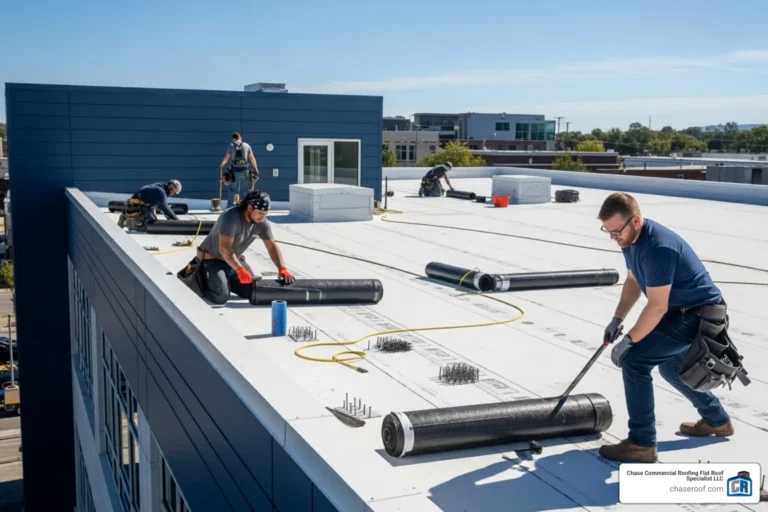
During installation, sheets of TPO membrane are placed across the roof and the seams are heat-welded together. When installed correctly, these welded seams create a strong, continuous barrier designed to protect the building from moisture.
TPO roofing is known for its combination of durability, flexibility, energy efficiency, and relatively straightforward maintenance. Chase Commercial Roofing specializes in TPO roofing in NJ.
What Is EPDM Roofing?
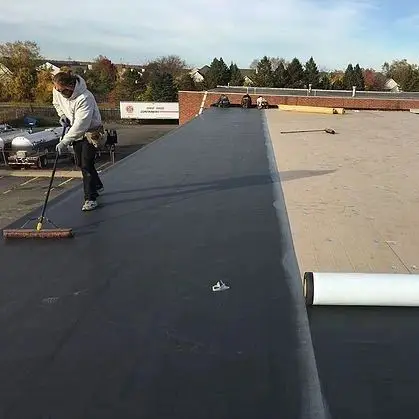
EPDM stands for ethylene propylene diene monomer. It is a synthetic rubber roofing membrane that has been used on commercial buildings for decades.
EPDM is most commonly recognized by its black appearance, although white EPDM products are also available.
The rubber membrane is flexible and capable of expanding and contracting as temperatures change. This characteristic makes EPDM particularly useful in areas that experience significant seasonal temperature fluctuations.
Unlike TPO, which typically uses heat-welded seams, EPDM roofing systems generally use specialized adhesives or seam tape to connect membrane sections.
EPDM has a long history in commercial roofing and remains a popular option for flat and low-slope buildings. Chase Commercial Roofing provides EPDM roofing in NJ. We can also help with commercial roof repairs, installation and maintenance.
TPO vs. EPDM: What Are the Main Differences?
Although both roofing systems are designed for similar types of buildings, TPO and EPDM differ in several important ways.
The biggest differences generally involve material composition, appearance, seam construction, heat absorption, puncture resistance, installation, and maintenance.
Understanding these differences can make it easier to determine which commercial roofing system makes the most sense for a particular building.
Energy Efficiency
One of the biggest advantages associated with TPO roofing is its reflective surface.
White TPO reflects a portion of the sun’s energy rather than absorbing as much heat as a traditional dark roofing material. For large commercial buildings, this may help reduce rooftop temperatures during hot weather and decrease the amount of heat transferred into the building. The U.S. Department of Energy provides additional guidance on reflective and cool roofing products.
Traditional EPDM roofing is usually black. A black roofing surface absorbs more solar heat, which can increase roof temperatures during the summer.
However, heat absorption is not always a disadvantage. In colder climates and during winter months, a darker roof may assist with snow melt and heat retention.
Because New Jersey experiences both hot summers and cold winters, energy performance should be evaluated based on the specific building rather than choosing a roofing system based solely on color.
Durability
Both TPO and EPDM can provide durable commercial roofing solutions when installed and maintained correctly.
TPO is designed to resist UV exposure, weathering, and many environmental conditions. Its heat-welded seams also provide strong protection against moisture when properly installed.
EPDM is known for its flexibility and ability to withstand temperature changes. The rubber membrane can expand and contract as temperatures fluctuate, making it well suited for climates with significant seasonal changes.
The actual durability of either system depends heavily on installation quality, membrane thickness, roof traffic, drainage, maintenance, and exposure to the elements.
Seam Construction
One of the most significant differences between TPO and EPDM roofing is how the seams are joined.
TPO roofing membranes are generally heat-welded together. Specialized equipment heats the overlapping membrane sections so that they fuse together.
EPDM roofing typically relies on seam tape or adhesives to connect membrane sections.
Both systems can provide reliable protection when installed correctly, but seams are always an important area to inspect on a commercial flat roof.
Damaged, separated, or improperly installed seams can create potential entry points for water.
Resistance to Punctures and Damage
Commercial roofs frequently contain HVAC equipment, vents, drains, electrical components, and other mechanical systems. Maintenance workers and contractors may need to walk across the roof to service this equipment.
Roof traffic can increase the risk of punctures or other membrane damage.
TPO generally provides good resistance to punctures and tears, although its performance depends partly on membrane thickness and the overall roofing assembly.
EPDM is flexible and durable but can also be punctured by sharp objects, dropped tools, storm debris, or heavy rooftop activity.
Walkway pads and proper roof-access procedures can help protect either type of membrane in areas that receive frequent foot traffic.
TPO vs. EPDM Lifespan
Commercial building owners naturally want to know how long their new roof will last.
Both TPO and EPDM roofing systems can provide long service lives when properly installed and maintained.
However, it is difficult to provide an exact lifespan because commercial roofs are exposed to different conditions.
Factors that influence roof lifespan include installation quality, membrane thickness, drainage, weather exposure, maintenance frequency, rooftop equipment, foot traffic, and how quickly repairs are performed.
Regular commercial roof inspections are one of the best ways to identify developing problems and extend the useful life of either roofing system.
Maintenance Requirements
Both TPO and EPDM roofs require routine maintenance.
Commercial property owners should have their roofs inspected periodically and after significant storms or severe weather. The National Roofing Contractors Association provides guidance and training related to roof inspection, repair, and maintenance, including TPO and EPDM membrane systems.
Maintenance may include checking seams, inspecting flashing, clearing drains, removing debris, evaluating rooftop penetrations, and looking for punctures or other membrane damage.
Ponding water should also be addressed. Although flat roofs are designed with drainage systems, clogged drains or low areas can allow water to remain on the roof.
Catching these problems early may help prevent leaks and more extensive commercial roof repairs.
Which Roofing System Is Better for New Jersey?
There isn’t one roofing material that is automatically better for every commercial building.
TPO may be attractive to property owners looking for a reflective roofing system with heat-welded seams and strong resistance to UV exposure.
EPDM may be a good option for building owners who value flexibility, proven long-term performance, and a roofing material that has been widely used on commercial buildings for decades.
New Jersey’s climate also makes proper installation particularly important. Commercial roofs must withstand summer heat, freezing winter temperatures, snow, ice, heavy rain, wind, and repeated freeze-thaw cycles.
The building’s roof configuration, drainage system, insulation, existing roofing material, budget, and long-term plans should all be considered before selecting a roofing system.
Should You Repair or Replace an Existing TPO or EPDM Roof?
If a commercial building already has a TPO or EPDM roof, problems do not necessarily mean the entire roofing system needs to be replaced. Often times a commercial roof repair will do the job.
Localized punctures, damaged flashing, seam issues, and certain leaks may be repairable if the rest of the roofing system remains in good condition.
However, widespread deterioration, recurring leaks, saturated insulation, extensive membrane damage, or an aging roofing system may make commercial roof replacement the better long-term option.
A professional commercial roof inspection can help determine the extent of the damage and whether repair or replacement makes more sense.
TPO and EPDM Commercial Roofing in New Jersey
Both TPO and EPDM can be excellent options for commercial flat roofs. The best choice depends on the building, existing roof, budget, performance requirements, and long-term goals of the property owner.
Chase Commercial Roofing Flat Roof Specialists, located at 256 Bergen Blvd Ste 301, Woodland Park, NJ 07424, provides commercial roofing services for businesses and property owners throughout New Jersey.
Our team specializes in flat roofing systems, including TPO roofing and EPDM roofing, as well as commercial roof repair, roof replacement, inspections, and maintenance. You can also learn more about our commercial roofing services.
We serve commercial property owners throughout New Jersey. View our commercial roofing service areas to learn more about the areas we cover.
If you’re deciding between TPO and EPDM roofing or are experiencing problems with an existing commercial flat roof, contact Chase Commercial Roofing to schedule a professional roof evaluation and determine the right solution for your building.