How to Choose the Right Commercial Roof Contractor
Choosing a commercial roof contractor is one of the most important decisions you can make for your building. Your roof protects employees, equipment, inventory, tenants, and daily operations, so the contractor you hire should understand far more than basic roof installation.
Commercial roofing involves flat and low-slope systems, insulation, drainage, flashing, rooftop equipment, penetrations, safety requirements, and manufacturer-specific installation methods.
At Chase Commercial Roofing, we work with businesses and property owners throughout New Jersey to install, repair, replace, and maintain commercial roofing systems.
Start With Commercial Roofing Experience
Commercial roofing is different from residential roofing, and experience with large flat or low-slope buildings matters.
Ask whether the contractor regularly works with:
- Warehouses
- Office buildings
- Retail properties
- Industrial facilities
- Schools
- Multifamily buildings
- Institutional properties
It is also helpful to ask for examples of projects involving a roofing system similar to yours.
Commercial Roofing Systems a Contractor Should Understand
TPO Roofing
TPO is a thermoplastic single-ply membrane commonly used on commercial low-slope roofs. Its seams are typically heat-welded during installation.
Learn more about Chase’s TPO roofing services in New Jersey.
EPDM Roofing
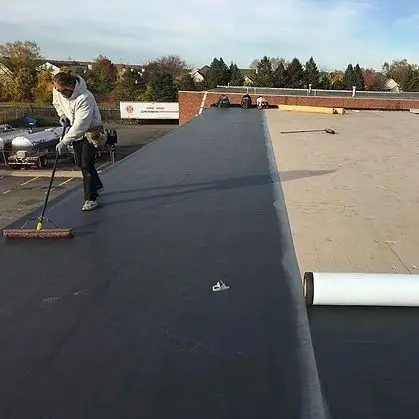
EPDM is a synthetic rubber membrane commonly used on flat and low-slope commercial buildings.
It requires system-specific adhesives, tapes, primers, flashing materials, and repair methods.
Chase also provides EPDM roofing services.
Metal Roofing
Commercial metal roofing may include standing seam and other panel systems depending on building design and roof slope.
For compatible properties, Chase provides commercial metal roofing services.
Other Flat Roof Systems
Modified bitumen, built-up roofing, coatings, and other low-slope systems may also be appropriate depending on the property.
You can review Chase’s commercial flat roof systems for additional information.
Why the Roof Assembly Matters
A commercial roof is more than the visible membrane.
The complete system may include:
- Roof deck
- Air-control layers
- Vapor-control layers
- Insulation
- Cover board
- Roof membrane
- Flashing
- Drainage components
A strong contractor should evaluate the complete assembly instead of focusing only on the surface roofing material.
Verify Insurance and Applicable Credentials
Before hiring a roofing contractor, ask for current proof of appropriate insurance.
Coverage requirements can vary depending on project size, contract requirements, property type, and other factors, so there is no single insurance amount that automatically applies to every commercial roofing project.
You should also ask the contractor what registrations, manufacturer qualifications, or other credentials apply to the work being performed.
Ask About Manufacturer Training and Certifications
Many commercial roofing manufacturers offer training, approved-contractor programs, or certifications for contractors installing their systems.
These programs can be relevant because some roofing assemblies or warranty options may require installation by contractors meeting specific manufacturer requirements.
However, manufacturer credentials should be considered alongside:
- Commercial project experience
- Insurance
- References
- Safety procedures
- Quality of previous work
Review Their Commercial Roofing Portfolio
Ask to see recent examples of completed work.
A strong portfolio can help confirm experience with:
- Your roof material
- Similar building sizes
- Comparable rooftop equipment
- Similar drainage systems
- Comparable project scopes
Read Reviews and Ask for References
Reviews can provide insight into how a contractor communicates, manages schedules, handles unexpected problems, and follows through after a project.
You can review Chase Commercial Roofing client reviews as part of your research.
Recent commercial references can also be particularly useful because they allow you to ask about real project experience.
What Should a Commercial Roofing Proposal Include?
A professional proposal should clearly explain what work is being performed.
Depending on the project, the proposal may identify:
- Roofing system
- Manufacturer
- Membrane type
- Insulation
- Cover board
- Attachment method
- Tear-off scope
- Deck repair allowances
- Flashing
- Drainage work
- Roof penetrations
- Cleanup
- Warranty options
- Exclusions
The clearer the proposal, the easier it is to compare contractors accurately.
Don’t Compare Roofing Contractors on Price Alone
Two commercial roof proposals can have very different scopes even when the final numbers appear similar.
Differences may include:
- Membrane specifications
- Insulation thickness
- Cover boards
- Attachment methods
- Flashing details
- Tear-off assumptions
- Drainage improvements
- Warranty levels
The lowest bid is not automatically the best value if important components are excluded.
Questions to Ask a Commercial Roof Contractor
- How much experience do you have with my roofing system?
- Can you show me comparable commercial projects?
- What roof system do you recommend and why?
- Will the existing roof need to be removed?
- How will wet insulation or damaged decking be handled?
- How will drainage be evaluated?
- Who will manage my project?
- What safety procedures will be used?
- What manufacturer warranty options may be available?
- What workmanship warranty do you provide?
- What isn’t included in the proposal?
Commercial Roofing Safety Matters
Roofing work involves fall hazards, roof openings, material handling, ladders, equipment, and other construction risks.
OSHA requires appropriate fall protection for applicable roofing activities and has specific requirements for work on low-slope roofs.
You can review OSHA’s construction fall-protection requirements for more information.
A commercial contractor should be able to explain how safety will be managed on your property.
Understanding New Jersey Roofing Codes and Permits
Commercial roofing projects may be subject to New Jersey construction requirements as well as municipal permitting and inspection requirements depending on the project scope.
Property owners can review the current New Jersey construction codes through the Department of Community Affairs.
Your roofing contractor should determine what permits and inspections apply to the specific project.
Commercial Roof Installation Services
When a new roof is required, the contractor should coordinate the project from assessment through final inspection.
Chase provides commercial roof installation throughout New Jersey.
A typical project may involve:
- Roof assessment
- System selection
- Site planning
- Tear-off or preparation
- Deck repairs
- Insulation installation
- Roof membrane installation
- Flashing
- Drainage detailing
- Final inspection
Commercial Roof Repair Services
Not every roof needs to be replaced.
Localized defects may be appropriate for commercial roof repair.
Common repairs include:
- Membrane patches
- Seam repair
- Flashing repair
- Drain repairs
- Penetration repairs
- Storm-damage repairs
When Commercial Roof Replacement Makes Sense
Replacement may become more practical when:
- Roof deterioration is widespread
- Leaks recur throughout the property
- Large areas of insulation are wet
- Deck damage is present
- Repair spending has become repetitive
Chase provides commercial roof replacement in New Jersey when continued repair no longer provides good long-term value.
Can Roof Coatings Be a Good Alternative?
Some existing roofs may be candidates for restoration using a coating system.
However, the roof should first be evaluated for:
- Active leaks
- Wet insulation
- Membrane damage
- Drainage problems
- Compatibility
For appropriate roofs, Chase provides commercial roof coating services.
What Affects Commercial Roofing Cost?
Commercial roofing costs can vary significantly from one property to another.
Major factors include:
- Roof size
- Roofing material
- Membrane specifications
- Insulation
- Tear-off requirements
- Wet materials
- Deck repairs
- Building height
- Access
- Rooftop equipment
- Drainage work
- Project complexity
A detailed site inspection and written scope are much more reliable than generic per-square-foot pricing.
Understanding Commercial Roofing Warranties
Commercial roof warranties vary based on manufacturer, roofing system, installation method, contractor qualifications, and the coverage selected.
Depending on the project, there may be:
- Manufacturer material warranties
- Manufacturer system warranties
- Contractor workmanship warranties
Ask for the actual warranty documentation before approving the project rather than assuming every roof includes the same coverage.
Why Maintenance Should Be Part of the Conversation
A strong commercial roofing contractor should also be able to discuss long-term roof care.
Routine maintenance may include:
- Drain cleaning
- Debris removal
- Seam inspections
- Flashing inspections
- Penetration checks
- Storm inspections
- Reviewing previous repair areas
The National Roofing Contractors Association recommends ongoing roof-system inspection and maintenance to help building owners identify developing problems.
Review the NRCA’s roof repair and maintenance guidance.
What About Emergency Roofing Service?
When comparing contractors, ask how they handle urgent leaks and storm damage.
Emergency capabilities vary from contractor to contractor, so avoid assuming every company provides the same response times or hours.
For urgent roofing problems, Chase provides emergency commercial roof repair.
Finding the Perfect Commercial Roof Contractor Doesn’t Have to Be Complicated
Choosing the right commercial roof contractor comes down to asking good questions and comparing more than price.
Look for relevant commercial experience, appropriate insurance, strong references, clear proposals, safety procedures, manufacturer expertise, and an understanding of the complete roofing system.
Chase Commercial Roofing provides commercial roofing services throughout New Jersey, including installation, repair, replacement, TPO, EPDM, flat roofing, metal roofing, coatings, maintenance, and emergency roofing.
If you are planning a commercial roofing project, contact Chase Commercial Roofing to schedule an assessment and discuss the options for your property.