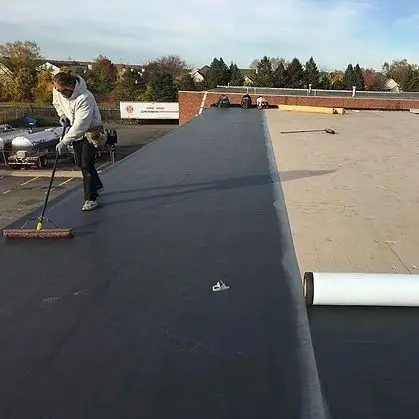
When Is It Time for an EPDM Flat Roof Replacement?
EPDM flat roof replacement may become necessary when a commercial roof has reached the point where repeated repairs no longer provide good long-term value.
EPDM, or Ethylene Propylene Diene Monomer, is a synthetic rubber roofing membrane commonly used on flat and low-slope commercial buildings.
At Chase Commercial Roofing, we install, repair, replace, and maintain EPDM roofing systems throughout New Jersey.
A replacement decision should be based on the actual condition of the roof rather than age alone.
Signs an EPDM Roof May Need Replacement
Recurring Roof Leaks
One localized leak does not automatically mean the entire roof needs replacement.
However, repeated leaks in multiple areas can indicate broader deterioration within the roofing system.
Widespread Membrane Deterioration
EPDM membrane that has extensive cracking, shrinkage, punctures, or other deterioration may no longer be a good candidate for repeated localized repairs.
Large Areas of Wet Insulation
Water can travel beneath the roof membrane and saturate insulation beyond the area where the leak becomes visible indoors.
If moisture is widespread, replacement may provide better long-term value than repeatedly opening and repairing isolated sections.
Deck Damage
Long-term water intrusion can eventually affect the roof deck beneath the membrane and insulation.
Damaged decking needs to be addressed before a new roofing system is installed.
Increasing Repair Frequency
If service calls are becoming more frequent and the roof continues developing new problems, it may be time to compare the cost and disruption of ongoing repairs with replacement.
What Makes EPDM Different?
EPDM is a single-ply synthetic rubber membrane that has been used on commercial roofing systems for decades.
Its flexibility makes it well suited to many flat and low-slope commercial applications.
EPDM systems can be installed using different attachment methods depending on the building and roofing design.
Learn more about Chase’s EPDM roofing services in New Jersey.
Common EPDM Installation Methods
Fully Adhered EPDM
A fully adhered system uses compatible adhesive to bond the membrane to the prepared roofing substrate.
The specific adhesive, application rate, substrate preparation, and installation conditions should follow manufacturer requirements.
Mechanically Attached EPDM
Mechanically attached systems use approved fasteners and plates or attachment components to secure the roofing assembly.
Ballasted EPDM
Some EPDM systems use ballast to secure the membrane.
Whether this method is appropriate depends on structural capacity, roof design, drainage, and other project-specific considerations.
EPDM Roof Replacement vs. Repair
| Repair May Make Sense When | Replacement May Make Sense When |
|---|---|
| Damage is localized | Damage is widespread |
| Leaks occur in limited areas | Leaks repeatedly occur throughout the roof |
| Most insulation remains dry | Large areas of insulation are saturated |
| Most membrane remains serviceable | Membrane deterioration is extensive |
| Repair offers good long-term value | Repair spending has become repetitive |
Chase provides commercial roof repair when localized repair remains the better option.
EPDM Replacement vs. Roof Overlay
Some existing roofs may potentially qualify for a recover or overlay system, while others should be completely removed.
The decision should consider:
- Existing roof condition
- Moisture beneath the roof
- Number of existing roofing layers
- Structural capacity
- Code requirements
- Manufacturer requirements
- Warranty objectives
A complete tear-off gives the contractor access to the existing insulation and roof deck, making it easier to identify hidden deterioration.
The EPDM Flat Roof Replacement Process
1. Evaluate the Existing Roofing System
The project begins with an assessment of the existing membrane, insulation, flashing, drainage, roof deck, and rooftop equipment.
2. Determine the Tear-Off Scope
If the existing system needs removal, the contractor develops a plan for demolition, disposal, staging, and protecting the building during construction.
3. Inspect the Roof Deck
Once existing materials are removed, the roof deck can be evaluated for deterioration or damage.
4. Replace Damaged Materials
Damaged decking, wet insulation, or other compromised components should be addressed before the new roof assembly is installed.
5. Install Insulation
The new roof assembly may include one or more layers of insulation depending on the building, roof design, and applicable requirements.
6. Add Tapered Insulation Where Needed
Tapered insulation may be used to create or improve slope toward drains, scuppers, or other drainage points.
7. Position the EPDM Membrane
EPDM sheets are arranged according to the roof layout and selected attachment system.
8. Complete Seams and Flashing
Compatible tapes, adhesives, primers, flashing materials, and other system components are used according to manufacturer specifications.
9. Detail Penetrations and Roof Edges
HVAC curbs, pipes, drains, walls, roof edges, and other transitions require careful flashing.
10. Perform a Final Inspection
The completed roof should be checked for membrane damage, flashing details, seam conditions, drainage, and installation issues before the project is considered complete.
Why Insulation Matters During EPDM Replacement
Roof replacement is also an opportunity to evaluate the insulation beneath the membrane.
Insulation can affect:
- Thermal performance
- Roof slope
- Drainage
- Condensation control
- Roof assembly design
Insulation type and thickness should be selected as part of the complete roof assembly.
Why Drainage Should Be Addressed Before the New Roof Goes On
Installing a new membrane over an unresolved drainage problem can leave the building with the same underlying issue.
Persistent ponding may be related to:
- Clogged drains
- Compressed insulation
- Low areas
- Deck movement
- Insufficient slope
The replacement plan should address these conditions where appropriate.
EPDM Roof Flashing Details Matter
Many commercial roof leaks develop around transitions rather than in the open field of the membrane.
Important flashing areas include:
- HVAC curbs
- Parapet walls
- Roof edges
- Pipes
- Vents
- Skylights
- Drains
Each area should be detailed using materials compatible with the EPDM system.
EPDM vs. TPO
EPDM and TPO are both widely used commercial single-ply roofing systems, but they differ in material and installation methods.
| EPDM | TPO |
|---|---|
| Synthetic rubber membrane | Thermoplastic membrane |
| Seams use system-specific tapes or adhesives | Seams are commonly heat-welded |
| Commonly available in dark membrane options | Frequently selected in light reflective colors |
| Flexible membrane system | Thermoplastic membrane system |
Neither system is automatically better for every building.
Chase also provides TPO roofing services for commercial properties.
EPDM vs. Other Flat Roofing Systems
Other commercial flat roofing options may include:
- PVC
- Modified bitumen
- Built-up roofing
- Metal roofing
- Roof coating systems
The right system depends on building use, roof configuration, climate, budget, maintenance expectations, and project objectives.
Review Chase’s commercial flat roof systems for more information.
How Much Does EPDM Flat Roof Replacement Cost?
There is no universal EPDM replacement price.
Cost can depend on:
- Roof size
- Existing roof condition
- Tear-off requirements
- Membrane specifications
- Insulation
- Cover board
- Drainage work
- Deck repairs
- Building height
- Access
- Rooftop equipment
- Flashing complexity
A site-specific assessment and detailed proposal provide a much more useful estimate than generic square-foot pricing.
Commercial Roofing Codes in New Jersey
EPDM roof replacement projects may be subject to New Jersey construction requirements as well as local permitting and inspection requirements.
Property owners can review the current New Jersey construction codes through the Department of Community Affairs.
The contractor should determine which requirements apply to the specific project.
EPDM Roof Replacement Safety
Commercial roof replacement involves serious fall hazards as well as material handling, roof openings, ladders, and rooftop equipment.
OSHA provides fall-protection requirements applicable to many commercial roofing activities.
Review OSHA’s construction fall-protection requirements.
Can EPDM Be a DIY Commercial Roof?
Commercial EPDM replacement is generally not a good DIY project.
The work can require:
- Fall-protection systems
- Manufacturer-specific adhesives and primers
- Roof-system design
- Flashing expertise
- Drainage planning
- Insulation installation
- Permit and code compliance
Incorrect installation can lead to poor adhesion, seam failure, flashing leaks, drainage problems, or warranty issues.
What Happens After an EPDM Roof Replacement?
A new commercial roof still requires ongoing care.
Maintenance may include:
- Clearing drains
- Removing debris
- Inspecting seams
- Checking flashing
- Monitoring roof traffic
- Inspecting previous repairs
- Evaluating the roof after significant storms
The National Roofing Contractors Association provides guidance and training focused on roof inspection, leak detection, maintenance, and repair.
Review the NRCA’s roof repair and maintenance guidance.
Protect High-Traffic Roof Areas
Commercial roofs often need regular access for HVAC and other building maintenance.
Depending on the roof design, walkways or additional membrane protection may be appropriate around frequently serviced equipment.
Keep a Roof Maintenance Record
After replacement, maintain records of:
- Inspection dates
- Photographs
- Maintenance work
- Repairs
- Storm events
- Warranty documents
This makes it easier to monitor roof performance over time.
Understand Your EPDM Warranty
Commercial EPDM warranty options vary based on manufacturer, roof system, contractor qualifications, installation details, and coverage selected.
There may be separate:
- Material warranties
- Manufacturer system warranties
- Contractor workmanship warranties
Review the actual written warranty documentation rather than assuming all EPDM roofs receive identical coverage.
Flat Out Fantastic EPDM Replacement Tips
A successful EPDM flat roof replacement starts with understanding why the existing roof is failing and then designing the new roofing system around the actual needs of the building.
The membrane itself is only part of the project. Insulation, drainage, flashing, roof edges, penetrations, deck condition, attachment, and workmanship all contribute to how the finished roof performs.
Chase Commercial Roofing provides commercial roof replacement and commercial roofing services throughout New Jersey, including EPDM, TPO, flat roofing, metal roofing, coatings, maintenance, and repair.
If your existing EPDM roof is leaking repeatedly or showing widespread deterioration, contact Chase Commercial Roofing to schedule an assessment and determine whether repair, restoration, or replacement is the right next step.