What to Do When Your Commercial Flat Roof Is Damaged
Filing a flat roof insurance claim can feel overwhelming, especially when your business is already dealing with leaks, storm damage, or interrupted operations. The most important thing is to approach the situation methodically and avoid making assumptions about what your insurance policy will or will not cover.
Your first priorities should be safety, preventing additional damage when it can be done safely, documenting the condition of the property, and notifying your insurance company according to your policy requirements.
At Chase Commercial Roofing, we inspect and repair commercial roofing systems throughout New Jersey and can document the physical condition of a damaged roof for property owners.
Step 1: Protect People and Property
If a roof has suffered sudden damage, safety should come before documentation or repairs.
Keep employees, customers, and tenants away from areas involving:
- Active electrical hazards
- Sagging ceilings
- Possible structural damage
- Standing water near electrical equipment
- Loose roofing components
- Unsafe roof-access areas
New Jersey’s Department of Banking and Insurance recommends making reasonable temporary repairs when property is damaged in order to help protect it from further loss, while keeping receipts for those expenses.
If roof access is unsafe, contact a qualified professional rather than sending untrained personnel onto the building.
Step 2: Document the Roof Damage
Good documentation can help create a clear record of what happened and what conditions existed after the loss.
When it is safe to do so, document:
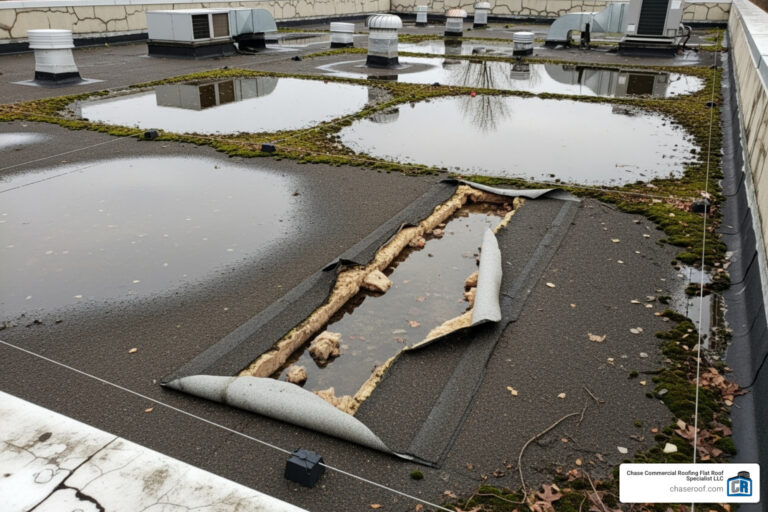
- Roof membrane damage
- Open or damaged seams
- Loose flashing
- Punctures or tears
- Wind-damaged materials
- Hail or impact damage
- Standing water
- Damaged rooftop equipment
- Interior ceiling or wall damage
- Wet insulation where visible
- Damaged inventory or equipment
Take both close-up photographs and wider images that show where the damage is located on the roof or inside the building.
New Jersey regulators specifically recommend photographing damaged property before disposing of it and, when possible, retaining damaged items until the insurance company has had an opportunity to inspect them or provides other instructions.
Step 3: Record When and How the Damage Happened
Write down what you know about the event while the details are still fresh.
Helpful information may include:
- Date the damage was discovered
- Date and approximate time of the storm or incident
- When interior leaking began
- Areas of the building affected
- Temporary measures taken
- People who witnessed the damage
If the claim involves severe weather, retain relevant weather information for the date of the loss as part of your records.
Step 4: Review Your Commercial Property Insurance Policy
Do not assume that every type of roof damage is automatically covered.
Commercial property policies can vary considerably in their:
- Covered causes of loss
- Exclusions
- Deductibles
- Roof-specific limitations
- Reporting requirements
- Valuation provisions
- Coverage limits
The insurer or licensed insurance professional is the appropriate source for determining how your particular policy applies to a specific loss.
Actual Cash Value vs. Replacement Cost Value
One important policy provision is how covered property damage will be valued.
Actual Cash Value
Actual Cash Value, commonly abbreviated as ACV, generally accounts for depreciation when determining the value of damaged property.
Replacement Cost Value
Replacement Cost Value, or RCV, generally bases covered repairs or replacement on materials of like kind and quality without deducting depreciation, subject to the terms, limits, deductibles, and conditions of the policy.
The National Association of Insurance Commissioners explains that ACV coverage takes age and wear into account, while replacement-cost coverage generally pays the cost of repairing or replacing damaged property with materials of like kind and quality, subject to the policy.
Review your declarations and policy language carefully rather than assuming which valuation method applies to the roof.
What Types of Roof Damage May Be Covered?
Coverage always depends on the specific policy and facts of the loss, but commercial property claims can involve events such as:
- Wind damage
- Hail
- Falling objects
- Fire
- Vandalism
- Certain storm-related damage
However, even when a type of event is commonly insured, exclusions or special deductibles may apply.
The NAIC notes, for example, that wind and hail coverage can vary and may sometimes be subject to exclusions or separate deductibles.
What Roof Damage Is Often More Difficult to Claim?
Insurance is generally intended to cover insured losses—not routine roof maintenance or ordinary deterioration.
Coverage disputes commonly arise when damage may be related to:
- Normal wear and tear
- Long-term deterioration
- Deferred maintenance
- Pre-existing damage
- Installation defects
- Excluded causes of loss
The exact outcome depends on the wording of the policy and the actual cause of the damage.
Why Maintenance Records Matter
Maintenance documentation can help establish the condition of the roof before an incident.
Useful records may include:
- Previous roof inspections
- Repair invoices
- Maintenance reports
- Photographs
- Drain-cleaning records
- Warranty documentation
- Prior roofing proposals
These records can be particularly useful when the insurer is trying to distinguish sudden damage from pre-existing deterioration.
Step 5: Have the Roof Professionally Inspected
A qualified commercial roofer can assess the physical condition of the roof and identify what appears damaged.
The inspection may evaluate:
- Roof membrane
- Seams
- Flashing
- Roof edges
- Drains and scuppers
- Rooftop penetrations
- Insulation
- Roof decking where accessible
- Previous repair areas
Chase provides commercial roof repair in New Jersey and can evaluate whether visible damage appears localized or requires a broader roofing solution.
What a Roofing Contractor Can—and Cannot—Do During a Claim
A roofing contractor can provide useful technical information about the roof itself.
This may include:
- Photographs of roof damage
- Inspection findings
- Measurements
- Repair recommendations
- Roofing-system identification
- Written repair or replacement estimates
A roofer should not promise that insurance will cover the work or determine what the policy legally requires the insurer to pay.
Coverage decisions belong to the insurance company under the policy, and licensed public adjusters or attorneys may have different roles when representing policyholders in claim negotiations or disputes.
Step 6: Report the Loss to Your Insurance Company
Review your policy and report the loss according to its requirements.
New Jersey’s Department of Banking and Insurance advises policyholders to report losses promptly and have their policy number and relevant information available when contacting the insurer.
After the claim is opened, record:
- Claim number
- Date the claim was reported
- Name of the assigned representative
- Contact information
- Inspection dates
- Documents submitted
Step 7: Prepare for the Insurance Adjuster’s Inspection
The insurer will typically assign an adjuster to evaluate the damage and determine how the policy applies.
Have your records organized before the inspection, including:
- Photos and videos
- Roof inspection reports
- Maintenance records
- Previous repair invoices
- Contractor estimates
- Weather information
- Receipts for temporary repairs
New Jersey guidance confirms that insurers assign adjusters to inspect property damage and determine coverage.
Should Your Roofer Be Present for the Insurance Inspection?
Having a roofing professional available can be helpful when there are technical questions about the roofing system or damaged areas.
The roofer can identify roofing components, explain their physical findings, and provide documentation of the observed damage.
However, the contractor’s role should remain focused on roofing—not interpreting insurance policy language or guaranteeing claim outcomes.
Temporary Repairs vs. Permanent Repairs
When water is actively entering the building, temporary work may be necessary to limit additional damage before permanent repairs can be completed.
Examples can include:
- Temporary membrane patches
- Emergency weatherproofing
- Securing loose roofing materials
- Protecting exposed areas
Keep records and receipts associated with emergency work.
New Jersey regulators advise property owners to make necessary temporary repairs while noting that permanent repairs may need to wait until the insurer has had an opportunity to inspect the damage.
For urgent roof problems, Chase provides emergency commercial roof repair.
Repair or Replace After an Insured Loss?
The physical condition of the roof may determine whether repair or replacement is technically appropriate, while the insurance policy determines what portion—if any—is covered.
Repair May Be Appropriate When:
- Damage is localized
- The surrounding roofing system remains serviceable
- Wet materials are limited to a small area
- A compatible repair can restore the damaged section
Replacement May Be Appropriate When:
- Damage is widespread
- Large areas of insulation are wet
- Membrane or flashing failure is extensive
- Roofing materials cannot reasonably be restored through localized repairs
If the physical condition warrants replacement, Chase also provides commercial roof replacement in New Jersey.
What If Your Flat Roof Insurance Claim Is Denied?
A denied claim does not automatically mean the denial is incorrect, nor does it necessarily mean you have no further options.
Start by reviewing the denial letter carefully.
Look for:
- The stated reason for denial
- Policy provisions cited
- Excluded causes of loss
- Requested documentation
- Any reconsideration or appeal procedures
If you believe information is missing or incorrect, ask the insurer what documentation may be submitted for reconsideration.
When to Consider a Public Adjuster
A public adjuster represents the policyholder rather than the insurance company and may assist with documenting, presenting, and negotiating an insurance claim.
In New Jersey, public adjusters must be licensed by the Department of Banking and Insurance.
If you choose to hire one, review the contract, services, and fees carefully before signing.
When Legal Advice May Be Appropriate
For significant disputes involving policy interpretation, coverage, or claim-handling issues, a qualified attorney may be able to advise you about your rights and available options.
A roofing contractor should not substitute for legal or insurance advice.
Can Filing a Roof Claim Increase Your Premium?
Claims history can be one factor insurers consider in pricing or renewal decisions, but there is no universal rule stating exactly how one roof claim will affect a particular commercial policy.
The effect can depend on the insurer, type of loss, claims history, property, policy, and broader underwriting conditions.
Your insurance agent or carrier can provide information specific to your policy.
Does Every Policy Pay Roof Claims the Same Way?
No. Two commercial property owners experiencing similar roof damage can have very different claim outcomes because their policies may have different:
- Coverage forms
- Exclusions
- Deductibles
- Limits
- Endorsements
- Roof provisions
- Valuation methods
This is why the actual insurance contract matters more than generalized advice about what insurance “usually covers.”
Flat Roof Insurance Claim Checklist
- Prioritize safety
- Prevent additional damage when safe
- Photograph and video the damage
- Record the date and circumstances
- Save damaged materials when appropriate
- Review your insurance policy
- Locate maintenance and inspection records
- Obtain a professional roofing assessment
- Report the loss according to policy requirements
- Keep your claim number and adjuster information
- Save temporary-repair receipts
- Keep written records of claim communications
Don’t Get Left Out in the Rain
A successful flat roof insurance claim begins with understanding the damage, documenting it carefully, protecting the property from additional loss, and following the requirements of your actual insurance policy.
Your roofing contractor can help determine the physical condition of the roof and provide repair or replacement recommendations, but insurance coverage and claim payments are ultimately governed by the policy and insurer’s coverage determination.
Chase Commercial Roofing provides commercial roofing services throughout New Jersey, including inspections, roof repair, replacement, emergency service, TPO, EPDM, metal roofing, and flat roofing solutions.
If your commercial flat roof has been damaged by a storm or another event, contact Chase Commercial Roofing to schedule a roof assessment and obtain documentation of the roofing work that may be required.