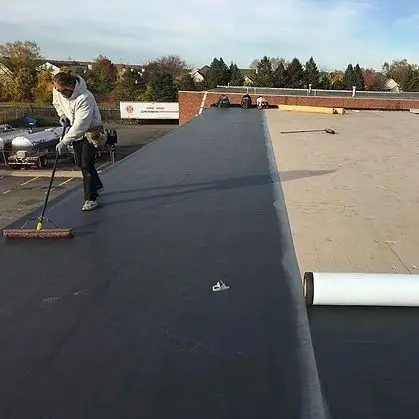
When Is It Time to Replace a Commercial Flat Roof?
A commercial flat roof replacement is a major investment, but there comes a point when continuing to patch an aging or extensively damaged roofing system is no longer the best financial decision. For commercial property owners in Hackensack, East Rutherford, and Paterson, the goal is to recognize when repair is still practical and when replacement is likely to provide better long-term value.
At Chase Commercial Roofing, we work with businesses throughout New Jersey to evaluate flat and low-slope roofing systems and determine whether repair, restoration, or full replacement makes the most sense.
A professional assessment should consider the roof’s current condition, moisture levels, repair history, insulation, drainage, substrate, roofing material, and overall performance—not simply its age.
Signs Your Flat Roof May Need Replacement
Not every commercial roof leak means the entire system needs to be replaced. However, certain conditions can indicate that the roofing system is experiencing broader deterioration.
Recurring Roof Leaks
If leaks repeatedly appear in different areas of the building despite previous repairs, the problem may no longer be isolated. Widespread seam failure, deteriorated membrane, wet insulation, or aging flashing can make repeated repairs increasingly impractical.
Widespread Membrane Damage
Large areas of cracking, splitting, blistering, punctures, or deterioration may indicate that the roof is losing its ability to provide reliable protection.
Localized damage may still be suitable for commercial roof repair, but widespread deterioration should be evaluated as part of a larger replacement decision.
Saturated Insulation
Moisture trapped beneath the roofing membrane can reduce insulation performance and spread beyond the original leak location. Large areas of wet insulation may need to be removed as part of a replacement project.
Ponding Water and Drainage Problems
Flat roofs are not truly flat; they are designed with enough slope to move water toward drains, scuppers, or gutters.
Persistent standing water can be associated with clogged drainage, compressed insulation, settled decking, inadequate slope, or other underlying conditions. When replacing a roof, these issues should be evaluated rather than simply covered by a new membrane.
Extensive Flashing and Seam Failure
Flashing, seams, walls, curbs, edges, and penetrations are critical parts of a commercial roofing system. When deterioration becomes widespread across these areas, replacement may provide more reliable long-term performance than repeatedly repairing individual defects.
Repair vs. Replacement: Which Makes More Sense?
The decision should be based on the overall condition of the roofing system.
| Repair May Make Sense When | Replacement May Make Sense When |
|---|---|
| Damage is isolated | Damage is widespread |
| Leaks occur in one identifiable area | Leaks recur across multiple roof areas |
| Most insulation remains dry | Large areas of insulation are saturated |
| Membrane remains generally serviceable | Membrane deterioration is extensive |
| Repair costs remain reasonable | Repair spending is becoming repetitive |
Chase provides commercial roof replacement throughout New Jersey when an existing roof can no longer be economically maintained.
Flat Roof Replacement in Hackensack, NJ
Hackensack commercial properties include offices, retail buildings, medical facilities, multifamily properties, warehouses, and other structures that commonly use flat or low-slope roofs.
When planning a flat roof replacement in Hackensack, property owners should consider the condition of the existing assembly, rooftop equipment, insulation, drainage, code requirements, and how the work can be scheduled to reduce disruption to occupants or business operations.
For businesses in the area, Chase also provides dedicated commercial roofing services in Hackensack.
Flat Roof Replacement in East Rutherford, NJ
East Rutherford contains many commercial, industrial, warehouse, retail, and mixed-use properties where large low-slope roofing systems are common.
A flat roof replacement in East Rutherford should account for drainage, rooftop HVAC equipment, penetrations, wind exposure, insulation requirements, and the operational needs of the building.
Chase serves businesses through its dedicated East Rutherford commercial roofing services.
Flat Roof Replacement in Paterson, NJ
Commercial buildings in Paterson range from industrial facilities and warehouses to retail properties, offices, and older urban structures. Each building can present different roof replacement challenges depending on age, access, substrate conditions, drainage, and previous roof installations.
Before beginning a flat roof replacement in Paterson, the existing roof assembly should be carefully evaluated to determine what materials need to be removed and whether the deck, insulation, or drainage configuration also requires work.
Learn more about Chase’s commercial roofing services in Paterson.
Choosing the Right Flat Roofing System
There is no single flat roofing material that is best for every commercial building. The right system depends on roof configuration, building use, environmental exposure, budget, insulation requirements, expected maintenance, and long-term ownership plans.
Chase installs and services multiple commercial flat roof systems.
TPO Roofing
TPO is a thermoplastic single-ply roofing membrane commonly used on commercial flat and low-slope roofs. It is often available in reflective colors and uses heat-welded seams.
For many commercial properties, TPO roofing in New Jersey can provide a practical combination of durability, reflectivity, and system flexibility.
EPDM Roofing
EPDM is a synthetic rubber roofing membrane widely used on commercial buildings. It is known for flexibility and its ability to accommodate seasonal temperature changes.
Chase also installs and services EPDM roofing systems for New Jersey commercial properties.
PVC Roofing
PVC is another thermoplastic single-ply roofing membrane. It can be especially useful for buildings exposed to certain greases, oils, or chemicals, depending on system specifications.
Modified Bitumen and Built-Up Roofing
Modified bitumen and built-up roofing systems use multiple layers to create durable commercial roofing assemblies. They may be suitable for buildings where rooftop traffic, redundancy, or specific performance characteristics are important.
Energy Efficiency and Insulation During Roof Replacement
A roof replacement is also an opportunity to evaluate the building’s insulation and overall thermal performance.
Wet or deteriorated insulation may need to be removed, while new insulation can be selected based on applicable code requirements and project goals.
Reflective roofing surfaces may also help reduce solar heat absorption in certain buildings. The U.S. Department of Energy provides guidance about cool roofs and reflective roofing surfaces.
The Commercial Flat Roof Replacement Process
A professional replacement project should begin with evaluation and planning rather than immediately removing roofing material.
1. Existing Roof Assessment
The contractor evaluates the roofing membrane, seams, flashing, penetrations, drainage, insulation, deck conditions, and previous repairs.
2. Replacement Strategy
The findings are used to determine whether the existing roof must be completely removed or whether another code-compliant replacement approach may be appropriate.
3. Material Selection
The roofing system is selected based on the building, slope, drainage, exposure, intended use, budget, and project requirements.
4. Tear-Off When Required
Existing roofing materials are removed where necessary so wet insulation, deteriorated components, and damaged substrate can be addressed.
5. Deck and Substrate Repairs
Any damaged or deteriorated portions of the roof deck should be repaired before the new roofing system is installed.
6. Insulation Installation
New insulation and related components are installed according to the selected roof assembly and applicable requirements.
7. New Roofing Installation
The new membrane or roofing system is installed according to manufacturer requirements, including seams, attachment, transitions, and field details.
8. Flashing and Penetrations
HVAC curbs, walls, vents, pipes, parapets, drains, and roof edges require detailed flashing because these transitions are common locations for water intrusion.
9. Final Inspection
The finished system should be reviewed to verify the installation, flashing, drainage, seams, and project scope before completion.
New Jersey Building Codes and Commercial Roof Replacement
Commercial roofing work must comply with applicable New Jersey construction requirements and any local permitting or inspection requirements that apply to the project.
As of August 17, 2026, New Jersey adopted the 2024 International Building Code as part of its current Building Subcode, along with updated energy and other related codes.
Property owners can review the current New Jersey construction codes through the Department of Community Affairs.
What Affects the Cost of a Flat Roof Replacement?
There is no universal square-foot price for a commercial flat roof replacement. Costs vary significantly depending on the building and project scope.
Important factors include:
- Roof size: Larger roofs require more material and labor.
- Roofing system: TPO, EPDM, PVC, modified bitumen, and other materials have different installation requirements.
- Tear-off: Removing existing roofing increases labor and disposal requirements.
- Wet insulation: Saturated insulation may need to be removed and replaced.
- Deck condition: Deteriorated substrate or structural components may require repair.
- Rooftop equipment: HVAC units and numerous penetrations increase flashing complexity.
- Building access: Cranes, lifts, staging, or specialized equipment may be necessary.
- Drainage: Drain, scupper, or slope corrections can increase the project scope.
- Insulation requirements: The selected roof assembly and applicable code requirements affect insulation costs.
A professional inspection and detailed written proposal are the best way to determine a realistic project budget.
How Long Does Commercial Flat Roof Replacement Take?
Project duration varies considerably. A straightforward commercial roof may be completed relatively quickly, while a large or complex facility can take much longer.
Timing depends on:
- Roof square footage
- Amount of existing roofing that must be removed
- Deck repairs
- Insulation replacement
- Roofing system selected
- Number of penetrations and rooftop units
- Building access
- Weather conditions
A qualified contractor should provide an estimated project schedule after evaluating the actual building rather than promising the same timeline for every commercial roof.
Choosing a Commercial Roofing Contractor
The quality of a replacement roof depends heavily on installation. A good contractor should have experience with commercial flat roofing systems and the specific material being installed.
When comparing contractors, look for:
- Commercial roofing experience
- Insurance and applicable credentials
- Manufacturer training or certifications where appropriate
- Experience with TPO, EPDM, and other flat roofing systems
- Local references
- Detailed written proposals
- Clear warranty information
- Safety procedures
- Communication throughout the project
Understanding Commercial Roofing Warranties
Commercial roof warranties vary by manufacturer, roofing system, contractor, and coverage level.
Depending on the project, there may be separate coverage for roofing materials and contractor workmanship. Certain commercial systems may also qualify for enhanced manufacturer warranty options when installed according to specific requirements.
Property owners should review:
- What components are covered
- Warranty duration
- Coverage exclusions
- Maintenance requirements
- Inspection or reporting obligations
- Who is responsible for workmanship coverage
The exact written warranty matters more than generalized warranty claims.
Plan Your Flat Roof Replacement Before It Becomes an Emergency
The ideal time to plan a commercial roof replacement is before the roofing system reaches the point of widespread failure.
Early planning gives property owners more time to evaluate roofing systems, obtain proposals, budget for the project, coordinate with tenants or operations, and schedule the work under better conditions.
Chase Commercial Roofing provides commercial roofing services throughout New Jersey, including repair, installation, replacement, TPO, EPDM, metal roofing, coatings, and emergency service.
If your commercial flat roof in Hackensack, East Rutherford, Paterson, or another New Jersey community is showing signs of widespread deterioration, contact Chase Commercial Roofing to schedule an assessment and determine whether replacement is the right next step.