Why Commercial Buildings Need Roof Coating Paint Solutions
Roof coating paint offers New Jersey facilities managers a cost-effective way to extend roof life, prevent leaks, and reduce energy costs without the disruption of full replacement. Here’s what you need to know when buying roof coating paint:
Top Roof Coating Paint Options:
– Acrylic Elastomeric – Best for sloped roofs, high reflectivity, 10-year warranty
– Silicone – Superior ponding water resistance, 95%+ solids content, 20-year lifespan
– Aluminum Fibered – Metal roof protection, rust prevention, moderate cost
– Elastomeric Rubber – Flexible for temperature changes, crack bridging ability
– Coverage: 50-500 sq ft per gallon depending on surface and product type
– Cost: $0.40-$2.00 per square foot vs $8-15 for full replacement
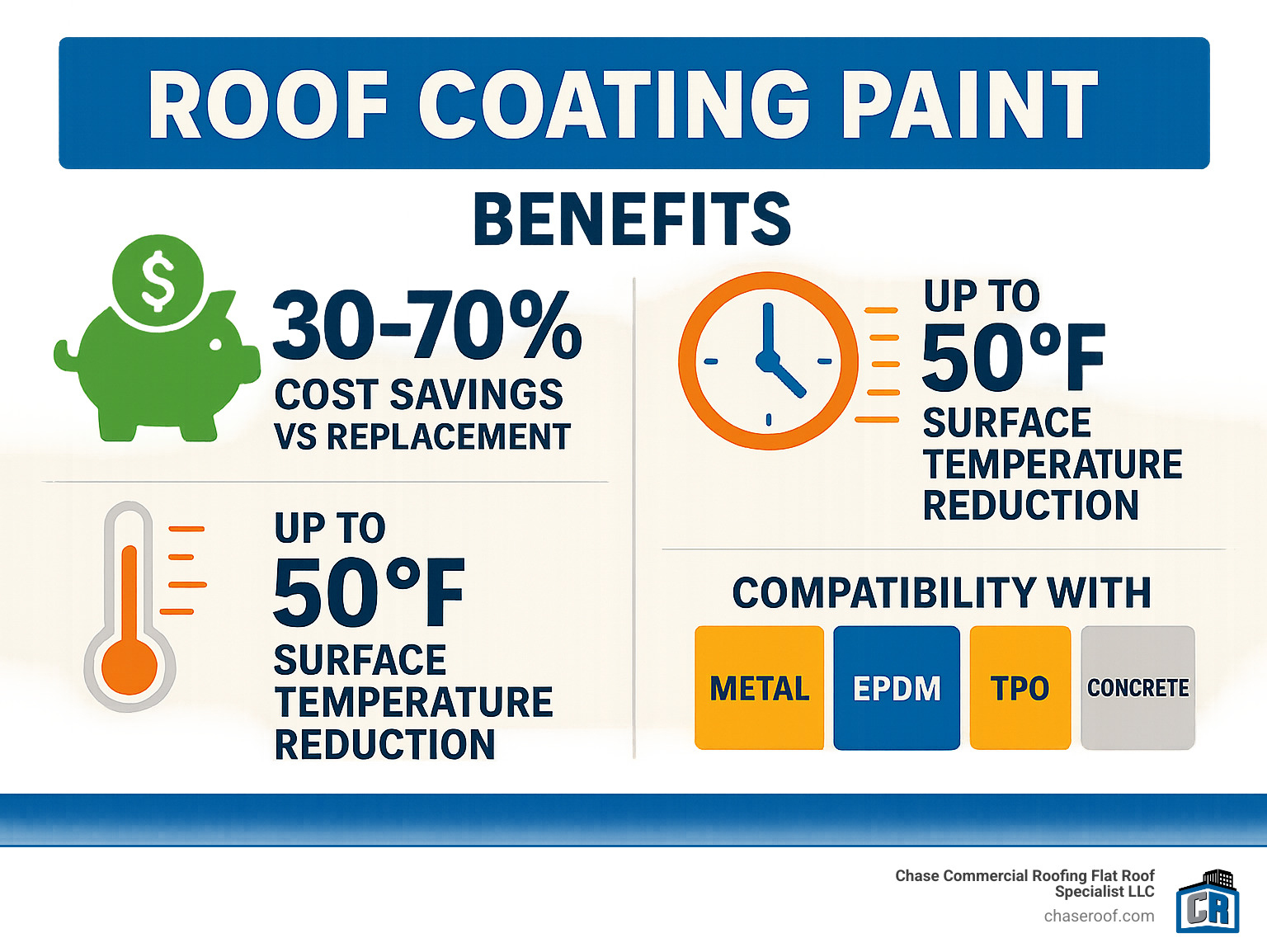
With New Jersey’s harsh winters and hot summers taking a toll on commercial roofs, roof coating paint serves as both a protective barrier and energy-saving solution. Reflective coatings can reduce roof surface temperatures by up to 50°F, translating to significant cooling cost savings for warehouses, office buildings, and manufacturing facilities across Newark, Paterson, and Jersey City.
The key is choosing the right coating chemistry for your specific roof type and climate conditions. According to the U.S. Department of Energy, reflective roof coatings can reduce cooling energy use by 10-15% in commercial buildings.
I’m John Chase, President of Chase Commercial Roofing Flat Roof Specialist LLC, and over my 30 years in the industry, I’ve seen how the right roof coating paint application can transform a failing roof into a reliable, energy-efficient system. Our team has successfully applied thousands of square feet of roof coatings across New Jersey, helping facilities managers avoid costly emergency repairs while extending roof life by 10-20 years.
Why Roof Coating Paint Is More Than Just Paint
When I talk to facility managers about roof coating paint, I often see that look of confusion. They’re thinking, “Isn’t that just fancy paint?” Trust me, I get it. But after three decades in this business, I can tell you that modern roof coatings are light-years beyond anything you’d pick up at the hardware store.
Today’s premium roof coating paint systems contain over 95% solids content – that’s what makes them incredibly durable and waterproof. Regular paint just sits on top of your roof like makeup. But quality roof coatings actually penetrate and bond with the surface, creating what we call a seamless membrane that flexes and moves with your building.
Here’s something that always gets my clients’ attention: while that bucket of regular paint might give you 3-5 years if you’re lucky, professional roof coating paint comes with 10-20 year warranties. We’ve installed silicone coatings that are still going strong after two decades of New Jersey weather.
| Coating Type | Lifespan | Best For | Solids Content | Ponding Water Resistance |
|---|---|---|---|---|
| Acrylic Elastomeric | 10-15 years | Sloped roofs, high reflectivity | 50-60% | Good |
| Silicone | 15-20 years | Flat roofs, ponding areas | 95%+ | Excellent |
| Elastomeric | 10-15 years | Temperature extremes | 60-70% | Very Good |
Each coating chemistry serves different purposes, and choosing the wrong one can cost you thousands in premature failure. That’s why we always start with a thorough roof assessment before recommending any roof coating solution for our New Jersey clients.
How Roof Coating Paint Stops Leaks
Here’s where roof coating paint really shines – it eliminates the biggest weakness in traditional roofing systems. Quality elastomeric coatings can stretch up to 400% of their original size without cracking or tearing. When your roof expands in July’s heat and contracts during February’s freeze, the coating moves right along with it.
Silicone coatings are absolute champions when it comes to ponding water. While other materials break down when sitting in standing water for days, silicone actually thrives in it. We’ve got silicone installations from 15 years ago that still look perfect, even in areas that pond regularly after our notorious New Jersey thunderstorms.
Roof Coating Paint & Utility Bills
Now here’s something that gets every facility manager excited – the energy savings from reflective roof coating paint can be absolutely huge. We’re talking about reflecting up to 90% of the sun’s rays instead of absorbing all that heat.
I’ve personally measured surface temperature drops of 50°F on dark roofs after applying white elastomeric coatings. For a typical 10,000 square foot warehouse here in New Jersey, we’re seeing $2,000-4,000 in annual cooling cost savings.
The math is pretty compelling – most of our clients see payback in just 2-3 years when you factor in both the avoided commercial roof replacement costs and those ongoing energy savings.
Best Types of Roof Coating Paints & Their Ideal Surfaces
Not all roof coating paint is created equal. After thirty years of protecting New Jersey commercial buildings, I’ve learned that matching the right coating chemistry to your specific roof type makes all the difference between a successful long-term solution and a costly do-over.
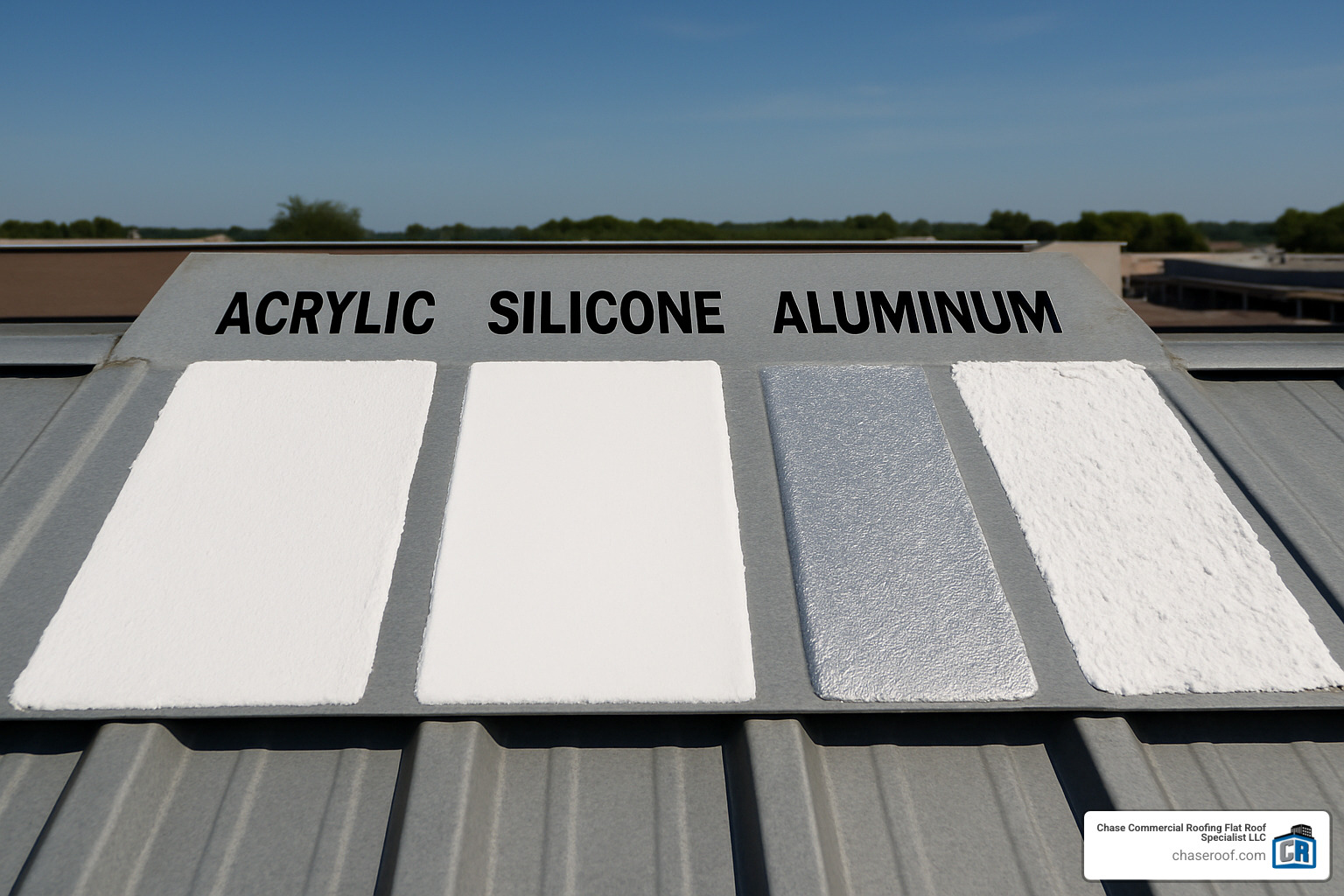
Acrylic elastomeric coatings shine when you need maximum reflectivity and dirt resistance. They breathe when cured, allowing trapped moisture vapor to escape while keeping liquid water out. You’ll typically get around 100 square feet of coverage per gallon, making them budget-friendly for large warehouse and manufacturing facilities.
Silicone coatings are the heavy-duty champions of the coating world. With over 95% solids content, they create an incredibly tough waterproof membrane that laughs at ponding water. Yes, they cost more upfront – you’ll get 50-100 square feet per gallon – but they can handle decades of abuse.
Aluminum fibered coatings combine the best of multiple worlds for metal roofs dealing with rust and corrosion. The asphalt base provides waterproofing, aluminum paste reflects heat, and reinforcing fibers add strength.
Elastomeric rubber coatings are your go-to choice when dealing with substrates that move a lot. New Jersey’s temperature swings can be brutal on roofing materials, and these coatings stay flexible whether it’s a sweltering August day or a bitter February morning.
Compatibility isn’t just important – it’s everything. Silicone and elastomeric coatings work beautifully on metal, concrete, BUR (built-up roofing), spray polyurethane foam, and single-ply membranes like EPDM and TPO.
Acrylic vs Silicone Roof Coating Paint
The acrylic versus silicone debate comes up on almost every coating project we evaluate. Both are excellent roof coating paint options, but they excel in different situations.
Acrylic coatings are the smart choice when you have good drainage and want maximum energy savings. They maintain that brilliant white finish longer and resist dirt pickup better than silicone. The breathability factor allows moisture vapor to pass through while blocking liquid water.
Silicone coatings dominate when water is the enemy. They’re completely waterproof and actually get stronger when exposed to moisture. We’ve applied silicone to flat roofs that pond water for days after heavy rains, and fifteen years later, those coatings are still performing perfectly.
Our recommendation? Acrylic for sloped roofs and well-drained flat roofs where energy efficiency is the priority. Silicone for flat roofs with drainage challenges or any area where ponding water is a concern.
Specialty Roof Coatings for RVs & Mobile Homes
RV and mobile home roofs present unique challenges that standard roof coating paint often can’t handle. These structures flex and move constantly, requiring flexible rubber coatings specifically engineered for this movement.
Quick-dry formulas are essential for RV applications. The specialized formulations we use can be dry to touch in 4 hours and ready for light rain in 24 hours, getting you back on the road faster.
Step-By-Step Guide to Preparing and Applying Roof Coating Paint
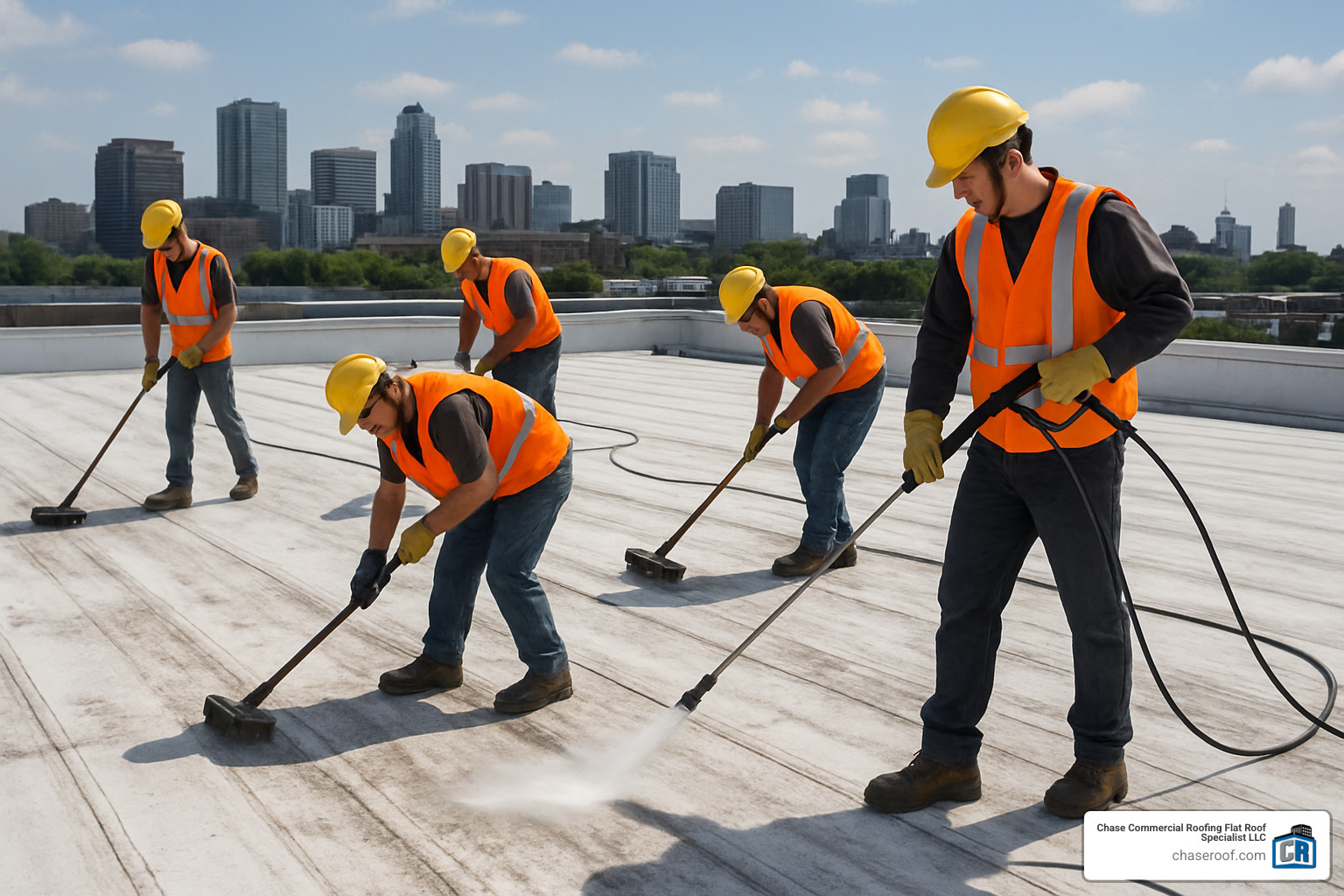
Getting roof coating paint to perform properly isn’t just about buying the right product – it’s about doing the prep work correctly. After 30 years of coating roofs across New Jersey, I can tell you that most coating failures happen because someone skipped a step or rushed the preparation.
Starting with a thorough inspection is absolutely essential. We walk every square foot of the roof, looking for structural damage, wet insulation, and compatibility issues. You can’t coat over problems and expect miracles.
Cleaning comes next – we power wash to remove years of accumulated dirt, debris, and biological growth. Metal roofs get special attention with wire brushing to remove rust and oxidation. Everything must be bone dry before coating application.
Repairs happen before coating, not after. Every crack gets filled, every hole gets patched, and every seam gets reinforced. For facilities dealing with significant damage, our commercial roof repair team can handle structural issues and prepare the surface for optimal coating performance.
Temperature and weather conditions make or break a coating project. We only apply when temperatures are between 40-90°F with humidity below 90%. Rain must stay away for at least 24 hours after application.
The curing process varies by coating type, ranging from 4 hours to 24 hours for initial set, but full cure can take several days. We always wear proper PPE including respirators, non-slip shoes, and fall protection because safety isn’t negotiable.
Roof Coating Paint Application Methods
The way you apply roof coating paint determines how long it lasts and how well it performs. We’ve tried every method over the years, and each has its place depending on the project.
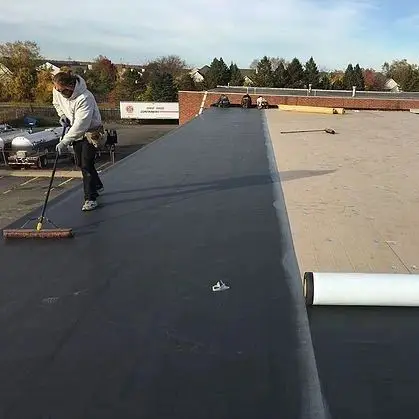
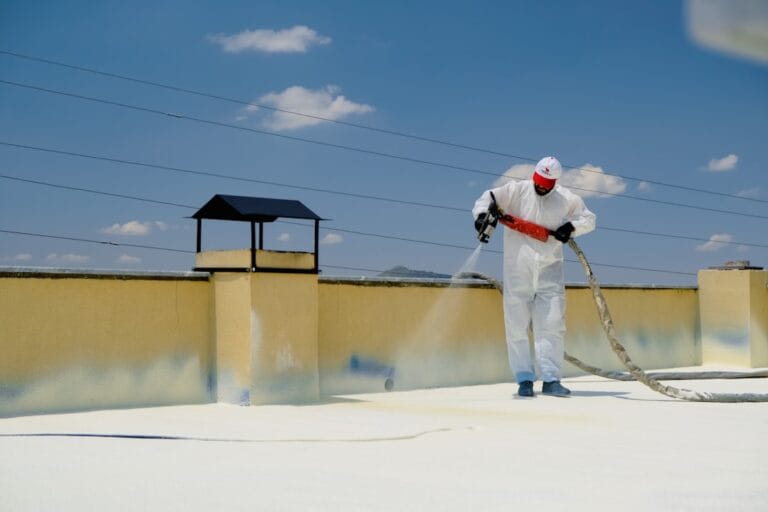
Brush application gives you the thickest film build and best penetration. Roller application strikes a nice balance between speed and control. Airless spray is our go-to method for large commercial roofs, while squeegee and back-roll technique works particularly well with silicone coatings on flat roofs.
Mil thickness checks happen throughout application using wet film thickness gauges. Too thin and you won’t get warranted performance. Too thick and you’re wasting money while potentially causing adhesion problems.
Ideal Weather Window for Roof Coating Paint
New Jersey weather keeps us on our toes when scheduling roof coating paint applications. Temperature sweet spot runs between 50-85°F for optimal results. Low humidity below 85% is crucial during application and curing. Wind control becomes critical with spray applications – winds above 15 mph cause overspray problems.
Rain-free forecasts of at least 24 hours are non-negotiable, though we prefer 48 hours for complete peace of mind.
Cost, Lifespan & ROI: Is Coating Better Than Replacement?
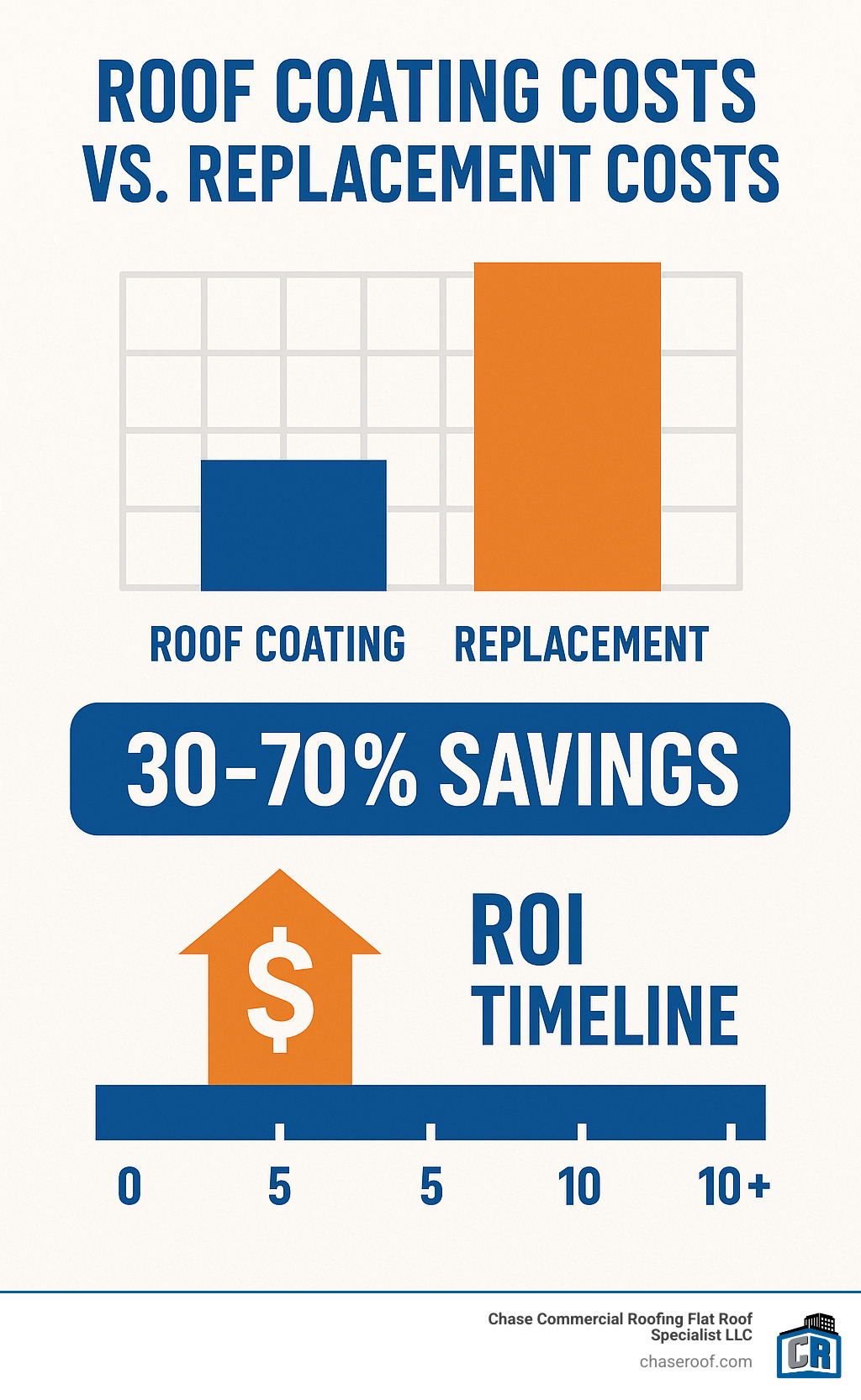
When facility managers in New Jersey face aging roofs, the question isn’t whether to act – it’s whether roof coating paint makes more financial sense than complete replacement. After helping hundreds of businesses across the Garden State make this decision, I can tell you the numbers usually speak for themselves.
Roof coating paint typically costs between $0.40-$2.00 per square foot, while full replacement runs $8-15 per square foot. For that 20,000 square foot warehouse in Paterson, you’re looking at $15,000-$40,000 for coating versus $160,000-$300,000 for replacement. That’s a savings of 30-70% right off the bat.
Quality coatings come with 10-20 year warranties, meaning you’re getting decades of protection at a fraction of replacement cost. The energy savings sweetens the deal even more – reflective coatings can cut cooling costs by 10-15%, adding up to thousands of dollars annually for larger facilities.
For businesses weighing their options, our commercial roof replacement services include detailed cost-benefit analysis. Sometimes replacement really is the better choice – particularly when structural issues or severely deteriorated decking are involved.
Coverage & Material Calculator
Getting your material estimate right is crucial for roof coating paint success and budget planning. A typical 5-gallon pail covers dramatically different areas depending on what you’re coating. Smooth single-ply membranes might give you 500 square feet per gallon, while rough concrete surfaces might only yield 250 square feet per gallon.
Most coating systems require two coats for full warranty coverage. Don’t forget to factor in 10-15% waste for typical applications. Professional application ensures proper surface preparation, optimal weather timing, and warranty compliance.
Roof Coating Paint vs New Membrane
Beyond the obvious cost savings, roof coating paint offers practical advantages. Service disruption is minimal – most coating projects wrap up in 2-5 days without interrupting operations, while full replacement can shut down sections of your facility for weeks.
The sustainability factor is huge too. Coating your existing roof keeps thousands of pounds of material out of New Jersey landfills while extending the life of systems that still have good structural integrity.
Maintenance, Limitations & When to Call a Pro
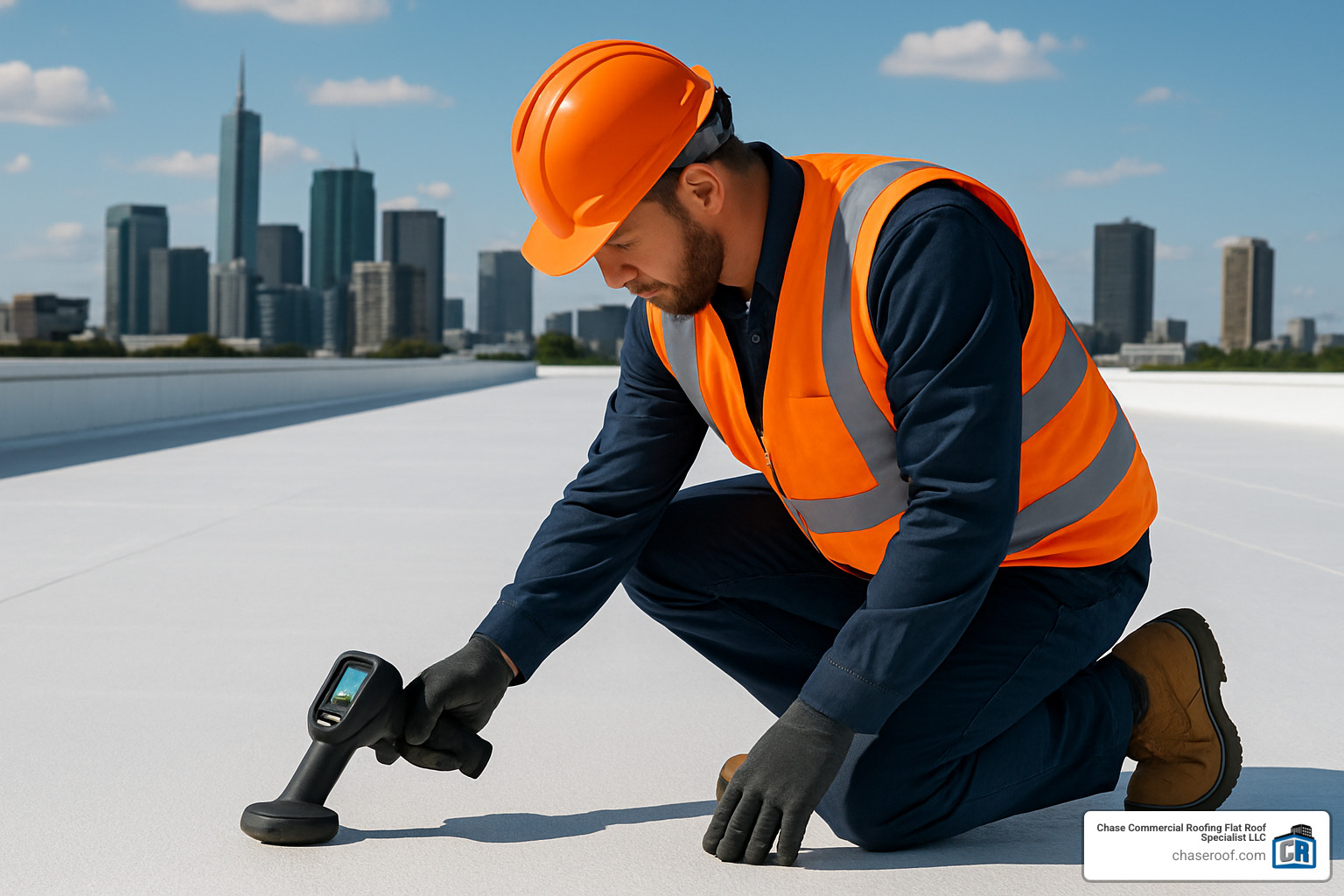
Even the best roof coating paint isn’t a “set it and forget it” solution. Regular maintenance keeps it running smoothly for years, but neglect it and you’ll face expensive problems down the road.
Annual inspections are your best defense against small problems becoming big headaches. We walk every roof we’ve coated, looking for debris accumulation around drains and checking for any damage from foot traffic.
Cleaning debris from gutters and drains is critical – standing water can stress even the best silicone coatings over time. Recoat cycles vary significantly based on your coating type. Acrylic coatings typically need refreshing every 8-12 years, while premium silicone systems can go 15-20 years between major recoats.
For situations requiring immediate attention, our emergency roof repair services are available around the clock.
Situations Roof Coating Paint Can’t Solve
Here’s where I need to be straight with you – roof coating paint isn’t magic. Structural damage to your roof deck needs fixing before any coating discussion begins. Wet or saturated insulation is another coating killer. Moisture trapped under a coating will eventually cause failure.
Severe rust-through on metal roofs requires metal replacement, not just coating over the holes. Steep-slope shingle roofs aren’t good coating candidates either.
Scheduling Pro Maintenance in New Jersey
New Jersey’s weather presents unique challenges. Winter freeze-thaw cycles can stress even the most flexible coatings. We recommend spring inspections after the last frost and fall inspections to prepare your roof for winter.
Our routine service plans include regular inspections, minor repairs, and preventive treatments that extend coating life while maintaining warranty coverage. Scheduled maintenance costs about 20% of what emergency repairs typically run.
For comprehensive information about our ongoing maintenance programs, our commercial roofing services include detailed maintenance planning that keeps your investment protected year-round.
Frequently Asked Questions About Roof Coating Paint
Over the years, we’ve answered thousands of questions about roof coating paint from facility managers across New Jersey. Here are the three questions we hear most often, along with the honest answers based on our three decades of experience in the field.
How long does roof coating paint last?
The lifespan of roof coating paint depends heavily on what type you choose and how well it’s applied. We typically see acrylic elastomeric coatings performing well for 10-15 years when properly maintained, while premium silicone coatings can go strong for 15-20 years or even longer.
I’ve personally inspected silicone coatings we applied two decades ago that are still providing excellent waterproofing protection. The secret isn’t just the product quality – it’s the combination of proper surface preparation, correct application thickness, and regular maintenance.
Weather exposure plays a huge role in coating longevity. Roofs that get pounded by New Jersey’s harsh winters and baking summers will naturally age faster than protected areas. But even under tough conditions, quality coatings with annual inspections consistently outperform neglected installations by years.
The bottom line? Invest in quality materials and professional application, then stay on top of simple maintenance. Your coating will reward you with decades of reliable service.
Can roof coating paint be applied over metal roofs?
Absolutely! Metal roofs are actually some of our favorite surfaces for roof coating paint applications. They’re stable, don’t retain moisture like other substrates, and provide excellent adhesion when properly prepared.
We’ve successfully coated thousands of square feet of metal roofing throughout New Jersey. The key is thorough preparation – we remove all rust and oxidation, apply appropriate primers when the substrate requires it, and select coatings specifically formulated for metal applications.
Aluminum fibered coatings work particularly well on metal roofs because they provide both waterproofing and corrosion protection in one system. We’ve seen these coatings completely transform rusted metal roofs, giving them another 15-20 years of reliable service.
The preparation work is crucial though. Skip the proper cleaning and priming steps, and even the best coating will fail prematurely. That’s why we always recommend professional application for metal roof coating projects.
What is the typical dry-to-touch time?
Roof coating paint dry times can vary quite a bit depending on the weather conditions and coating chemistry. Most coatings we apply are dry to touch within 4-8 hours under normal New Jersey weather conditions, but full cure takes a solid 24-48 hours.
Silicone coatings typically cure faster than acrylics and often achieve rain resistance within just 2-4 hours. That’s one reason we recommend them for projects with tight weather windows.
But here’s the important part – even if the coating feels dry to touch, we never recommend foot traffic or severe weather exposure until it’s completely cured. High humidity or cool temperatures can extend cure times significantly, which is why we monitor weather forecasts closely and plan application timing accordingly.
We’ve learned over the years that patience during the curing process pays off with better long-term performance. Rush the process, and you might compromise the coating’s ability to protect your roof for decades to come.
Conclusion
The right roof coating paint can be a game-changer for your New Jersey commercial property. Instead of facing the stress and expense of a complete roof replacement, you can extend your roof’s life by 10-20 years while slashing energy costs and avoiding business disruptions.
After three decades of helping businesses across New Jersey protect their investments, I’ve seen how quality roof coating paint transforms aging roofs into reliable, energy-efficient systems. The key is working with experienced professionals who understand our challenging climate and know which coatings perform best on different roof types.
At Chase Commercial Roofing Flat Roof Specialist LLC, we take pride in being Woodland Park’s trusted roofing experts. Our certified technicians provide comprehensive solutions that include thorough roof assessment, proper surface preparation, professional application, and ongoing maintenance support.
Whether you’re managing a warehouse in Newark dealing with ponding water issues, an office building in Paterson looking to reduce cooling costs, or a manufacturing facility in Jersey City with an aging metal roof, we have the expertise to recommend and apply the perfect roof coating paint solution for your specific situation.
Our commitment goes beyond just getting the job done. We understand that your roof protects your business, your employees, and your bottom line. That’s why we use only the highest-quality coating materials and follow manufacturer specifications to the letter, ensuring you get the full warranty protection and performance you’re paying for.
For detailed information about our flat roof systems and coating options, we’re here to help. Every project starts with a thorough assessment where we identify potential issues, discuss your options, and provide a detailed estimate with no surprises.
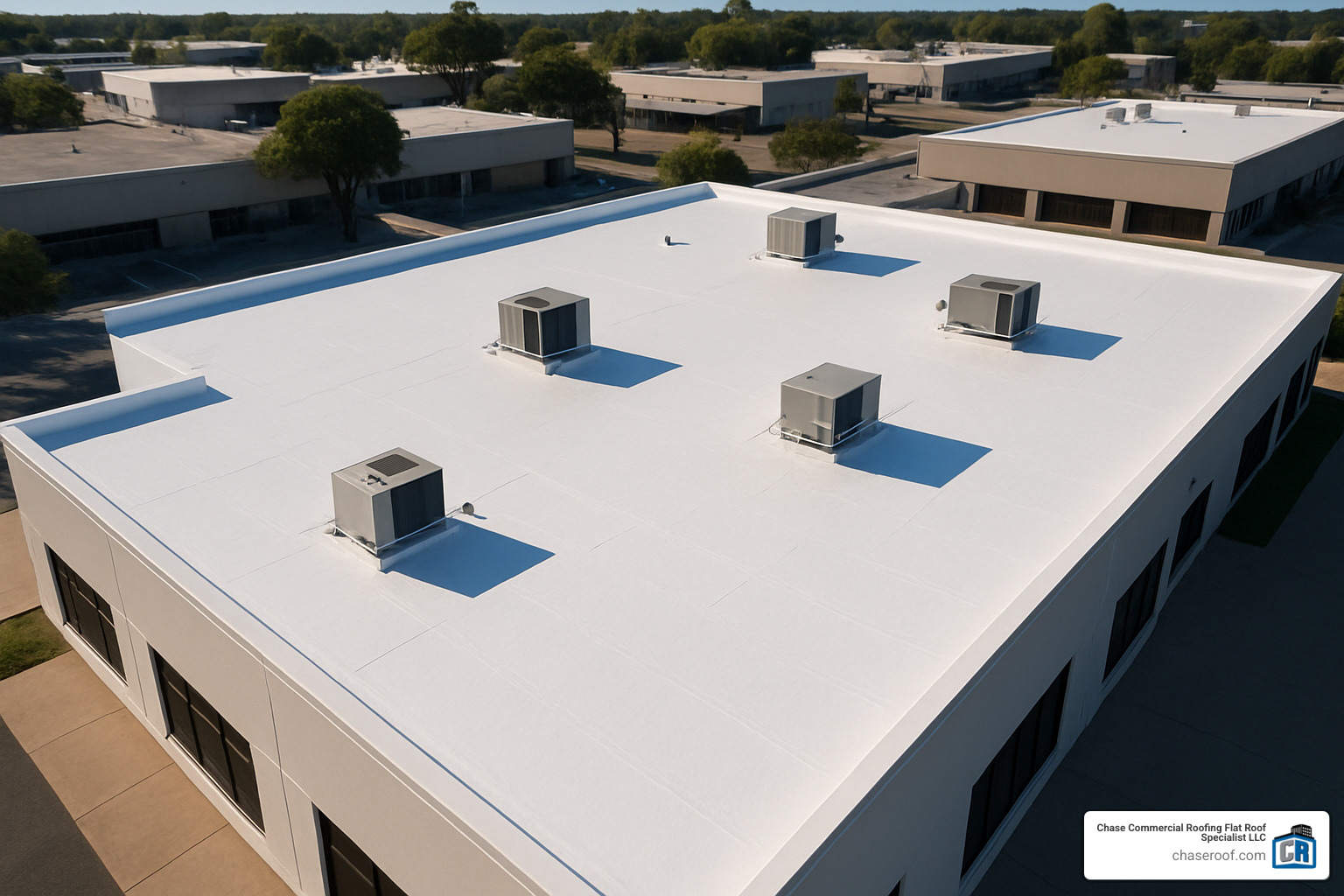
Don’t let minor roof problems turn into major headaches. The longer you wait, the more expensive repairs become, and eventually, you might face emergency situations that could have been prevented with timely coating application.
Call Chase Commercial Roofing Flat Roof Specialist LLC today for your free estimate. We’ll show you exactly how the right roof coating paint can save you money, extend your roof’s life, and give you peace of mind for years to come.
Visit our Woodland Park location page to learn more about our services in your area, or contact us directly to schedule your consultation. When it comes to protecting your commercial property, experience matters – and we’ve been keeping New Jersey businesses dry and comfortable for over 30 years.