What to Do When Your Commercial Roof Starts Leaking
A commercial roof leak rarely fixes itself. When water begins dripping through a ceiling or staining interior walls, the priority is to protect people, equipment, inventory, and the building itself while determining where the water is actually entering.
For businesses needing roof leak repair in Passaic, NJ, acting promptly can help limit the amount of moisture that spreads through insulation, decking, ceilings, and other building materials.
At Chase Commercial Roofing, we provide commercial flat roof inspection, repair, replacement, and emergency roofing services throughout New Jersey, including dedicated commercial roofing services in Passaic.
First Steps When You Discover a Roof Leak
If water is actively entering the building, focus first on safety and limiting interior damage.
- Move equipment, merchandise, documents, and furniture away from the affected area.
- Place containers beneath active drips where it is safe to do so.
- Keep employees and customers away from wet electrical equipment or visibly unstable ceiling materials.
- Photograph visible damage for your records.
- Contact a qualified commercial roofing contractor to inspect the roof.
Do not send untrained employees onto a wet commercial roof to investigate the leak. Roof surfaces can be slippery, and low-slope roofing work involves significant fall hazards.
Signs of a Commercial Roof Leak Inside Your Building
Some roof leaks are obvious. Others begin with subtle interior signs long before water starts dripping onto the floor.
Water Stains
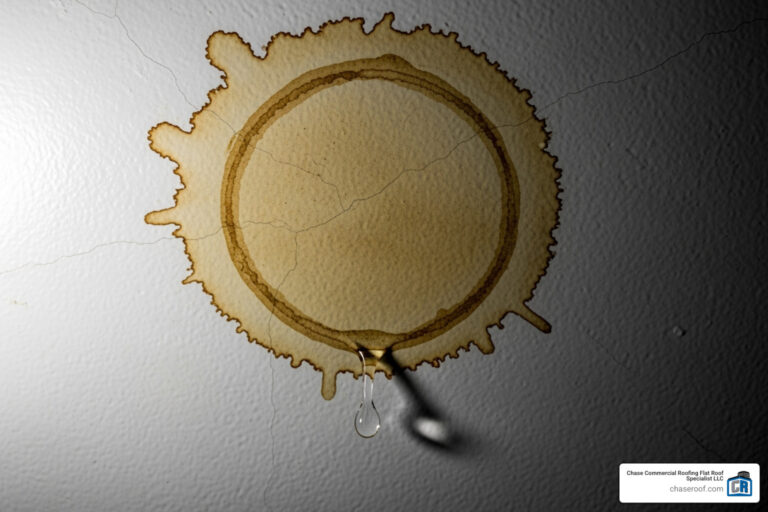
Yellow, brown, or dark stains on ceilings and walls can indicate moisture intrusion from the roofing system.
The visible stain is not always directly beneath the actual roof defect because water may travel through insulation, decking, or structural components before becoming visible indoors.
Sagging Ceiling Materials
Ceiling tiles or drywall that begin to sag may be holding moisture and should be treated cautiously.
Keep people away from unstable ceiling areas and address the water source professionally.
Peeling or Bubbling Paint
Paint and wall finishes can bubble, peel, or discolor when moisture accumulates behind them.
Musty Odors
Persistent musty smells near upper floors or ceilings may indicate hidden moisture. The cause could be roofing, plumbing, HVAC condensation, or another source, so the area should be investigated rather than automatically attributed to the roof.
Active Dripping
Water entering during rainfall is one of the clearest indications that the building envelope has been compromised and should be evaluated promptly.
Common Causes of Commercial Roof Leaks in Passaic
Passaic commercial properties commonly use flat and low-slope roofing systems, where leaks may develop from several different components.
Membrane Punctures and Tears
Foot traffic, HVAC service, dropped tools, construction activity, storms, or wind-blown debris can puncture commercial roofing membranes.
Even a small opening can allow moisture beneath the roof surface.
Open or Deteriorated Seams
Single-ply roofing systems such as TPO, EPDM, and PVC contain seams joining sections of membrane.
When those seams become damaged or separated, they may create a pathway for water intrusion.
Failed Flashing
Flashing protects the transitions around:
- HVAC equipment
- Pipes
- Vents
- Skylights
- Parapet walls
- Roof edges
- Drains
Because these areas interrupt the continuous roofing surface, flashing defects are common places for leaks to develop.
Deteriorated Sealants
Sealants around penetrations and transitions can deteriorate from age, ultraviolet exposure, movement, and weather.
Simply applying more sealant is not always a permanent repair. The underlying flashing and roofing materials should also be evaluated.
Blocked Roof Drains
Leaves, trash, sediment, and other debris can restrict roof drains and scuppers.
When water cannot leave the roof efficiently, ponding can develop and increase exposure around seams, penetrations, and existing weak areas.
Why Ponding Water Deserves Attention
Flat roofs are designed with enough slope to direct water toward drainage points, even though they appear flat from the ground.
Recurring standing water can be associated with:
- Blocked drains
- Compressed insulation
- Low areas in the roof
- Deck movement
- Inadequate drainage design
Repairing a leak without correcting a recurring drainage problem may leave the roof vulnerable to additional problems.
How New Jersey Weather Can Affect Commercial Roofs
Commercial roofs in Passaic experience changing temperatures, heavy rainfall, winter weather, high winds, and seasonal storms.
Weather-related problems can include:
- Wind damage to edges or flashing
- Debris punctures
- Snow and ice accumulation
- Freeze-thaw deterioration
- Overwhelmed drainage systems
FEMA recommends preparing properties for severe winter weather and taking steps to protect buildings and occupants during snow, ice, and extreme cold events.
You can review Ready.gov winter weather guidance for additional preparedness information.
Emergency Roof Leak Repair in Passaic
Some leaks can wait for a scheduled inspection. Others require faster professional attention.
Emergency service may be appropriate when there is:
- Heavy active leaking
- Storm-damaged roofing
- Large membrane tears
- Loose roofing components
- Serious drainage backups
- Possible structural damage
Temporary repairs may sometimes be necessary to limit additional water intrusion until permanent work can be safely completed.
Chase provides emergency commercial roof repair for urgent roofing problems throughout New Jersey.
How a Professional Finds the Source of a Roof Leak
Locating a commercial roof leak can be more complicated than finding the interior drip.
A professional inspection may evaluate:
- Roof membrane
- Seams
- Flashing
- Penetrations
- Roof edges
- Drains and scuppers
- HVAC curbs
- Previous repair areas
- Visible moisture damage
The objective is to determine both where water is entering and how far it may have traveled through the roofing assembly.
Common Commercial Roof Leak Repairs
Membrane Patching
Localized punctures or tears may be repaired using materials compatible with the existing roof system.
Seam Repair
Damaged or open seams may require cleaning, preparation, and system-specific repair methods.
Flashing Repair
Failed flashing around walls, equipment, drains, pipes, and other transitions can be repaired or replaced depending on its condition.
Drainage Repair
Clogged or damaged drainage components may need to be cleaned, repaired, or otherwise corrected as part of addressing the leak.
Roof Coatings
Some serviceable commercial roofs may qualify for restoration using commercial roof coatings after leaks and damaged areas have first been properly repaired.
A coating should not simply be applied over saturated insulation or unresolved roof damage.
Repairing TPO Roof Leaks
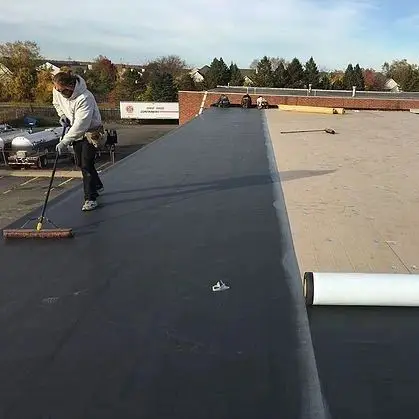
TPO is a thermoplastic single-ply membrane commonly used on commercial low-slope roofs.
Repairs may involve compatible TPO membrane and heat-welded seams depending on the location and type of damage.
Learn more about Chase’s TPO roofing services in New Jersey.
Repairing EPDM Roof Leaks
EPDM is a synthetic rubber roofing membrane. Repair materials may include compatible primers, adhesives, tapes, flashing products, and membrane patches.
Chase also provides EPDM roofing repair and installation throughout New Jersey.
Why DIY Commercial Roof Repair Can Be Risky
A commercial roof leak may look simple from inside the building but be difficult to diagnose accurately from the roof surface.
DIY repair also creates several risks:
- Falls from roof edges
- Slippery surfaces
- Skylight and roof-opening hazards
- Use of incompatible repair materials
- Damage to the existing roof membrane
- Failure to identify wet insulation or decking
OSHA requires fall protection for many roofing activities and has specific requirements for work performed on low-slope roofs.
Review OSHA’s fall-protection requirements for more information.
How Much Does Roof Leak Repair in Passaic Cost?
There is no single reliable price for commercial roof leak repair because costs depend on the exact condition of the building.
Important factors include:
- Roofing material
- Size of the damaged area
- Location of the leak
- Roof accessibility
- Wet insulation
- Deck damage
- Flashing complexity
- Drainage problems
- Emergency or temporary work
A professional inspection and written scope of work are the best way to establish a realistic repair cost.
Can Property Insurance Cover a Commercial Roof Leak?
Insurance coverage depends on the specific policy and cause of the damage.
Damage associated with a sudden covered event may be treated differently from deterioration, normal wear, or maintenance-related conditions.
Property owners should review their policy and contact their insurance company or licensed insurance professional for coverage questions.
If the roof has been damaged by a storm or another event, photographs, inspection findings, maintenance records, and written roofing estimates can help document the physical condition of the property.
When Does a Leaking Roof Need Replacement?
A roof leak does not automatically mean the entire system needs to be replaced.
| Repair May Make Sense When | Replacement May Make Sense When |
|---|---|
| Damage is localized | Damage is widespread |
| Leaks occur in one area | Leaks recur throughout the roof |
| Most insulation remains dry | Large areas of insulation are wet |
| Membrane remains serviceable | Membrane deterioration is extensive |
| Repair offers good long-term value | Repair spending has become repetitive |
When replacement becomes the more practical option, Chase provides commercial roof replacement throughout New Jersey.
How Regular Roof Maintenance Helps Prevent Leaks
Routine inspection and maintenance can help identify small roof problems before they lead to extensive moisture intrusion.
Maintenance may include:
- Clearing drains and scuppers
- Removing roof debris
- Inspecting seams
- Checking flashing
- Monitoring ponding areas
- Inspecting around rooftop equipment
- Checking previous repair areas
- Inspecting after major storms
The National Roofing Contractors Association encourages building owners to establish roof maintenance programs and address developing roofing problems before they become more serious.
Review the NRCA’s roof repair and maintenance guidance for additional information.
Choosing a Commercial Roofer in Passaic
Commercial flat roofs require specialized experience, especially when repairing TPO, EPDM, modified bitumen, coatings, metal roofing, and complex rooftop penetrations.
When comparing roofing contractors, look for:
- Commercial roofing experience
- Experience with your specific roof system
- Insurance and applicable credentials
- Manufacturer training or certifications where relevant
- Local references
- Customer reviews
- Written estimates
- Clear warranty information
- Safety procedures
Drip, Drip, Done—Stop the Leak Before It Spreads
Fast action matters when a commercial roof begins leaking, but the goal should be more than simply stopping the visible drip. A lasting roof leak repair in Passaic, NJ starts with identifying the actual source of water intrusion and determining whether surrounding insulation, decking, flashing, or drainage systems have also been affected.
Chase Commercial Roofing provides commercial roofing services throughout New Jersey, including roof leak repair, emergency service, TPO, EPDM, roof coatings, metal roofing, and roof replacement.
If your commercial property in Passaic has developed a roof leak, contact Chase Commercial Roofing to schedule an inspection and determine the right repair strategy.