What Is TPO Roofing – Complete Guide For Commercial Building Owners
Are you wondering what is TPO Roofing? In this complete guide for commercial building owners we will discuss everything you need to know! You may also contact our New Jersey commercial roofing company today with any of the questions you may have on the topic! We are NJ’s TPO roofing contractors with 20+ years of experience!
Choosing The Right Roofing System Is Crucial
When it comes to protecting a commercial building, choosing the right roofing system is an important decision. Commercial roofs need to withstand changing weather conditions, moisture, UV exposure, temperature fluctuations, and years of everyday wear. For buildings with flat or low-slope roofs, one of the most popular roofing materials available today is TPO roofing.
TPO roofing is commonly installed on office buildings, warehouses, retail properties, industrial facilities, apartment buildings, and other commercial structures. Its durability, energy efficiency, and relatively low maintenance requirements have made it a popular choice for property owners throughout New Jersey.
At Chase Commercial Roofing Flat Roof Specialists, located at 256 Bergen Blvd Ste 301, Woodland Park, NJ 07424, we specialize in commercial and flat roofing systems. We also provide commercial roof replacements in New Jersey. Understanding how TPO roofing works can help building owners determine whether it may be the right choice for their property.
What Is TPO Roofing?
TPO stands for thermoplastic polyolefin. It is a type of single-ply roofing membrane designed primarily for flat and low-slope commercial roofs.
Although it is called a single-ply roofing system, a complete TPO roof consists of multiple components. Depending on the building and installation method, these can include insulation, cover boards, fasteners, adhesives, flashing, and the TPO membrane itself.
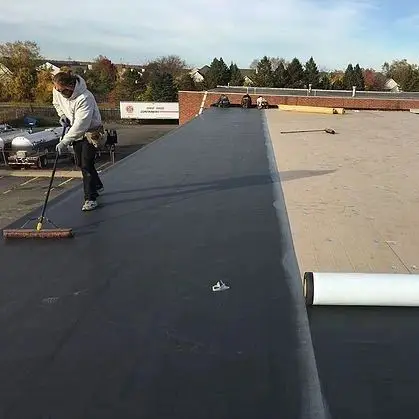
The membrane is typically available in large sheets that are rolled across the roof surface. The seams between sheets are heat-welded together, creating a continuous roofing surface designed to resist water intrusion.
TPO membranes are commonly white, although other colors may be available. White TPO is particularly popular on commercial buildings because its reflective surface can help reduce the amount of solar heat absorbed by the roof. The U.S. Department of Energy explains how reflective cool roofs can reduce solar heat absorption and help lower roof temperatures.
Why Is TPO Popular for Commercial Flat Roofs?
One reason TPO has become such a common commercial roofing material is its combination of performance and affordability.
Commercial property owners need roofing systems capable of covering large roof areas without creating unnecessary maintenance or energy costs. TPO can provide a practical balance between initial installation costs, durability, energy efficiency, and long-term performance.
It can also be installed on many different types of commercial buildings, making it a versatile option for businesses and property owners considering a commercial roof replacement.
Benefits of TPO Roofing
There are several reasons a building owner may choose TPO for a commercial flat roof.
Energy Efficiency
One of the most recognizable characteristics of TPO roofing is its reflective surface.
Traditional dark roofing materials can absorb substantial amounts of heat from sunlight. A reflective TPO membrane can help reduce heat absorption, particularly during the warmer months.
For commercial buildings with large roof surfaces, reducing heat transfer into the building may help decrease the workload placed on the cooling system.
Strong Seam Protection
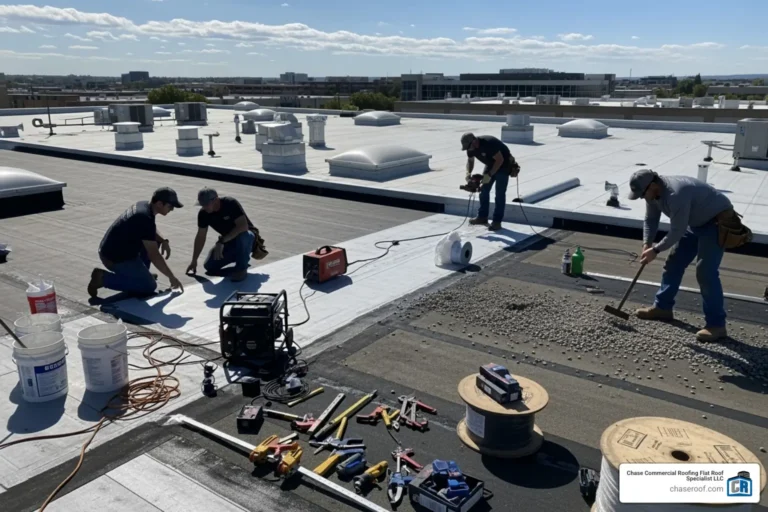
The seams of a TPO roof are typically heat-welded rather than simply taped together. Specialized equipment heats the overlapping membrane sections so they fuse together.
Properly installed seams create a strong barrier against moisture and are one of the reasons TPO works well for large commercial flat roofs.
However, seam quality depends heavily on proper installation. Working with an experienced commercial roofing contractor is important when installing or repairing a TPO roofing system.
Resistance to UV Exposure
Commercial roofs receive continuous exposure to sunlight. Over time, ultraviolet radiation can contribute to deterioration in many roofing materials.
TPO roofing is manufactured to resist UV exposure and weathering, helping it perform under the demanding conditions commercial roofs face.
Flexibility
Roofing materials naturally expand and contract as temperatures change. This can be especially important in New Jersey, where commercial roofs experience hot summers, freezing winter temperatures, snow, ice, rain, and significant seasonal temperature changes.
TPO membranes offer flexibility that allows the roofing system to accommodate normal building and temperature-related movement.
Relatively Low Maintenance
All commercial roofing systems require routine inspections and maintenance, but TPO roofs can be relatively straightforward to maintain when installed correctly.
The National Roofing Contractors Association provides TPO inspection, maintenance, and repair guidance emphasizing periodic inspection and preventive maintenance to help extend the service life of TPO membrane roofing systems.
Keeping drains clear, removing debris, checking seams and flashing, and repairing minor damage promptly can help prevent larger roofing problems.
How Is TPO Roofing Installed?
There are several methods for installing a TPO roofing system. The appropriate installation method depends on the building, roof deck, existing roofing system, and other structural considerations.
A TPO roof may be mechanically attached using specialized fasteners. It may also be fully adhered to the roofing substrate using approved adhesives.
Before installing the membrane, the roofing contractor may install insulation and other components necessary for the particular roofing system.
Once the TPO membrane is positioned, the seams are heat-welded. Special attention must also be given to penetrations and transition areas, including vents, HVAC equipment, drains, curbs, flashing, and roof edges.
These areas are particularly important because improper flashing or installation can create potential entry points for water.
Learn more about our commercial roof installation services for flat and low-slope commercial properties.
How Long Does a TPO Roof Last?
The lifespan of a TPO roof depends on several factors, including membrane thickness, installation quality, weather exposure, maintenance, drainage, foot traffic, and the overall condition of the roofing system.
A properly installed and maintained commercial TPO roof can often provide many years of reliable service.
Routine commercial roof inspections are one of the best ways to maximize the lifespan of the system. Small problems are generally easier and less expensive to address before they result in widespread moisture damage.
Common TPO Roofing Problems
Although TPO is durable, no commercial roofing system is maintenance-free.
One potential issue is seam failure. If seams become damaged or were not properly welded during installation, water may eventually penetrate the roofing system.
Punctures can also occur from dropped tools, HVAC work, heavy foot traffic, storm debris, or other activity on the roof.
Flashing around rooftop equipment and penetrations should also be inspected regularly.
Another significant concern for flat roofs is ponding water. Water that remains on the roof for extended periods may indicate drainage problems or low areas in the roofing system. Persistent standing water should be evaluated by a commercial roofing professional.
Building owners should also watch for interior warning signs such as ceiling stains, unusual moisture, mold growth, or active leaks.
If problems are localized, professional commercial roof repair may be able to correct the issue without requiring complete replacement.
TPO Roofing vs. EPDM Roofing
TPO and EPDM roofing are two of the most widely used single-ply systems for commercial flat roofs.
One of the most obvious differences is appearance. TPO is commonly white and reflective, while traditional EPDM roofing is typically black.
The systems also use different seam technologies. TPO seams are generally heat-welded, whereas EPDM systems commonly rely on adhesives and specialized seam tapes.
Neither roofing material is automatically the right choice for every building. Roof configuration, budget, insulation requirements, drainage, existing materials, and long-term plans for the property should all be considered.
A professional commercial roofing inspection can help determine which system is best suited for a particular building.
Is TPO Roofing Right for Your Commercial Building?
TPO can be an excellent option for warehouses, offices, retail centers, industrial properties, multifamily buildings, and many other commercial structures with flat or low-slope roofs.
However, the performance of any commercial roofing system depends heavily on proper installation.
Before choosing a roofing material, building owners should have the existing roof evaluated. A professional roofer can inspect the roof deck, drainage, insulation, existing membrane, flashing, penetrations, and other components before recommending repair, restoration, or complete commercial roof replacement.
Commercial TPO Roofing in New Jersey
New Jersey commercial roofs face demanding weather conditions throughout the year. Heavy rain, snow, ice, summer heat, high winds, and freeze-thaw cycles can all take a toll on a flat roofing system.
Regular inspections and timely repairs can help prevent minor TPO roofing problems from becoming expensive leaks or structural damage.
Chase Commercial Roofing Flat Roof Specialists, located at 256 Bergen Blvd Ste 301, Woodland Park, NJ 07424, provides commercial roofing services for businesses and property owners throughout New Jersey. Our team specializes in flat roofing systems and understands the unique requirements of commercial properties.
Whether a building needs a TPO roof inspection, TPO roof repair, commercial roof replacement, or a new flat roofing system, working with experienced commercial roofing professionals can help protect the property and maximize the service life of the roof.
You can learn more about our commercial roofing services or view our commercial roofing service areas throughout New Jersey.
If you’re considering TPO roofing for a commercial building or are concerned about the condition of an existing flat roof, contact Chase Commercial Roofing Flat Roof Specialists to schedule a professional roof evaluation.