Why Flat Roof Drain Cleaning Matters
Flat roof drain cleaning is an important part of maintaining a commercial roofing system. Unlike steep-slope roofs that shed water quickly toward the edges, flat and low-slope roofs rely heavily on drains, scuppers, gutters, and properly designed slope to move rainwater away from the building.
When drainage becomes blocked, water can collect on the roof and increase exposure around seams, flashing, penetrations, and other vulnerable areas.
At Chase Commercial Roofing, we inspect, repair, and maintain commercial flat roofing systems throughout New Jersey, including drainage systems that play a critical role in overall roof performance.
Common Signs of a Clogged Flat Roof Drain
A blocked drain does not always cause an immediate interior leak. Often, the roof shows warning signs first.
Ponding Water
If water repeatedly remains in the same areas after rainfall, drainage should be evaluated.
The cause may be something as simple as debris around a drain, but recurring ponding can also involve roof slope, compressed insulation, deck movement, or an undersized or damaged drainage system.
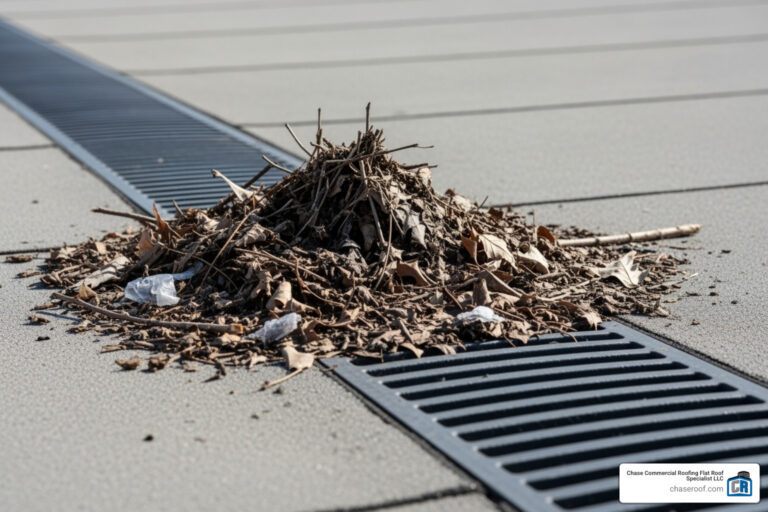
Visible Debris Around Drain Domes
Leaves, branches, trash, sediment, and other materials can accumulate around drain strainers and restrict water flow.
Overflowing Scuppers or Gutters
If water backs up or overflows during rainfall, the drainage pathway may be restricted.
Interior Water Stains
Ceiling stains, wet walls, or active dripping can indicate that water has found a pathway into the roofing assembly.
If you’re already noticing signs of moisture, Chase provides commercial roof repair in New Jersey.
Plant Growth or Organic Buildup
Repeated standing water and accumulated debris can sometimes support algae, weeds, moss, or other organic growth on the roof.
That is usually a sign that drainage and roof maintenance deserve attention.
What Causes Flat Roof Drains to Clog?
Commercial roofs can collect surprising amounts of material over time.
Common causes include:
- Leaves
- Twigs and branches
- Wind-blown trash
- Dirt and sediment
- Roofing granules or loose materials
- Bird nests
- Construction debris
- Ice or frozen buildup during winter
Buildings surrounded by mature trees or exposed to frequent wind may require more frequent drainage inspections.
Why Ponding Water Can Become a Bigger Problem
Standing water adds weight to a roofing system and can increase the amount of time roofing materials remain exposed to moisture.
Water weighs approximately 5.2 pounds per square foot for every inch of depth. That means even a relatively shallow area of ponding water can add substantial weight when spread across a large commercial roof.
Recurring ponding can also increase exposure around:
- Membrane seams
- Flashing
- Roof drains
- HVAC curbs
- Penetrations
- Previous repair areas
Persistent ponding should be investigated rather than treated only as a cleaning issue.
Understanding Commercial Flat Roof Drainage Systems
Not every flat roof drains the same way. The drainage design depends on the building, parapet configuration, roof slope, and plumbing system.
Internal Roof Drains
Internal drains are located within the roof field and direct water into piping that runs through the building.
Drain domes or strainers help prevent large debris from entering the piping system.
Scuppers
Scuppers are openings through parapet walls that allow roof water to leave the roof surface.
They may discharge directly away from the building or connect with conductor heads and downspouts.
Gutters and Downspouts
Some low-slope roofs direct water toward perimeter gutters, which then carry water into downspouts.
Primary and Overflow Drainage
Some commercial roof designs include both primary drainage and secondary or overflow drainage.
Overflow components can provide an alternate path for water if the primary drainage system becomes overwhelmed or blocked.
How Often Should Flat Roof Drains Be Checked?
There is no single maintenance schedule that works for every building.
Inspection frequency should consider:
- Surrounding trees
- Local weather
- Roof size
- Drainage design
- Previous clogging problems
- Building use
- Roof age and condition
For many commercial properties, checking drainage during routine seasonal roof inspections and after significant storms is a sensible maintenance practice.
The National Roofing Contractors Association recommends regular roof inspection and maintenance as part of managing commercial roofing systems.
Property owners can review the NRCA’s roof repair and maintenance guidance for additional information.
What Should Be Included in a Drainage Inspection?
A roof drainage inspection should look beyond whether the drain opening appears clear.
Important areas include:
- Drain strainers and domes
- Scuppers
- Gutters
- Downspouts
- Overflow drains
- Membrane around drain assemblies
- Flashing
- Ponding areas
- Loose debris across the roof
If the same area repeatedly holds water even after drains are clear, the problem may involve the roof assembly rather than the drain itself.
When Is Drain Cleaning More Than a Maintenance Issue?
Sometimes cleaning removes the obstruction and restores proper drainage. Other times, the clog is only one symptom of a larger roofing problem.
Professional evaluation may be appropriate when:
- Water continues to pond after drains are cleared
- The drain assembly appears loose or damaged
- Roof membrane is deteriorated around the drain
- Water is entering the building
- There are soft or sagging areas nearby
- Drain piping appears blocked deeper in the system
- Overflow drainage is not functioning properly
Flat Roof Drain Cleaning and Roof Safety
Commercial roof maintenance should never ignore fall hazards.
Wet membranes, roof edges, skylights, ladders, rooftop equipment, and unstable surfaces can create serious risks.
OSHA has specific requirements for fall protection during roofing and other elevated work.
For additional information, review OSHA’s walking-working surface and fall-protection requirements.
Untrained building employees should not be sent onto a commercial roof simply to clear a drain if safe access and appropriate fall protection are not already in place.
Can a Clogged Drain Cause a Roof Leak?
Yes, a clogged drain can contribute to conditions that increase the likelihood of water intrusion.
When water backs up, it may remain around seams, flashing, penetrations, and membrane defects for longer periods.
However, a clogged drain is not necessarily the actual leak source. The roofing membrane, flashing, seams, or drain assembly may also have defects.
Drain Problems on TPO Roofs
TPO roofs typically use heat-welded thermoplastic membrane around roof drains and other penetrations.
If the membrane around a drain becomes damaged, the area should be repaired using materials and techniques compatible with the TPO system.
Learn more about Chase’s TPO roofing services in New Jersey.
Drain Problems on EPDM Roofs
EPDM roofs require compatible rubber membrane, primers, adhesives, flashing materials, and related repair products.
Drain details should be evaluated carefully if water intrusion is occurring near the drainage assembly.
Chase also provides EPDM roofing installation and repair throughout New Jersey.
What If Water Still Ponds After the Drain Is Clean?
If drainage components are clear but standing water remains, the issue may involve:
- Improper roof slope
- Compressed insulation
- Deck deflection
- Settled areas
- Insufficient drainage capacity
- Poorly positioned drains
Correcting these problems may require tapered insulation, drainage modifications, localized reconstruction, or a larger roofing project.
Can Roof Coatings Fix Drainage Problems?
No. A roof coating can protect compatible roofing surfaces, but it does not correct poor slope or inadequate drainage.
Drainage issues should be addressed before a coating system is installed.
For suitable roofing systems, Chase provides commercial roof coating services after necessary repairs and preparation have been completed.
How Drain Maintenance Helps Protect Your Roof
Keeping commercial roof drainage systems functional can help reduce unnecessary water accumulation and make developing problems easier to identify.
A broader maintenance program may include:
- Drain and scupper inspections
- Debris removal
- Flashing inspections
- Seam inspections
- Checking roof penetrations
- Reviewing previous repairs
- Monitoring ponding areas
- Post-storm inspections
Frequently Asked Questions About Flat Roof Drain Cleaning
What are the main types of flat roof drainage?
Commercial flat roofs commonly use internal roof drains, scuppers, gutters, or a combination of drainage systems.
Can I tell if a drain is clogged from inside the building?
Sometimes. Interior leaks, unusual drainage noises, or water appearing near drain piping can indicate a problem, but a roof inspection may be necessary to determine the actual cause.
Does every area of ponding water mean the drain is clogged?
No. Standing water can also result from inadequate slope, compressed insulation, deck movement, or drainage design issues.
Should roof drains be checked after storms?
It can be a good maintenance practice, particularly after storms that leave branches, leaves, or other debris on the roof.
When should I call a professional?
Professional help is appropriate when roof access is unsafe, the blockage cannot be easily identified, ponding continues after obvious debris has been removed, or there are signs of leaking, damaged roofing materials, or structural problems.
Keep the Water Moving
Flat roof drain cleaning may sound like a small maintenance task, but a properly functioning drainage system plays an important role in protecting the entire commercial roof.
Keeping drains, scuppers, and gutters clear helps water leave the roof efficiently and makes it easier to identify more serious drainage or roofing problems before they lead to extensive damage.
Chase Commercial Roofing provides commercial roofing services throughout New Jersey, including flat roof repair, TPO, EPDM, coatings, roof replacement, emergency service, and preventive roofing maintenance.
If your commercial roof has recurring ponding water, clogged drains, or signs of leaking, contact Chase Commercial Roofing to schedule an inspection and determine whether the problem is routine maintenance or part of a larger roofing issue.