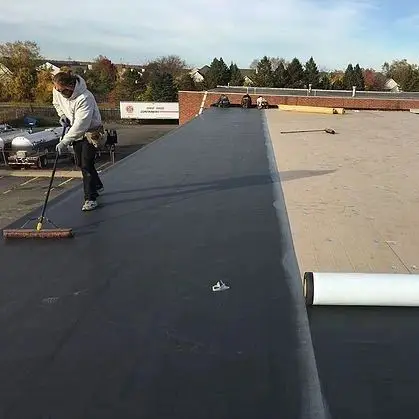
What Is Standing Seam Snap Lock Roofing?
Standing seam snap lock is a type of metal roofing system that uses interlocking panel edges and concealed fasteners to create a clean, continuous roof surface. Rather than driving exposed screws through the face of the metal panels, snap-lock systems typically secure panels using hidden clips beneath the seams.
The adjoining edges of the panels are designed to snap together during installation, creating the raised vertical seams that give standing seam roofing its distinctive appearance.
At Chase Commercial Roofing, we install and service commercial metal roofing systems throughout New Jersey and help property owners determine whether standing seam roofing is appropriate for their building, roof slope, and performance requirements.
How Does Standing Seam Snap Lock Work?
Snap-lock systems use specially formed metal panels with complementary edges. One panel edge engages with the adjoining panel and snaps into place over a concealed clip or fastening assembly.
The exact panel profile varies by manufacturer, but the basic system generally includes:
- Metal roofing panels
- Raised interlocking seams
- Concealed clips or fasteners
- Underlayment or other specified substrate components
- Flashing and trim at roof edges and penetrations
Because the primary fasteners are located beneath the finished metal panels, they are protected from direct exposure to rain, snow, ultraviolet radiation, and other weather.
Why Concealed Clips Matter
One of the main advantages of standing seam roofing is that the fastening system is generally concealed beneath the finished roof surface.
Some clip-attached standing seam systems are specifically designed to allow panels to move as temperatures change. Metal naturally expands when heated and contracts when cooled, so accommodating that movement is an important part of standing seam roof design.
The Metal Construction Association explains that standing seam roof clips are commonly used to accommodate dimensional changes caused by thermal cycling while maintaining the roof panel’s attachment to the supporting structure.
You can review the Metal Construction Association’s Standing Seam Roof Clips Best Practices Guide for additional technical information.
Snap-Lock vs. Exposed-Fastener Metal Roofing
The biggest difference between snap-lock standing seam and exposed-fastener metal roofing is how the panels are attached.
With exposed-fastener systems, screws typically penetrate through the visible face of the roofing panels. The fastener heads and washers remain exposed to weather throughout the life of the roof.
Standing seam systems generally conceal the primary fastening system beneath the panel seams.
| Feature | Snap-Lock Standing Seam | Exposed-Fastener Metal |
|---|---|---|
| Fasteners | Primarily concealed beneath seams | Visible through panel surface |
| Appearance | Clean vertical seams | Visible fastener pattern |
| Thermal Movement | Certain clip systems accommodate panel movement | Movement depends heavily on fastening configuration |
| Typical Application | Architectural and commercial sloped roofs | Agricultural, industrial, commercial, and other applications |
Advantages of Standing Seam Snap Lock Roofing
Concealed Fasteners
Keeping primary fasteners beneath the panel surface reduces their direct exposure to weather and creates a cleaner finished appearance.
Clean Architectural Appearance
Standing seam roofing is known for its long, uninterrupted vertical lines. This can make it attractive for offices, retail buildings, institutional properties, mixed-use developments, and other projects where roof appearance is important.
Accommodation of Thermal Movement
Depending on the specific system, concealed clips may allow panels to move as temperatures change rather than rigidly locking the entire panel in place.
This is especially important with long metal panels that experience repeated heating and cooling throughout the year.
Fewer Exposed Roof Penetrations
Because the primary fasteners are concealed, snap-lock systems avoid many of the exposed screw penetrations found on through-fastened metal roofing.
That does not make the roofing system immune to leaks, however. Flashing, penetrations, seams, roof edges, transitions, installation quality, and drainage still play important roles in overall roof performance.
Efficient Installation
Snap-lock panels are designed to engage during installation without requiring the same field-seaming process used by certain mechanically seamed standing seam systems.
This can simplify portions of the installation process, although commercial installation still requires skilled roofers who understand panel layout, attachment, flashing, expansion, and roof geometry.
Are There Drawbacks to Snap-Lock Roofing?
Yes. Standing seam snap lock can be an excellent solution for appropriate buildings, but it is not automatically the right metal roof for every project.
Roof Slope Matters
Snap-lock systems generally require sufficient roof slope to shed water effectively. Exact minimum slope requirements vary by manufacturer and panel profile.
This is particularly important for Chase’s commercial clients because many commercial buildings have genuinely flat or very low-slope roofs.
In those situations, a different standing seam profile or one of Chase’s commercial flat roof systems may be more appropriate.
Performance Varies by System
Wind uplift, impact resistance, fire ratings, water penetration resistance, allowable spans, and other technical specifications should never be assumed simply because a roof is described as snap-lock.
These characteristics depend on the exact panel manufacturer, gauge, attachment system, substrate, clip spacing, tested assembly, and building design.
It Is Not the Most Weather-Tight Standing Seam Option for Every Application
For demanding low-slope or severe-weather applications, mechanically seamed standing seam systems may sometimes be preferred because the seam is mechanically folded or crimped after installation.
The appropriate choice should be based on engineering requirements, slope, exposure, manufacturer specifications, and building design.
Snap-Lock vs. Mechanically Seamed Standing Seam
Both systems fall within the broader standing seam metal roofing category, but their seams are formed differently.
| Feature | Snap-Lock | Mechanically Seamed |
|---|---|---|
| Seam Formation | Panels snap together during installation | Seams are mechanically folded or crimped |
| Specialized Seaming Equipment | Usually not required for primary seam engagement | Typically required |
| Roof Slope | Generally used on steeper slopes, subject to manufacturer requirements | Certain systems can accommodate lower slopes |
| Weather Resistance | Depends on tested assembly and installation | Often selected for demanding weather or lower-slope conditions |
| Installation | Panel seams engage during installation | Additional mechanical seaming step required |
Snap-Lock vs. Nail-Strip Standing Seam
Nail-strip or fastener-flange panels are another type of concealed-fastener metal roofing.
Instead of relying on separate clips, these systems typically contain an integrated fastening flange along one edge of the panel. The next panel covers the flange and fasteners.
This can simplify installation, but it also changes how the panels accommodate expansion and contraction.
For longer panel runs or buildings exposed to substantial temperature changes, clip-attached systems may provide advantages because certain clip designs allow more controlled thermal movement.
What Is Oil Canning?
Oil canning is a visible waviness that can appear across relatively flat sections of metal panels.
It is primarily an aesthetic condition and can occur in many types of architectural metal roofing—not just snap-lock systems.
Factors that may influence its appearance include:
- Panel width
- Metal thickness
- Substrate irregularities
- Fabrication
- Installation
- Thermal movement
- Handling
Some manufacturers offer striations, ribs, or other panel profiles that can reduce the visual appearance of oil canning.
Standing Seam Metal Roofing and Energy Performance
Metal roofing is available in a wide range of finishes and colors. Some factory-applied coatings are designed with higher solar reflectance, which can reduce the amount of solar energy absorbed by the roof surface.
The U.S. Department of Energy notes that factory or field-applied coatings can improve the solar reflectance and thermal emittance of certain metal roofing products, potentially allowing them to qualify as cool-roof materials.
Property owners can review the U.S. Department of Energy’s Guide to Cool Roofs for more information.
Actual energy savings depend on factors such as climate, roof color, insulation, building design, HVAC efficiency, occupancy, and the specific roofing product selected.
What Determines the Performance of a Snap-Lock Roof?
The phrase “snap-lock” describes the seam style, but it does not tell you everything about how the roof will perform.
Important specifications include:
- Metal thickness or gauge
- Panel width
- Seam height
- Clip design
- Clip spacing
- Substrate requirements
- Minimum allowable roof slope
- Wind-uplift testing
- Impact testing
- Finish and coating system
- Panel length
- Flashing details
The Metal Construction Association specifically recommends consulting the panel manufacturer or qualified design professional when selecting standing seam clips because attachment design must account for required loads and functionality.
Where Does Standing Seam Snap Lock Work Best?
Snap-lock standing seam can be a strong choice for buildings that have adequate roof slope and where the owner wants the durability and appearance of concealed-fastener metal roofing.
Possible applications include:
- Office buildings
- Retail properties
- Mixed-use buildings
- Schools and institutional properties
- Light commercial buildings
- Architectural entrances and canopies
- Commercial buildings with sloped roof sections
When Snap-Lock May Not Be the Right Choice
A snap-lock system may not be appropriate when:
- The roof slope is below the manufacturer’s approved minimum
- The building has a truly flat roof
- Project specifications require a mechanically seamed system
- The tested system does not meet required wind or structural loads
- Existing roof geometry is incompatible with the panel system
For truly flat commercial roofs, Chase can evaluate alternatives such as TPO roofing, EPDM roofing, coatings, and other flat-roof solutions.
Does Standing Seam Snap Lock Require Maintenance?
Metal roofing is generally considered a relatively low-maintenance roofing option, but low maintenance does not mean no maintenance.
Periodic inspections can help identify:
- Damaged panels
- Flashing deterioration
- Sealant deterioration
- Loose trim
- Drainage problems
- Storm damage
- Problems around penetrations
Keeping records of inspections and completed repairs can also help property owners manage the roof as a long-term building asset.
Is Standing Seam Snap Lock Right for Your Commercial Roof?
The answer depends primarily on your building design, roof slope, environmental exposure, structural requirements, aesthetic goals, and budget.
For an appropriately sloped building, snap-lock standing seam can provide a clean appearance, concealed fastening, accommodation of thermal movement, and the durability associated with commercial metal roofing.
For a very low-slope or truly flat commercial roof, another roofing system may be the better choice.
Find the Metal Roofing System That Clicks for Your Building
Standing seam snap lock offers an appealing combination of concealed fastening, architectural appearance, efficient installation, and metal-roof durability. But the best results depend on choosing a panel system that is appropriate for the building rather than assuming every standing seam profile performs the same way.
Chase Commercial Roofing provides commercial roofing services throughout New Jersey, including metal roofing, flat roofing, TPO, EPDM, roof replacement, repair, coatings, and emergency roofing.
If you are considering standing seam metal roofing for your commercial property, contact Chase Commercial Roofing to discuss your roof slope, building design, and available roofing options.