What Are Commercial Roof Coatings?
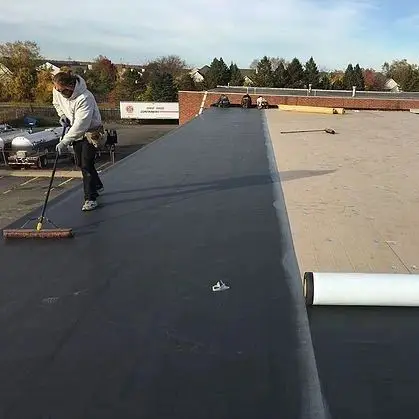
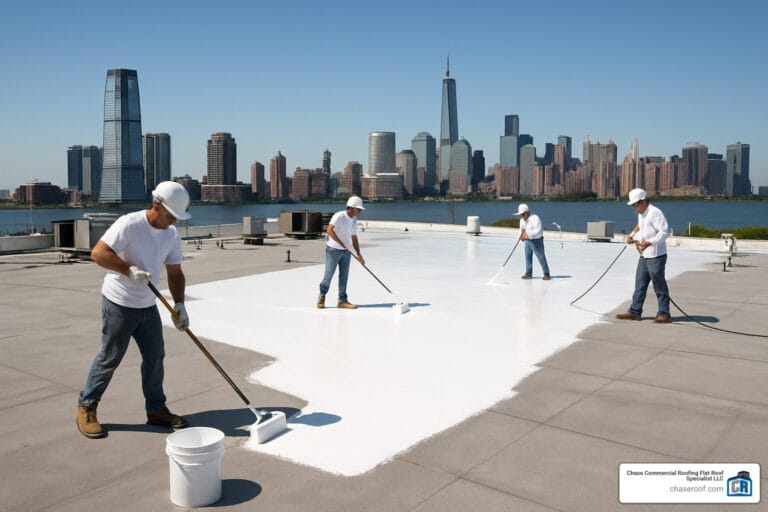
Commercial roof coatings are liquid-applied roofing products designed to create a protective layer over an existing commercial roof.
Depending on the product and roof system, coatings may be applied by spray, roller, or brush and then cure into a continuous protective membrane.
Commercial roof coatings are commonly considered for roofs that are still structurally serviceable but may benefit from additional weather protection, reflectivity, or restoration.
At Chase Commercial Roofing, we evaluate commercial roofing systems throughout New Jersey to determine whether coating, repair, or replacement is the most appropriate option.
How Commercial Roof Coatings Work
Unlike sheet-applied roofing membranes, coatings are applied in liquid form and conform to the existing roofing surface.
Depending on the system, the coating process may involve:
- Roof cleaning
- Localized repairs
- Primer
- Seam reinforcement
- Base coat
- Top coat
The exact application process depends on the coating manufacturer, existing roofing material, roof condition, weather, and project specifications.
What Types of Roofs Can Be Coated?
Commercial roof coatings may be compatible with several existing roofing systems, including:
- EPDM
- TPO
- PVC
- Modified bitumen
- Built-up roofing
- Metal roofing
- Spray polyurethane foam roofing
Compatibility should never be assumed. Some roofing surfaces require specific primers, preparation methods, or coating chemistries.
Types of Commercial Roof Coatings
Acrylic Roof Coatings
Acrylic coatings are commonly water-based and are frequently selected when reflectivity and UV exposure are important considerations.
Potential advantages include:
- Reflective surface options
- Water-based formulations
- Ease of application on appropriate substrates
Acrylic systems may be less appropriate for roofs with persistent drainage or standing-water problems depending on the specific product.
Silicone Roof Coatings
Silicone coatings are commonly used on commercial roofs where resistance to weathering and moisture exposure is important.
Potential advantages include:
- Strong UV resistance
- Moisture resistance
- Reflective color options
Silicone surfaces can become slippery when wet and may collect dirt over time, which is why inspection and maintenance still matter.
Polyurethane Roof Coatings
Polyurethane coatings are often selected where abrasion resistance or rooftop traffic may be an important consideration.
Different polyurethane formulations have different properties, so product selection should be matched to roof use and exposure.
SEBS and Other Elastomeric Coatings
Some commercial roof restoration systems use SEBS or other elastomeric chemistries designed to provide flexibility and protection over compatible substrates.
These systems should be evaluated based on manufacturer specifications and the existing roof condition.
Comparing Commercial Roof Coating Systems
| Coating Type | Common Strengths | Important Considerations |
|---|---|---|
| Acrylic | Reflectivity, UV protection, water-based options | Drainage and ponding-water conditions |
| Silicone | UV resistance, moisture resistance | Surface soiling and slipperiness when wet |
| Polyurethane | Abrasion resistance and durability | Product-specific UV and application characteristics |
| SEBS / Elastomeric | Flexibility and weather protection | Substrate compatibility and preparation |
What Are the Benefits of Commercial Roof Coatings?
Restoring a Serviceable Existing Roof
A coating system may allow a property owner to restore and protect an existing roof without immediately proceeding to full replacement, provided the underlying roof remains a suitable candidate.
Reducing Tear-Off
When a coating is appropriate, more of the existing roofing assembly may remain in place, potentially reducing demolition and disposal compared with a complete tear-off.
Creating a Continuous Protective Surface
Liquid-applied coatings can cover seams, transitions, and other roof areas with a continuous protective layer when installed as part of a properly designed system.
Reflective Roofing Options
Many roof coatings are available in light, reflective colors.
Reflective roofs can reduce roof surface temperatures and may reduce cooling demand in certain buildings and climates.
Actual energy performance depends on insulation, building use, climate, HVAC equipment, roof exposure, and other factors.
Property owners can review the U.S. Department of Energy’s cool roof guidance for additional information.
Can Roof Coatings Stop Leaks?
A roof coating should not be treated as a shortcut for unresolved roofing defects.
Before applying a coating, the contractor should identify and address issues such as:
- Active leaks
- Open seams
- Damaged flashing
- Wet insulation
- Deck deterioration
- Loose roofing materials
A coating system can protect a properly prepared roof, but it should not simply cover damaged materials and hope the underlying problem disappears.
Which Roofs Are Good Candidates for Coatings?
A coating candidate should generally have a roofing assembly that is still structurally serviceable.
Important factors include:
- Overall membrane condition
- Amount of wet insulation
- Deck condition
- Existing adhesion
- Drainage
- Roof slope
- Previous repairs
- Coating compatibility
When Roof Coatings May Not Be the Right Solution
Coatings may not be appropriate when:
- Large areas of insulation are saturated
- The roof deck has significant deterioration
- The existing roof is extensively delaminated
- Structural problems are present
- Widespread roof failure has already occurred
In these situations, commercial roof replacement may provide better long-term value.
Commercial Roof Coatings for TPO
TPO roofing may sometimes be restored with compatible coating systems, but preparation and adhesion are especially important.
The contractor should evaluate:
- Membrane condition
- Seams
- Flashing
- Previous repairs
- Primer requirements
- Coating compatibility
Learn more about Chase’s TPO roofing services in New Jersey.
Commercial Roof Coatings for EPDM
EPDM membranes may also be candidates for restoration depending on roof condition and coating compatibility.
Surface preparation is important because the coating system must properly bond to the existing rubber membrane.
Chase also provides EPDM roofing services.
Commercial Roof Coatings for Metal Roofs
Metal roofs are frequently evaluated for coating and restoration.
Preparation may involve:
- Cleaning
- Removing loose corrosion
- Treating affected metal
- Repairing fasteners
- Addressing seams
- Repairing flashing
A coating does not replace damaged structural metal panels or failed roof components.
Learn more about Chase’s commercial metal roofing services.
Commercial Roof Coatings for Modified Bitumen and Built-Up Roofing
Modified bitumen and built-up roof systems may also be suitable coating candidates when the existing roof remains serviceable.
Preparation may include repairing cracks, seams, blisters, exposed reinforcement, flashing, and other surface deterioration before coating is applied.
How the Roof Coating Process Works
1. Roof Assessment
The contractor begins by evaluating the current roof system, visible damage, drainage, existing repairs, and overall condition.
2. Moisture Investigation
When moisture beneath the roof is suspected, further investigation may be appropriate before coating.
Specialized diagnostic tools can sometimes help identify areas that deserve closer evaluation.
3. Cleaning
The roof must be properly cleaned so the coating system can bond to the existing surface.
4. Repairs
Damaged membrane, seams, flashing, fasteners, penetrations, and other defects should be corrected before coating.
5. Primer Where Required
Some substrates or coating systems require primer to achieve proper adhesion.
6. Reinforcement
Seams, transitions, fasteners, penetrations, or other details may require reinforcing fabric or additional material depending on the system.
7. Coating Application
The selected coating is applied according to the manufacturer’s required coverage rate, thickness, and application method.
8. Final Inspection
The completed roof should be inspected for coverage, missed areas, surface defects, flashing conditions, drainage, and overall workmanship.
Why Surface Preparation Is So Important
Many coating failures begin with poor preparation rather than the coating material itself.
Problems can occur when coatings are applied over:
- Dirt
- Oils
- Loose materials
- Wet surfaces
- Incompatible roofing products
- Unrepaired defects
The roof should be prepared according to both manufacturer requirements and actual field conditions.
Commercial Roof Coating Thickness
Roof coating systems are designed around specific application rates and finished thickness requirements.
The correct thickness depends on:
- Coating chemistry
- Manufacturer specifications
- Existing roof type
- Warranty option
- Project requirements
More coating is not automatically better. The system should be installed according to the approved specification.
Commercial Roof Coatings and Ponding Water
Persistent standing water should be evaluated before a coating project begins.
Recurring ponding may indicate:
- Clogged drains
- Compressed insulation
- Low areas
- Deck movement
- Insufficient slope
Some coating products are more tolerant of moisture exposure than others, but a coating should not be used as a substitute for correcting a serious drainage problem.
How Much Do Commercial Roof Coatings Cost?
There is no universal commercial roof coating price.
Cost depends on:
- Roof size
- Roof condition
- Coating type
- Surface preparation
- Repairs required
- Primer
- Reinforcement
- Application thickness
- Building access
- Warranty specifications
A detailed roof evaluation provides a much more useful estimate than generic square-foot pricing.
Roof Coating vs. Roof Replacement
| Coating May Make Sense When | Replacement May Make Sense When |
|---|---|
| Existing roof remains serviceable | Roof deterioration is widespread |
| Moisture is limited | Large areas of insulation are wet |
| Deck remains sound | Deck damage is present |
| Roof is compatible with restoration | Existing assembly is no longer a suitable substrate |
Commercial Roof Coating Warranties
Warranty coverage varies by manufacturer, coating system, contractor qualifications, roof condition, application specification, and maintenance requirements.
Potential warranty types may include:
- Material warranties
- Manufacturer system warranties
- Contractor workmanship warranties
Always review the actual written warranty rather than assuming every coating system provides the same coverage or duration.
Can a Roof Be Recoated Later?
Some coating systems can potentially be recoated in the future if the existing coating and underlying roof remain suitable.
Before recoating, the contractor should evaluate:
- Existing coating adhesion
- Surface condition
- Moisture
- Drainage
- Compatibility
- Required repairs
Recoating is an option in some situations, but it should not be presented as an unlimited extension of roof life.
How Should Commercial Roof Coatings Be Maintained?
Coated roofs still require inspection and maintenance.
Maintenance may include:
- Removing debris
- Clearing drains
- Checking penetrations
- Inspecting flashing
- Monitoring coating wear
- Checking previous repair areas
- Evaluating the roof after significant storms
The National Roofing Contractors Association provides guidance and training related to commercial roof inspection, maintenance, leak detection, and repair.
Review the NRCA’s roof repair and maintenance guidance.
Commercial Roof Coating Safety
Roof coating projects still involve fall hazards, roof edges, skylights, ladders, wet surfaces, chemicals, equipment, and rooftop penetrations.
OSHA provides fall-protection requirements applicable to many commercial roofing activities.
Review OSHA’s construction fall-protection requirements.
How to Choose a Commercial Roof Coating Contractor
Look for a contractor with experience in both your existing roofing system and the coating product being considered.
Important considerations include:
- Commercial roofing experience
- Experience with your roof type
- Coating-system experience
- Applicable manufacturer training
- Appropriate insurance
- Surface-preparation procedures
- Documentation
- Warranty options
The Ultimate Guide Comes Down to One Question: Is Your Roof a Good Candidate?
Commercial roof coatings can be an excellent restoration option for the right roof, but they are not a cure-all.
The best results come from evaluating the entire roofing assembly, correcting existing defects, choosing a compatible coating system, preparing the surface properly, and applying the product according to manufacturer requirements.
Chase Commercial Roofing provides commercial roof coating services and commercial roofing services throughout New Jersey, including TPO, EPDM, metal roofing, repair, replacement, maintenance, and roof restoration.
If you’re considering coating an aging commercial roof, contact Chase Commercial Roofing to schedule an assessment and determine whether coating, repair, or replacement makes the most sense for your property.